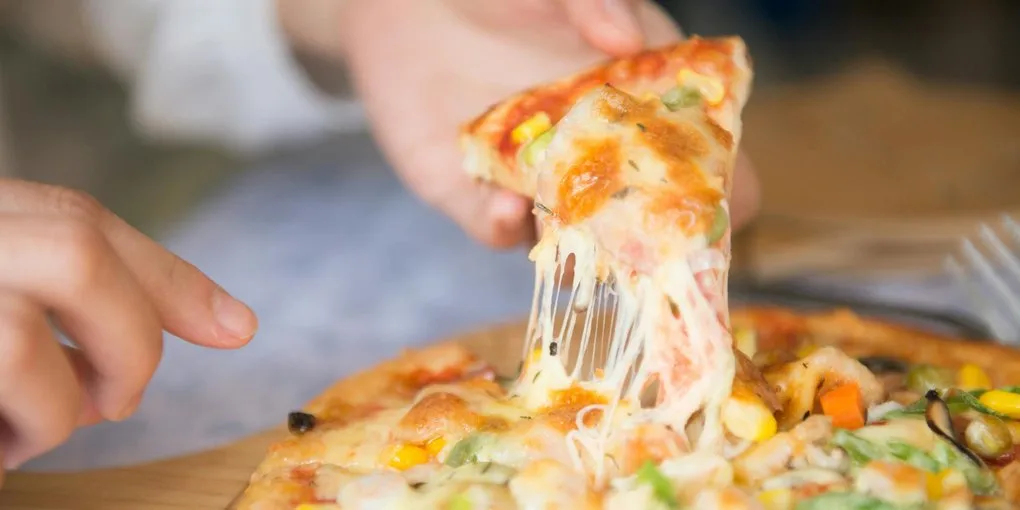
The cheese you put on a pizza matters as much as the dough underneath it. Maybe more. Dough is relatively forgiving — a few percentage points of hydration off, a slightly different flour, and you still get something recognizable. Cheese is less generous. Use the wrong type for the wrong style and you get a pool of grease, a sheet of rubber, or a soggy crust that never had a chance.
Most home pizza makers default to whatever mozzarella is closest to them in the grocery store. Usually that means a bag of pre-shredded low-moisture mozzarella coated in cellulose powder. It works, barely. But understanding why different cheeses behave differently on pizza — and which ones belong on which styles — is the single fastest upgrade most people can make.
What Actually Happens When Cheese Hits a Hot Oven
Cheese on pizza goes through a series of phase changes, and each one affects the final result.
Fat melts first, around 38°C/100°F. At this point the cheese softens but holds its shape. Between 55-80°C/130-175°F, the interactions between proteins, water, and calcium shift — this is where the cheese starts to flow and stretch. The classic stringy pull happens around 65°C/150°F, especially when the cheese is near the isoelectric point of its caseins (the pH where the protein matrix is most willing to let go).
Above 100°C/212°F, water inside the cheese turns to steam. That steam is what causes blistering — the brown and black bubbles you see on a well-baked Neapolitan pie. The pattern of blisters depends on how much moisture the cheese started with and how it was distributed.
Here’s the part that surprises people: mozzarella gets whiter as it bakes. As the cheese cooks, its surface absorbs less radiant heat — by a factor of about two. So the cheese lightens while the crust darkens. This is why a Neapolitan pizza pulled at the right moment has bright white cheese sitting on a deeply charred crust. It’s physics, not luck.
There’s also a temperature plateau during melting. The cheese absorbs heat without its temperature increasing — the energy goes into the phase transition from solid to liquid rather than making the cheese hotter. During this plateau, the cheese acts as a thermal blanket over the dough. The dough underneath cannot cook properly until the cheese finishes its phase change. This is one reason soggy pizza bottoms happen: the cheese is insulating the dough from above while the oven tries to cook it from below.
Fresh Mozzarella: Fior di Latte and Bufala
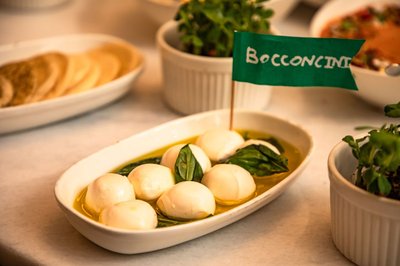
Fresh mozzarella comes in two main forms for pizza: fior di latte (cow’s milk) and mozzarella di bufala (water buffalo milk). Both are packed in liquid and have high moisture content — fior di latte runs around 65%, bufala around 62-64%.
That moisture is a problem. All that water has to go somewhere during baking, and where it goes is into your dough. A Neapolitan pizza baked at home is already fighting the temperature gap between a wood-fired oven and a kitchen broiler. Adding a cheese that’s 65% water makes the fight harder.
The fix is straightforward: drain the cheese. Remove fresh mozzarella from its packing liquid 1-2 days before you plan to use it and store it uncovered in the refrigerator on a paper towel-lined plate. You’re targeting roughly 45% moisture content — the cheese should feel noticeably firmer and drier to the touch, not wet and slippery. Some pizzaiolos press the cheese gently between towels to speed this up, but time in the fridge works better because the drying is more uniform.
The ideal fresh mozzarella for pizza is slightly acidified fior di latte, 1-2 days old, removed from its protective liquids. This is what most serious Neapolitan operations use.
Check price on Amazon → Galbani Fresh Mozzarella
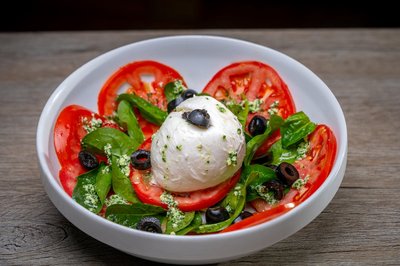
Mozzarella di Bufala Campana DOP has richer flavor but even higher moisture and a softer texture that can turn soupy in a home oven. Save bufala for finishing after the bake, or for ovens that can hit 450°C/850°F+ where the bake time is short enough that the moisture doesn’t matter.
For a home Neapolitan bake, add your drained fresh mozzarella about 4 minutes into a 7-minute bake. This gives the dough a head start on cooking before the cheese’s moisture and thermal insulation slow everything down.
Hand-pulled mozzarella — starting from cold curd, stretching in a 175-180°F water bath, brining for 30-60 minutes, stored in cold water up to 5 days — produces a drier, more compact cheese than machine-made. That compactness is an advantage on pizza. If you’re making your own, you’re already ahead of most fresh mozzarella you can buy.
Check price on Amazon → BelGioioso Mozzarella di Bufala
Low-Moisture Mozzarella: The NY Secret
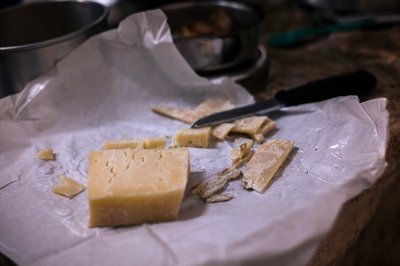
Low-moisture mozzarella — the stuff that comes in a block or a loaf, not a ball floating in water — is what makes New York-style pizza work. It melts shiny and smooth, stretches without breaking, and reheats well the next day. The standard you’ll see referenced in professional circles is Grande mozzarella, a Wisconsin brand that Gemignani calls “worth going out of your way to find.”
The whole-milk versus part-skim debate matters less for flavor than most people think. Blind taste tests often fail to distinguish them. But the performance difference is significant: whole-milk low-moisture mozzarella holds its texture better during baking, browns more evenly, and reheats without turning to rubber. Part-skim gets oily faster and develops a tougher skin when it cools. For home pizza, whole-milk is worth the minor extra cost.
The format matters too. Dry mozzarella in loaves — sometimes labeled “caprese” loaves — is the closest you’ll get to what NY coal-fired pizzerias use. It melts into a shiny, almost plasticky sheet that’s pure white and pulls in long strings. That visual is the signature of a good New York slice.
Always grate from a block. Pre-shredded mozzarella is coated in cellulose (wood pulp), starches, and gums to prevent clumping in the bag. Those anticaking agents do exactly what you’d expect on a pizza: they prevent the cheese from melting into a cohesive layer. Instead of a smooth, stretchy sheet, you get individual shreds that melt partially and leave a grainy texture. The convenience is not worth it. For a deeper comparison of these two cheese categories, see our guide on low-moisture versus fresh mozzarella.
If you’re slicing rather than grating — some NY-style recipes call for thin slices rather than shreds — chill the block thoroughly and use the longest knife you have. A meat slicer produces the most uniform results, but a long, sharp knife on a cold block works fine.
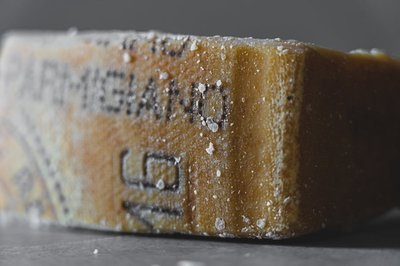
The classic NY cheese application: grated low-moisture whole-milk mozzarella over the entire surface, with a light dusting of pecorino Romano or Parmigiano-Reggiano underneath. The hard aged cheese adds salt and umami depth that mozzarella alone can’t provide.
Check price on Amazon → Grande Whole-Milk Mozzarella
Brick Cheese: The Detroit Frico Engine
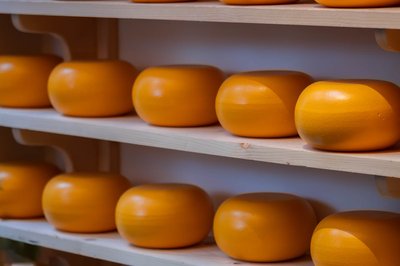
Wisconsin Brick Cheese is a semi-soft American cheese with higher butterfat than mozzarella. It’s the traditional cheese for Detroit-style pizza, and the reason for the style’s most distinctive feature: the frico crust.
The frico mechanism works like this. Cubed brick cheese is pushed to the edges of the pan, touching the metal walls on all sides. As the pizza bakes, butterfat melts out of the cheese and pools at the interface between cheese and metal. That pooled fat reaches frying temperature against the hot pan wall, crisping the dough edge from the outside while the cheese caramelizes against the metal. The result is a dark, lacquered cheese crust that’s half frico, half fried bread.
Brick cheese is hard to find outside the Midwest. The reliable substitute is a blend of cubed low-moisture mozzarella and cubed white cheddar. The mozzarella provides stretch and melt; the cheddar provides the butterfat content needed for frico formation. Cube both cheeses — don’t shred. Cubes melt more slowly and pool fat more effectively at the pan edges.
Check price on Amazon → Widmer’s Wisconsin Brick
The Oddball Cheeses
Three regional pizza styles use cheeses that most people outside those regions have never considered putting on a pizza.
Provel: The St. Louis Divide
Provel is a processed cheese blend of provolone, Swiss, and white cheddar, created specifically for St. Louis-style pizza. It melts into a gooey, almost Velveeta-like consistency — stringy but with a processed smoothness that natural cheese can’t replicate. People from St. Louis love it fiercely. People from everywhere else tend to find it unsettling. There’s no middle ground on Provel. If you want to try authentic St. Louis-style at home, you’ll need to order it online — it’s essentially unavailable outside the region.
Pecorino Romano: The New Haven Default
At Frank Pepe’s and Sally’s in New Haven, a “plain” pizza has no mozzarella. The default is tomato sauce, grated pecorino Romano, and olive oil on a thin, aggressively charred crust. Mozzarella is an upgrade you have to specifically request. The hard, salty, sharp pecorino stands up to the heavy char in a way that melted mozzarella doesn’t — it delivers concentrated hits of salt and umami rather than a blanket of dairy. If you’re making New Haven-style apizza, start with pecorino only and see if you even miss the mozzarella.
Ricotta Cream: Pipe It After
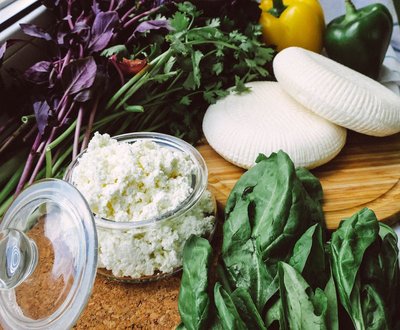
Ricotta on pizza usually means a few sad dollops of grainy, weepy cheese that bakes into heavy lumps. The fix is to not bake it at all.
A ricotta cream — 45g ricotta, 15g mascarpone, 5g heavy cream, whipped together and rested for an hour in the fridge — pipes beautifully onto a finished pizza. It stays light, creamy, and cool against the hot crust and sauce. Baked ricotta is heavier and weeps liquid. Piped ricotta cream after baking is the way every serious pizzeria handles it.
Check price on Amazon → Galbani Whole-Milk Ricotta
Cheese by Style: Quick Reference
The Pre-Shredded Problem
This point deserves its own section because the damage is that consistent.
Pre-shredded cheese from a bag contains anticaking agents — typically cellulose (refined wood pulp), potato starch, and various gums. These additives coat every shred and serve one purpose: keeping the shreds from sticking together in the bag. On a pizza, they prevent the cheese from melting into a smooth, cohesive sheet.
The result: individual shreds that partially melt, separated by a powdery residue that doesn’t melt at all. The texture is grainy. The browning is uneven. The stretch is weak. Side by side with cheese grated from a block minutes before baking, the difference is obvious to anyone.
This applies to every cheese, not just mozzarella. Pre-shredded Parmesan, pre-shredded cheddar, pre-crumbled anything — all coated, all compromised. Buy blocks. Grate them yourself. It takes 90 seconds and transforms the cheese on your pizza.
This is also a common cause when cheese burns before the crust finishes cooking — the uneven melt from anticaking agents creates hot spots that scorch before the bottom is ready.
A finishing drizzle of good olive oil and a pinch of flaky salt after baking will do more for your pizza than any cheese upgrade. But switching from pre-shredded to block-grated is a close second.
Choosing Your Cheese
Match your cheese to your style, drain your fresh mozzarella, grate from blocks, and don’t bake ricotta. Those four rules cover about 90% of what goes wrong with cheese on home pizza. The remaining 10% is oven temperature — but that’s a different problem entirely.
Some links above are affiliate links. If you buy through them, we may earn a small commission at no extra cost to you. Prices and availability are subject to change. We only recommend products we’d use ourselves.
Frequently Asked Questions
- What's the best cheese for Neapolitan pizza?
- Fior di latte (fresh cow's milk mozzarella) is the standard choice. Mozzarella di bufala has richer flavor but higher moisture and a softer texture that can turn soupy, especially in a home oven that can't match the 450°C+ temperatures of a wood-fired pizzeria. Whichever you choose, drain it: remove the cheese from its packing liquid 1-2 days before baking and store it uncovered in the fridge on a paper towel-lined plate. You want to bring the moisture content down from ~65% to roughly 45%. The cheese should feel firmer and drier, not wet and slippery. Slightly acidified fior di latte, 1-2 days old, is what most serious Neapolitan operations use.
- Is pre-shredded mozzarella OK for pizza?
- No. Pre-shredded mozzarella is coated in anticaking agents — cellulose (refined wood pulp), potato starch, and gums — that prevent the shreds from clumping in the bag. On a pizza, those same agents prevent the cheese from melting into a smooth, cohesive layer. You get individual shreds that partially melt, separated by a powdery residue that never melts at all. The texture is grainy, browning is uneven, and stretch is weak. Buy a block of low-moisture whole-milk mozzarella and grate it yourself. It takes 90 seconds and the difference is immediately visible.
- Should I drain fresh mozzarella before putting it on pizza?
- Yes, and it's one of the most impactful things you can do. Fresh mozzarella is roughly 62-65% water by weight. All that water releases during baking, steaming the dough underneath and preventing it from cooking properly. Remove the cheese from its packing liquid 1-2 days before use and store it uncovered in the refrigerator on a paper towel-lined plate. The target is about 45% moisture. Some people press the cheese gently between towels to speed this up, but passive refrigerator drying produces more uniform results. For a home Neapolitan bake, add the drained mozzarella about 4 minutes into a 7-minute bake to give the dough a head start before the cheese's moisture and thermal insulation slow everything down.
- What is brick cheese, and why does Detroit pizza use it?
- Wisconsin Brick Cheese is a semi-soft American cheese with higher butterfat than mozzarella. That extra fat is the engine of the frico crust — Detroit pizza's most distinctive feature. When cubed brick cheese is pushed to the edges of the pan and touches the metal walls, the butterfat melts and pools at the interface. That pooled fat reaches frying temperature against the hot pan, crisping the dough edge while the cheese caramelizes against the metal. The result is a dark, lacquered cheese crust. Brick cheese is hard to find outside the Midwest. The standard substitute is a blend of cubed low-moisture mozzarella (for melt and stretch) and cubed white cheddar (for the butterfat needed to form frico). Always cube rather than shred — cubes melt more slowly and pool fat more effectively at the pan edges.
- Can I mix different cheeses on pizza?
- Absolutely — several pizza styles depend on it. New York-style uses grated low-moisture mozzarella with pecorino Romano or Parmesan underneath for umami depth. Detroit-style blends mozzarella and cheddar. Bar pizza uses whatever melts well together: fontina, provolone, cheddar, low-moisture mozzarella. The key is understanding what each cheese contributes. Mozzarella provides stretch and melt. Hard aged cheeses (pecorino, Parmesan) add salt and umami. Higher-fat cheeses (cheddar, brick) contribute to browning and crisping. Mixing is often better than relying on a single cheese.
- When should I add cheese during baking?
- It depends on the style and your oven. For Neapolitan pizza in a home oven, add drained fresh mozzarella about 4 minutes into a 7-minute bake. This gives the dough a head start on cooking before the cheese insulates it. During the melting phase, cheese absorbs heat without its own temperature rising (a phase transition), and that thermal blanket prevents the dough underneath from cooking properly. For New York-style on a baking steel, the cheese goes on from the start because the steel provides enough bottom heat to cook through. For Detroit-style, cheese goes on after a 6-minute parbake — the parbake sets the bottom crust and also causes the dough to shrink slightly from the pan edges, creating space for the cheese to flow in and build a taller frico wall.
- What makes cheese blister on pizza?
- Steam. Fresh and low-moisture mozzarella both contain water. Above 100°C/212°F, that water turns to steam inside the cheese. The steam pushes up against the softened surface, creating bubbles that brown and char from the radiant heat above. The pattern depends on moisture content and how the cheese was distributed — fresh mozzarella with higher moisture blisters more aggressively. Irregular distribution (torn pieces vs. uniform shreds) creates more varied blister patterns. The brown-to-black blisters on a Neapolitan pizza are a sign of proper oven heat, not a mistake. If your cheese isn't blistering at all, your oven isn't hot enough or you're pulling the pizza too early.