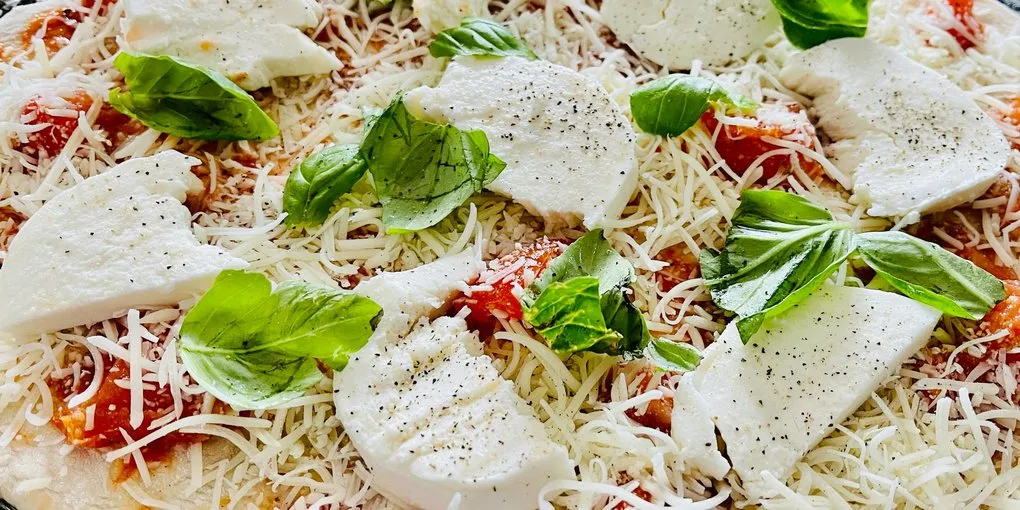
Fresh mozzarella’s single biggest problem on pizza isn’t flavor — it’s water. A soaking-wet ball of supermarket fior di latte can release enough liquid to turn your crust soggy, push oil across the surface, and leave you with a pool of white water where your cheese used to be. The brand you choose determines how much of that fight you’re walking into.
This article covers only the brand-level question. If you’re still deciding whether to use fresh or low-moisture mozzarella in the first place, start with low-moisture vs fresh mozzarella — that article covers the type decision. Here, we assume you’ve chosen fresh and want to know which brand behaves best in the oven.
Why Water Content Is the Only Metric That Matters
The science here is settled. Fior di latte (cow’s-milk fresh mozzarella) ships at roughly 65% water content per Masi’s Neapolitan Pizza specification, while mozzarella di bufala runs slightly lower at 62-64%. Once a ball sits in its packing brine for days on end, that figure can creep higher. Masi’s target for pizza is approximately 45% water before baking — which means most supermarket fresh mozz arrives at roughly 1.4x the ideal moisture level [Masi pp. 92-94].
What happens when you skip draining? The excess water boils off during baking, but it takes time and heat that should be going into your crust. In a 7-minute home oven bake, wet cheese keeps the crust surface cool and steamy — you get a gummy base instead of a crisp one. In a 90-second Neapolitan bake, wet mozzarella quite literally floods the disc before it can set.
Browning tells the story. The browned patches on baked mozzarella are areas that have lost their water; the still-white areas hold water bound up in the cheese’s fat-protein matrix [Masi pp. 92-94]. A soggy-seeming result after baking almost always means you didn’t drain enough.
The target for pre-bake mozzarella: slice or tear it, lay it on a paper towel or wire rack in the fridge, uncovered, the night before. That single habit transforms every brand on this list. Iacopelli is emphatic about the overnight drain, and it shows up consistently across the home oven pizza literature.
Galbani Fresh Mozzarella: High Availability, High Moisture
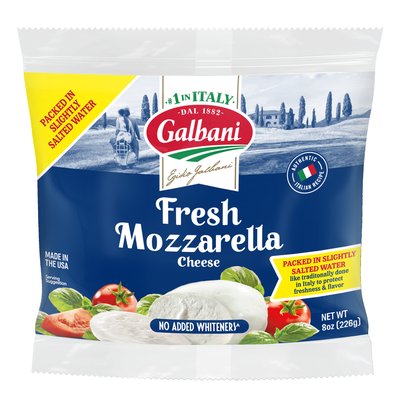
Galbani is one of the most widely stocked fresh mozzarella brands in US supermarkets. They produce both small balls (ciliegine and bocconcini) and the standard 8-oz round in a water-pack pouch. The round is what matters for pizza.
Water content is high. Galbani’s standard fresh mozzarella sits at the wetter end of the supermarket spectrum — when you cut into a cold ball, visible liquid pools immediately. Plan on a minimum 4-hour drain at room temperature, or ideally an overnight drain in the fridge uncovered on a wire rack.
For a 90-second Neapolitan bake in a portable oven: slice thin (3-4 mm), drain overnight, then pre-salt the slices for 15 minutes and blot again before use. Even then, cube-cutting (1 cm cubes) and spreading loosely often gives better results than thick rounds — the larger surface area accelerates moisture loss during the bake.
For a 7-minute home oven bake: an overnight drain is sufficient. Slice 5-6 mm thick and distribute evenly — less in the center, where cheese naturally migrates as it melts.
The melt is acceptable. Galbani pulls reasonably well and whitens appropriately when baked. Flavor is mild and clean — not distinctive, but not distracting. The con: inconsistent water content between production runs. You may drain one ball for four hours and get great results, then drain an identically-labeled ball for six hours and still have runoff. When that happens, cut your losses and cube it.
Availability: Nationwide — Walmart, Kroger, Target, Whole Foods. Roughly $4-6 for 8 oz. Check price on Amazon.
BelGioioso Fresh Mozzarella: The Home Baker’s Best Supermarket Option
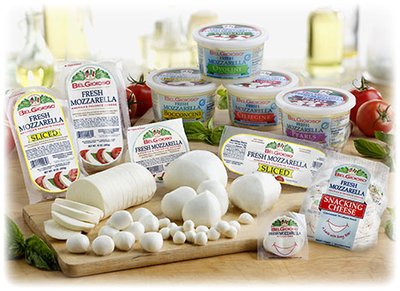
BelGioioso is made in Wisconsin, with a production philosophy closer to traditional Italian pasta filata methods than most American mass-market brands. Their fresh mozzarella has a distinctly layered, springy texture and a slightly more acidic flavor profile — that light tanginess is characteristic of properly-acidified pasta filata cheese, where stretching the curd at the right pH (near the isoelectric point of caseins) sets up the layered structure.
More importantly for pizza: BelGioioso produces a “Fresh Mozzarella for Pizza” lower-moisture format specifically designed to reduce weeping on the pie. The standard ball format still has significant moisture, but it’s measurably lower than Galbani. Drain time needed: 2-4 hours for the standard, 1-2 hours for the pizza-specific format.
For Neapolitan bakes: the pizza-specific BelGioioso format performs well without aggressive pre-treatment. Standard BelGioioso still needs the overnight drain and cube treatment for sub-90-second bakes.
Melt quality is excellent. The layered texture means the cheese stretches in visible sheets when pulled — that’s the pasta filata structure working as intended. Flavor is the most pronounced of the four brands here, with a noticeable milky sweetness.
The con: availability is spottier than Galbani. Most Whole Foods, specialty stores, and upscale supermarkets carry it, but you won’t find it at every Walmart. Slightly more expensive too — $5-8 for 8 oz. Check price on Amazon.
Verdict for pizza: The top widely-available supermarket choice. The lower-moisture pizza format is a genuine improvement.
Di Stefano 48-Hour Fresh Mozzarella: The Enthusiast Pick
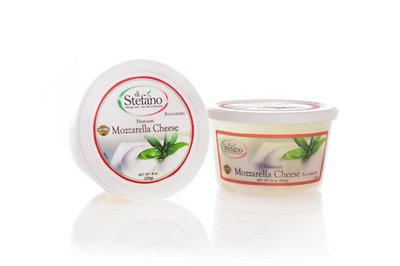
Di Stefano, based in Southern California, is a small-batch producer that has built a following among serious home pizza makers. Their flagship product is the 48-Hour Fresh Mozzarella — aged two days post-production before sale, which allows natural moisture migration out of the curd and into the brine. The practical effect: Di Stefano arrives noticeably drier than Galbani or standard BelGioioso.
The texture is firmer and more compact than the other brands — closer to what Gemignani describes as the desired result when making mozzarella from curd at home. That drier, more compact texture is precisely what you want for pizza: less pre-drain time, less pooling, cleaner bake.
Drain time needed: 1-2 hours at room temperature, or a 30-minute fridge drain is often sufficient. For a 90-second portable oven bake, a 2-hour room-temperature drain plus a thin slice delivers excellent results without the aggressive pre-salting that Galbani requires.
Flavor is richer and slightly more tangy than Galbani — the 48-hour rest allows more lactic acid to develop. On a margherita-style pizza it’s noticeable in a good way.
The con: distribution is limited to specialty retailers and West Coast supermarkets (Bristol Farms, Gelson’s, some Whole Foods locations). Not a reliable find nationally. Price: $7-10 for 8 oz. Check price on Amazon.
Verdict for pizza: Best performance of the four supermarket brands with the least prep work — but the hardest to find.
Polly-O Fresh Mozzarella: The Classic American Option
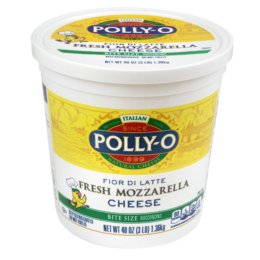
Polly-O has one of the longest US pedigrees of any brand here — the company traces back to 1899 — and remains a staple in East Coast Italian-American cooking. Their fresh mozzarella is creamy-textured and milky-flavored, with a moisture level at the wet end of the four brands tested.
For low-moisture block mozzarella on a New York-style pizza, Polly-O is a solid choice. For fresh mozzarella on a Neapolitan or margherita, it requires the most aggressive pre-treatment of all four brands. Expect a minimum 6-hour drain, and serious bakers often do an overnight drain plus a pre-salting and re-drain before baking.
Melt behavior is fine once drained — good stretch, appropriate whitening. Flavor is the mildest of the four, somewhat bland compared to BelGioioso or Di Stefano. The texture also doesn’t have the same layered pull as BelGioioso.
The con: the combination of high moisture and mild flavor makes Polly-O the weakest fit for pizza-specific applications. It performs better as a table cheese or in baked dishes where moisture isn’t an issue. Check price on Amazon.
Availability: Nationwide, primarily East Coast. Roughly $4-6 for 8 oz.
How Each Brand Handles a Neapolitan Bake vs a Home Oven Bake
A 90-second bake at 850-950°F in an Ooni or Gozney is a completely different cheese environment than a 7-minute home oven bake at 550°F. The high-heat fast bake means less time for water to evacuate — it stays trapped under the cheese and makes the crust soggy. The home oven bake gives water more time to leave but also gives more time for oil to separate.
| Brand | 90-sec bake | 7-min home oven |
|---|---|---|
| Galbani | Overnight drain + cube + pre-salt | Overnight drain + slice 5 mm |
| BelGioioso (pizza format) | 2-hr drain + slice thin | 1-hr drain + slice 5 mm |
| Di Stefano | 2-hr drain + slice thin | 30-min drain + slice 5 mm |
| Polly-O | Overnight drain + cube + pre-salt | Overnight drain + slice 5 mm |
The Iacopelli method for home oven cheese applies to all brands: cut the night before, drain uncovered in the colander in the fridge. This is the single most impactful preparation step regardless of brand. Pair the right cheese prep with the right home oven temperature and a well-managed baking steel, and the difference between a wet pizza and a clean one is often this one habit.
The Pro Solution: Handmade Mozzarella from Curd
Every supermarket brand above is a compromise. The actual answer — the one used in serious Neapolitan pizzerias — is mozzarella made fresh from curd the same day, or at most the night before.
Gemignani’s method starts with cold curd (not milk, which removes half the work). Shave the curd cold, let it come to room temperature. Set up a hot water bath at 175-180°F. Ladle water over the curd, let sit one minute, then work into a single mass with a spoon handle. Lift, fold, return — two to three times. When the cheese tightens and becomes glossy, squeeze balls through your palm. Brine for 30-60 minutes in chilled water with one cup of kosher salt per three cups of water. Store in cold water and use within five days.
The result is drier and more compact than any packaged brand because it hasn’t been sitting in brine for days absorbing water. Hand-pulled, same-day mozzarella is what separates a great Neapolitan from a good one.
Curd is available at Italian delis, cheese shops, and some Whole Foods stores. It is priced well under finished mozzarella. If you’re making Neapolitan pizza at home with regularity, the curd method is worth adding to your rotation.
What “Fior di Latte” Actually Means and Why It Matters
The term fior di latte — “flower of milk” — means fresh cow’s-milk mozzarella as opposed to mozzarella di bufala (water buffalo). All four brands on this list produce fior di latte. It’s the traditional Neapolitan pizza cheese. Masi specifies that the optimal choice is “slightly acidified fior di latte, partially deprived of water (1-2 days old, removed from protective liquids)” [Masi p. 94].
That description points toward Di Stefano (48-hour aging, lower moisture) or properly-drained BelGioioso as the closest supermarket approximations of the ideal.
Bufala (water buffalo) mozzarella is an upgrade in flavor but a liability for the bake. Bufala runs 62-64% water vs fior di latte’s roughly 65% — close on paper, but bufala typically arrives wetter from its packing liquid, and the higher butterfat means a softer matrix that releases more moisture under heat. Even Gemignani, when winning the World Pizza Cup in Naples in 2007, used fior di latte rather than bufala for his competition Napoletana. For home use, treat bufala as a finishing cheese — add it raw on pizza bianca after baking, or use sparingly alongside fior di latte rather than as the primary bake-in cheese.
How to Build the Pizza With Fresh Mozzarella
Placement matters as much as pre-treatment. Forkish recommends adding cheese 4 minutes into a 7-minute home oven bake — this gives the sauce time to set before the cheese melts over it, and the result more closely resembles a true Neapolitan bake where cheese is added after the initial dome heat sets the crust.
Apply less cheese in the center than toward the edges — mozzarella migrates inward as it melts, and center-loading creates a dense, greasy puddle. Optimal melt stringiness for mozzarella occurs around 65°C; past that, the proteins tighten and the texture goes grainy or rubbery [Masi pp. 92-94]. Adding the cheese partway through the bake is the simplest way to keep total cheese-in-oven time under that limit.
Salt the mozzarella after baking, not before — pre-salting on the pizza draws out more moisture during the bake. This is different from the pre-salting drain technique mentioned above for Galbani and Polly-O, which happens before the cheese ever touches the pizza.
For the full framework on building a pizza from the ground up, see how to build a pizza.
Brand Decision Framework
You can find Di Stefano locally and price isn’t the constraint: Di Stefano 48-Hour Fresh Mozzarella. Least pre-treatment, best texture, cleanest bake.
You shop at Whole Foods or a well-stocked supermarket: BelGioioso “Fresh Mozzarella for Pizza” in the lower-moisture format. The standard ball is also good with an overnight drain.
You’re at any grocery store and need a default: Galbani. Plan an overnight drain. For a 90-second bake, cube-cut and pre-salt; for a home oven bake, slice 5-6 mm.
You’re on the East Coast and Polly-O is what’s stocked: Drain overnight, pre-salt 15 minutes, blot, then bake. If you want pizza-friendly fresh mozz from a heritage East Coast brand, look for BelGioioso instead — the pasta filata texture is closer to what you want on a pizza.
You make pizza weekly and want the best result: Source fresh curd from an Italian deli or specialty cheese shop and follow Gemignani’s hot-water-bath method. Same-day mozzarella beats every packaged brand on the bake.
Frequently Asked Questions
- Do I have to drain fresh mozzarella before putting it on pizza?
- Yes, for virtually every brand sold in US supermarkets. Per Masi's specification, fior di latte ships at around 65% water and should be reduced to roughly 45% before baking. Packaged fresh mozzarella has typically absorbed additional moisture from its brine bath and arrives well above that 45% target. Minimum drain time is 2 hours on a paper towel or wire rack; overnight in the fridge uncovered is better. Skipping this step is the most common reason fresh mozzarella pizza comes out soggy.
- What is the difference between fior di latte and mozzarella di bufala on pizza?
- Fior di latte is cow's-milk mozzarella — the traditional pizza cheese used in Naples, and the version all four brands above produce. Per Masi, fior di latte runs about 65% water and bufala about 62-64%. Bufala has more pronounced flavor and higher butterfat, which on paper sounds like an upgrade but in practice releases more moisture and softness under heat. Serious Neapolitan pizzerias use fior di latte during the bake and may add cold bufala after, or simply use fior di latte throughout. Gemignani used fior di latte for his 2007 World Pizza Cup-winning Napoletana in Naples.
- Which fresh mozzarella brand is best for a portable pizza oven like an Ooni or Gozney?
- Di Stefano's 48-Hour Fresh Mozzarella is the top pick for high-heat portable ovens because its lower moisture content requires less pre-treatment. BelGioioso's pizza-specific lower-moisture format is a strong second that's easier to find nationally. For any brand, slice thin and drain at least 2 hours before a 60-90 second bake. Wet cheese in a hot, fast oven pools before it can set.
- Can I make my own mozzarella for pizza at home?
- Yes, and it is the best option. Start from fresh curd rather than whole milk — curd is available at Italian delis and specialty stores, and the process is faster. Gemignani's method uses a 175-180°F water bath, two to three folds, then a 30-60 minute brine soak in 3 cups water and 1 cup kosher salt. The result is drier and more compact than any packaged brand because it hasn't absorbed brine water. Same-day homemade mozzarella is what separates a great Neapolitan margherita from a merely good one.
- Why does my fresh mozzarella turn grainy or rubbery after baking?
- Two causes: overcooking (the cheese went past its melt phase and the proteins tightened), or insufficient moisture at the start (over-drained or low-quality cheese). Per Masi, optimum mozzarella stringiness occurs around 65°C — past that, texture degrades quickly. Add cheese partway through the bake rather than from the beginning to reduce total cheese-in-oven time. For a 7-minute home oven bake, Forkish recommends adding fresh mozzarella 4 minutes in.
- Is BelGioioso "Fresh Mozzarella for Pizza" actually different from regular BelGioioso?
- Yes, measurably. The pizza-specific format is intentionally produced at lower moisture so it weeps less on the pie. In practice, drain time drops from 2-4 hours for the standard ball to 1-2 hours for the pizza format, and Neapolitan-style bakes work without the cube-and-pre-salt treatment that wetter brands require. Look for the label specifically — both formats sit in the same dairy case.
- Should I use whole-milk or part-skim fresh mozzarella for pizza?
- Use whole-milk fresh mozzarella for pizza. Per Gemignani, the flavor difference between whole-milk and part-skim isn't always obvious in tasting, but the performance difference is very noticeable — whole-milk holds heat and reheats better thanks to its higher fat content. All four brands in this article produce whole-milk versions; that's the default to look for.
Some links above are affiliate links. We earn a commission at no cost to you.