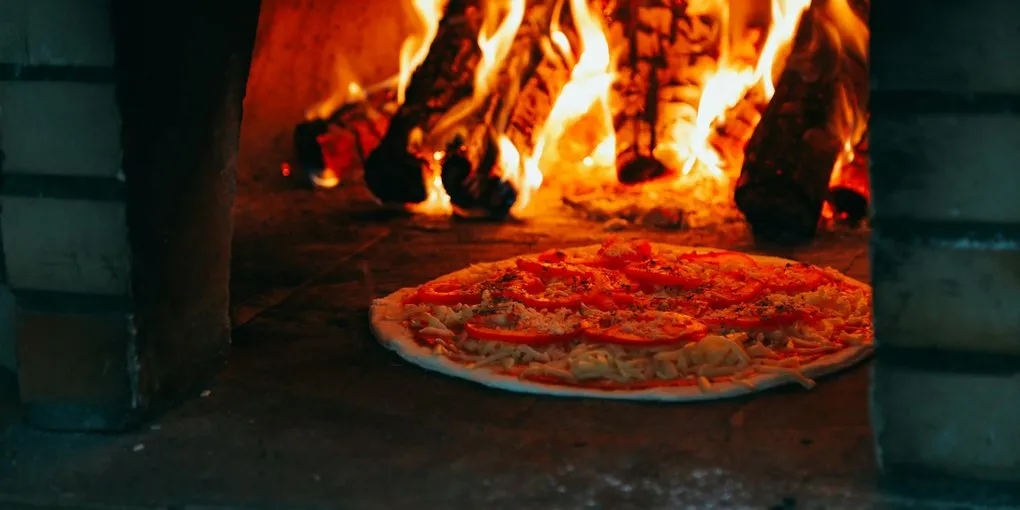
Burned cheese on an undercooked crust is the defining frustration of home pizza baking. You pull the pizza at the right internal timer, and the cheese is ashy brown or scorched while the bottom is pale and doughy. Or you wait for the crust to finish, and by then the cheese is ruined. It feels like a contradiction built into home cooking — and in a sense, it is.
The good news: there are four working solutions, ranging from a one-step timing adjustment to a complete rethink of how you assemble the pizza. This article covers the cause and then ranks the fixes from lowest to highest effort.
The Real Problem Is Physics, Not Technique
Professional Neapolitan pizza bakes in 60-90 seconds at 905F (485C). At that temperature, the entire pizza is done simultaneously — crust, sauce, cheese all hitting their targets within a minute and a half. Cheese does not have time to burn because everything is moving too fast.
A home oven tops out around 550F (290C). That is a massive temperature difference, and the consequences cascade. At 550F, the same pizza needs 7-8 minutes to develop a properly baked crust. But mozzarella — both fresh and low-moisture — cannot survive 7-8 minutes at full heat without burning.
Here is why: during baking, mozzarella goes through a phase transition. Fat melts first at around 100F (38C). At 130-170F (55-80C), protein-water-calcium interactions shift. Above 212F (100C), water becomes steam trapped in the protein network, forming the characteristic blisters and bubbles. Then, once the cheese loses enough free water, surface temperature can rise past the Maillard threshold and it begins to brown. A critical physics detail: mozzarella actually becomes whiter as it begins cooking, because the phase transition absorbs heat without a temperature increase — the cheese is reflecting more heat. Then it darkens rapidly once the phase transition is complete. By the time it browns, it is already overcooked.
The underlying cause: a 7-minute home-oven bake puts cheese through the entire Maillard browning process that a 90-second professional bake never reaches.
Fix 1: Add Cheese Halfway Through (Simplest)
The simplest fix requires no change to your recipe or method. Build the pizza as normal — sauce, then leave the cheese off — and launch it onto your preheated steel or stone. Bake for 3-4 minutes first, until the crust has begun to set, puff, and take some color. Then pull the pizza out on a peel, add cheese, and return it to the oven for the final 3-4 minutes.
This works because cheese that goes on a partially baked crust has less total time in the oven. The crust does not need the cheese present to develop properly — sauce and dough bake independently. The cheese only needs the final minutes to melt and begin to bubble, not the full bake time.
Honest limitation: the mozzarella melts onto an already-set crust rather than integrating with it during baking. The result is slightly different in texture — cheese sits on top of the crust rather than fusing into it. For NY-style pizza where cheese integration is part of the identity, this is noticeable. For Neapolitan-style home adaptations, it is a reasonable trade.
Best for: Any style. Easiest single change you can make.
Fix 2: The Two-Stage Bake — The Definitive Home Oven Method
The two-stage bake is the method Vito Iacopelli specifically developed for home ovens — and it is not just a timing trick, it is a fundamental restructuring of the bake.
The method:
- Build the pizza with sauce and olive oil only — no cheese.
- Bake on your preheated steel or stone at maximum heat until the crust is golden and puffed. This takes roughly 3-5 minutes depending on your oven.
- Remove the pizza from the oven. Brush the cornicione (rim) with a little olive oil for color and flavor.
- Add mozzarella and any remaining toppings.
- Return to the oven and bake until the cheese melts and begins to bubble. Roughly 2-3 more minutes.
- Total: never exceed 7 minutes. Beyond that, the crust dries out rather than staying soft inside.
The key difference from Fix 1: in the two-stage bake, you are deliberately using the first bake to set and develop the crust completely, then treating the second bake as purely a cheese-melting operation. This produces a crust with better structure and browning than you would get by splitting the timing of a single continuous bake.
Prep requirement: If using fresh mozzarella, the essential step is to drain it overnight in a colander in the refrigerator before baking. Fresh mozzarella contains 62-65% water by weight. At home-oven temperatures and bake durations, that water releases aggressively into the pizza, sogging the crust and delaying the cheese browning — which means it needs even more time in the oven, making the burn problem worse. Drained mozzarella (down to around 45% water) melts more cleanly and does not flood the pizza.
Best for: Neapolitan-style home oven pizza, any recipe using fresh mozzarella. This is the method to default to.
Fix 3: Broil Finish — More Char, Faster Cheese
The broil finish is Ken Forkish’s definitive home oven protocol, and it solves the problem from the opposite direction: instead of reducing how long the cheese spends in the oven, it speeds up the entire bake using the broiler’s direct radiant heat.
The method:
- Position your baking steel on the upper rack, about 8 inches below the broiler element.
- Preheat at maximum oven temperature for 45-60 minutes.
- Switch to broil for 5 minutes to superheat the steel surface just before launch.
- Switch back to bake at 525F immediately before loading the pizza.
- Bake 5-6 minutes.
- Switch to broil for 60-90 seconds to finish the top — watch the pizza constantly during this phase.
- Total: 7-8 minutes at bake; then 1-2 minutes of intense broiler exposure.
The broil finish works because the direct overhead heat completes the cheese melt and browning in a very short burst after the crust is already nearly done. Rather than the cheese sitting in extended oven heat, it gets intense focused radiant heat for a brief period — closer to what happens in a professional oven.
Honest caveat: The broil phase is aggressive. 90 seconds of inattention can go from perfectly charred to scorched. Stay at the oven window during the broil phase. The first time you use this method, treat it as a calibration run and expect to adjust the timing.
Best for: NY-style and Roman-style home pizza where more char and crust development is desirable. Also effective for Neapolitan-style if you want more leoparding on the cornicione.
Fix 4: Cheese-Down Assembly — Flip the Build Order
The most unconventional solution, but one with real science behind it. Instead of building sauce-first and cheese-second, you assemble the pizza cheese-down: mozzarella goes directly on the stretched dough, sauce on top of the cheese.
Why it works: Sauce on top of cheese acts as a heat shield. During baking, sauce boils at 212F — the evaporation of water from the sauce surface absorbs enormous amounts of heat, holding the cheese below the temperature needed to brown aggressively. With cheese underneath the sauce, it never gets direct heat exposure. It melts into the crust from below while the sauce protects it from above.
Myhrvold’s analysis confirms this principle: the gel layer problem (white, gummy line between crust and sauce) is significantly reduced in cheese-down assemblies, and cheese burn is essentially eliminated because the sauce acts as an active thermal buffer.
This method is not new — it is the traditional assembly for New Jersey tomato pie, Detroit-style pizza, and several other regional styles. Gemignani’s “New Yorker” competition pizza uses this exact cheese-down, sauce-on-top construction.
Honest caveat: The visual result is different. There is no visible melted cheese on top — the pizza looks “wrong” to anyone expecting a standard appearance. The cheese flavor is present but the texture is fundamentally different — integrated into the crust rather than on the surface. It is an excellent technique but it changes the eating experience meaningfully.
Best for: NY-style and pan pizzas where sauce-on-top is traditional. Notably, this is how Detroit pizza works and a core reason Detroit pizza solves the burn problem structurally.
Which Fix Works for Which Style?
Neapolitan-style in a home oven: The two-stage bake (Fix 2) is the right call. It most closely approximates what actually happens in a Neapolitan bake — fast crust development, brief cheese exposure — within the constraints of a 550F oven.
New York-style: Any of the four methods work. The broil finish (Fix 3) or cheese-down assembly (Fix 4) both fit NY pizza’s flavor profile. Adding cheese halfway (Fix 1) is the simplest starting point.
Detroit-style: The answer is built into the style. Sauce applied after baking, cheese pushed to the edges and baked into frico — no cheese burn problem exists when the structure is designed correctly.
Thick-crust pan pizza: Add cheese after the first 8-10 minutes of a 15-minute bake. Pan pizza needs extended time for the thick crust, so the two-stage approach is essential.
One note on cheese type: if you consistently struggle with cheese burning, low-moisture mozzarella is more forgiving than fresh. Low-moisture mozzarella starts at significantly lower water content, melts at a more controlled pace, and holds soft texture long after coming out of the oven without releasing water into the crust. For home bakers still calibrating their setup, switching from fresh to low-moisture while you sort out the timing is a legitimate strategy. The full comparison is covered in low-moisture vs fresh mozzarella.
The fundamental solution to all of this: a hotter oven. The home pizza oven temperature guide covers how to get the most out of whatever setup you have — the gap between home ovens and professional pizza ovens is real, but much of it can be closed with the right technique. For the full baking method, see how to bake pizza at home. And if you are comparing portable ovens, see the Ooni vs Roccbox vs home oven breakdown.
If your crust itself is the problem — tough, chewy, or not developing properly — that is a separate issue with its own causes. See pizza crust tough and chewy fix for the six-cause diagnostic, or the master pizza dough troubleshooting guide.
Frequently Asked Questions
- Does the two-stage bake work with low-moisture mozzarella, or is it only for fresh?
- It works with both, but low-moisture mozzarella is more forgiving. Low-moisture mozzarella starts drier and melts more predictably, so even with a full single-stage bake, it is less prone to burning than fresh. The two-stage bake is most valuable when using fresh mozzarella -- especially if you have not had time to drain it overnight. If you are using pre-shredded low-moisture mozz (not ideal but common), a standard bake with cheese added at the 3-4 minute mark is usually sufficient.
- Why does my broil finish always scorch one side of the pizza but not the other?
- Broiler elements do not heat evenly -- most home broilers have a hot spot directly under the element. Rotate the pizza 180 degrees at the midpoint of the broil phase (30-45 seconds in). Also check your rack position: closer to the broiler means faster, less even results; moving down an inch or two gives more even radiant heat distribution at the cost of slower browning.
- I have tried the two-stage bake and my crust is still soggy in the center. What is wrong?
- Two likely causes. First: fresh mozzarella that was not drained -- even a brief bake with wet mozzarella releases enough water to sog the crust in the final minutes. Drain overnight in the refrigerator, or press out excess moisture before adding. Second: too much sauce. The EU Neapolitan standard specifies 60-80g of sauce with mozzarella. Most home bakers apply significantly more, and the extra liquid creates exactly this problem -- the center stays wet regardless of bake method.
- Can I use the broil method for the entire bake from start to finish?
- Yes, but it requires precise positioning and constant attention. Some bakers run the broiler for the entire 7-8 minute bake with the steel 7-8 inches from the element. The pizza bakes from top radiant heat and bottom conduction from the steel simultaneously. This can produce excellent results with the right rack position, but it is less forgiving than the bake-then-broil method. If you try it, the pizza should show significant color on the rim and cheese within 4 minutes -- if it does not, your steel is not preheated enough or your rack is too far from the element.
- Does the cheese-down method change the flavor?
- The flavor of the cheese is present but the texture changes significantly. In the cheese-down method, mozzarella melts into the dough rather than pooling on the surface. You get a denser, more integrated bite -- the cheese flavors the crust from below and the sauce is on top. Many people find this a better eating experience once they get used to it. The big visual difference: there is no visible melted cheese on the surface, which can surprise guests expecting a standard-looking pizza.
For the complete baking setup — steel positioning, preheat protocols, and oven optimization — see the home pizza oven temperature guide. For the full troubleshooting catalog covering 27 documented defects, use the Pizza Troubleshooter.