The San Marzano DOP question and the format debate — what makes a good pizza tomato and when to use whole versus crushed — are questions worth understanding first. This article assumes you’ve answered those and now you’re standing in an aisle or on an Amazon page choosing between specific brands. That’s a different question, and the answer is brand-specific.
The cans look similar. The marketing language is nearly identical — words like “vine-ripened,” “hand-selected,” and “authentic Italian” appear on everything from $2 grocery store cans to $10 Italian imports. But open them side by side and taste the tomatoes raw, which is exactly what both Forkish and Gemignani recommend as the definitive test, and the differences are immediate and significant.
Why Brand-Level Differences Are Real (and How to Evaluate Them)
Canned tomatoes look interchangeable but taste like different fruits. Gemignani’s protocol is specific: “Buy several brands, drain in colander, rinse off the dark red juice — often added during canning, not from the tomatoes. Compare actual tomato color and flavor.”
That rinsing step matters. Canned tomatoes are packed in tomato juice or puree, but the quality and composition of that packing medium varies by manufacturer. Some brands pack in the natural juices released by the tomatoes themselves. Others add thicker, processed tomato puree or concentrate to fill the can. Rinsing reveals the tomato itself — its texture, flesh density, color, and baseline sweetness — stripped of the packing liquid’s contribution.
What you’re tasting for:
- Sweetness: Higher Brix (dissolved sugar solids) tomatoes taste more concentrated. Good pizza-processing tomatoes are typically specified in the 4.5-6 Brix range at the factory gate; below roughly 4 Brix the tomato tastes thin and flat on the finished pizza.
- Acidity balance: Some acidity is desirable — it brightens the sauce. Excessive acidity (from citric acid additions or low-quality fruit) makes the sauce fight with the cheese rather than support it.
- Flesh texture: Firm, meaty tomatoes hold their texture through the bake. Soft, watery tomatoes collapse into liquid that pools on the pizza and steams the crust instead of crisping it.
- Seed content: Fewer seeds mean less bitterness and a smoother sauce.
- Additives: Calcium chloride (a firming agent) is common in American-style canned tomatoes and changes texture in ways that work against a silky pizza sauce. Citric acid is another common addition — used to standardize pH for canning safety, but it tips the acidity the wrong direction for pizza. Premium Italian-pack canned tomatoes usually contain neither.
Masi’s data on moisture is relevant here: fresh tomatoes are approximately 94% water, and excessive thin passata slows heat transfer to the pizza base and can leave a rubbery, undercooked center. A tomato that produces a thick, high-pectin sauce isn’t just a flavor preference — it’s a structural choice that affects bake quality.
Bianco DiNapoli: The California Pro Favorite
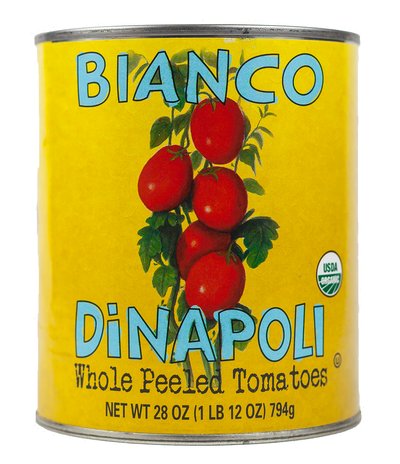
Bianco DiNapoli is the canned tomato brand most associated with serious American pizza culture. Co-founded by Chris Bianco of Pizzeria Bianco in Phoenix (widely considered among the best pizzerias in the United States), these are California-grown organic tomatoes selected for pizza-specific quality: thick flesh, low water content, balanced acidity, minimal additives.
Both Forkish and Gemignani name Bianco DiNapoli as a top choice. Forkish lists them as his favorite domestic option. Gemignani includes them on his recommended brand list for both whole peeled and ground tomatoes.
Ingredients: Organic tomatoes, organic tomato juice, sea salt, organic whole-leaf basil, citric acid. The citric acid is used as a natural acidifier for canning safety — no calcium chloride, no added puree concentrate beyond the light tomato juice pack.
The taste profile: Sweet-forward with good acidity balance. Dense, meaty texture. The packing liquid is relatively thick — when you drain these, there’s less watery runoff than with most grocery store brands. Can-to-can consistency is noticeably good.
Best use: Neapolitan-style sauce (hand-crushed, salt, done), Roman-style margherita, and any application where you want a clean, bright tomato flavor without much manipulation.
Formats available: Whole peeled with basil (28 oz, also a 6/10 restaurant pack), crushed, and an organic New York style pizza sauce that is already seasoned (skip this if you want to control the seasoning yourself).
Availability: Specialty grocery stores (Whole Foods, Bristol Farms), online direct (biancodinapoli.com), Amazon. Not typically at mainstream grocery chains. Check price on Amazon.
The honest con: The price. A 28 oz can typically runs $5-7 in grocery stores, often $7+ on Amazon with shipping on smaller orders. For a single pizza night, that’s manageable. For a weekly pizza household, the cost adds up.
Stanislaus 7/11 Ground Tomatoes: The Industry Standard
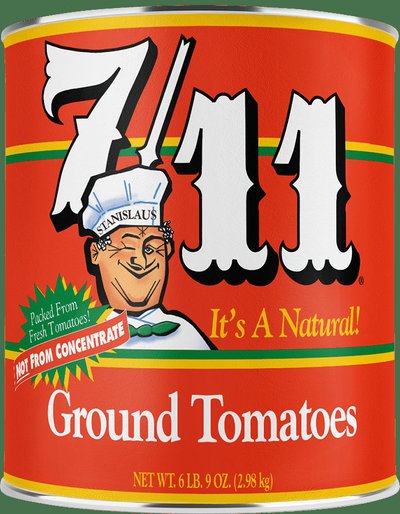
Stanislaus Food Products makes the canned tomatoes that appear at more serious American pizzerias than any other brand. Their 7/11 Ground Tomatoes (the name references a viscosity specification on the Bostwick consistometer, a standard processing-industry measurement) are primarily sold in food service quantities — the #10 can is about 6 pounds 9 ounces — which is why home cooks often haven’t heard of them. But they’re available online and worth seeking out.
Gemignani’s recommended brand list is explicit: Stanislaus 7/11 is his first-choice ground tomato for NY-style pizza. His NY-NJ sauce recipe specifies “7/11 or DiNapoli” ground tomatoes. This is a professional telling you what he uses in his competition pizzas.
What makes 7/11 distinctive: These are California-grown tomatoes ground with skins included. The skin layer carries a high concentration of aromatic volatile compounds — the flavor-forward element of the tomato. Grinding unpeeled retains that character. The texture is coarser and more rustic than smooth passata, with high pectin content that gives the sauce excellent body.
Ingredients: Vine-ripened fresh unpeeled California tomatoes, salt, naturally-derived citric acid. No calcium chloride, no added puree.
Best use: NY-style sauce (where body and intensity are wanted), sauce as one component in a larger build (mixed with tomato paste, as in Gemignani’s NY sauce formula). Less suited for classic Neapolitan margherita where a cleaner, hand-crushed whole tomato is the goal.
Availability: Restaurant supply (CHEF’STORE / US Foods, Restaurant Depot), Stanislaus online, some specialty retailers. The 6 lb 9 oz #10 is the smallest retail format; split a case with a pizza-obsessed friend. Check price on Amazon.
The honest con: Size and format. The #10 can is impractical for occasional home use. Portion and freeze the remainder — quart-sized bags frozen flat keep for 2-3 months without meaningful quality loss. If you make pizza weekly, you’ll work through a can in 2-3 sessions. If you make pizza once a month, Stanislaus is logistically awkward.
Cento Certified San Marzano: The Accessible Italian Option
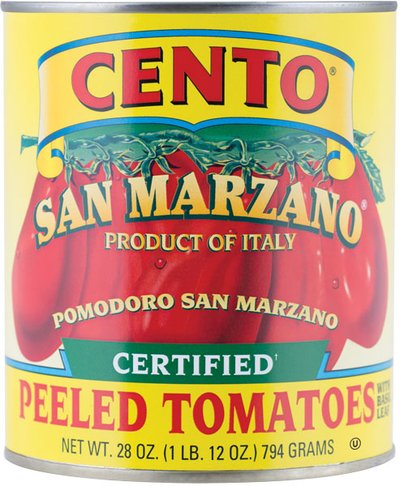
Cento is the Italian San Marzano brand most reliably found at American grocery stores — Kroger, Safeway, Publix, and most mainstream chains carry it. For home bakers who want Italian-grown San Marzano tomatoes without ordering online or finding a specialty retailer, Cento is the practical option.
An important label clarification: Cento is not a DOP product today. After a consumer lawsuit over DOP seal usage in 2019, Cento removed the Consorzio di Tutela del Pomodoro San Marzano DOP seal from its US labels. The product is now sold as “Cento Certified San Marzano” with Cento’s own independent third-party certification rather than the EU DOP consortium mark. The tomatoes are still grown in the Sarnese-Nocerino area; they are simply not legally DOP-certified in the same way that Gustarosso and La Valle are.
Ingredients: San Marzano whole peeled tomatoes, San Marzano puree, sea salt, basil leaf. No citric acid, no calcium chloride.
The taste profile: Mild sweetness, moderate acidity, firm flesh, relatively few seeds. The tomatoes are packed in a thicker San Marzano puree than Bianco DiNapoli’s light juice, which affects the mouth-feel of the finished sauce.
Best use: No-cook Neapolitan-style sauce, simple crushed tomato applications. Works in any style where a San Marzano-type tomato is appropriate and where you value grocery-store availability over terroir.
Availability: Widely available at mainstream grocery stores, Target, Whole Foods, and online. Check price on Amazon.
The honest con: The certification story means Cento no longer competes on the same terms as a true DOP product. Quality is also more variable year to year than the top-tier Italian cooperatives. For the same $5, you are getting a good tomato — not a great one.
Sclafani: The Northeast Traditional Standard (Read the Label)
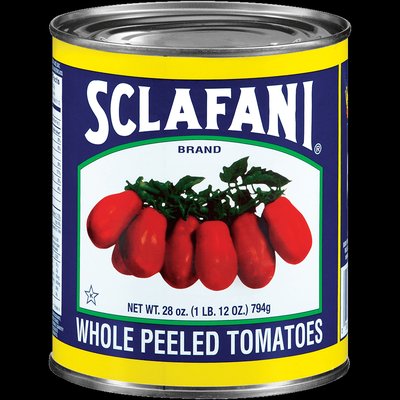
Sclafani has supplied the New York and New Jersey restaurant and home cooking market since 1911, when founder Gus Sclafani introduced the brand. The family’s US food business traces back to the late 1800s. For over a century Sclafani has been a default canned tomato at pizzerias and Italian-American home kitchens throughout the Northeast. The brand is now owned by Violet Foods LLC (divested from B&G Foods in 2025).
This is the one where you have to read the label. Sclafani sells two different whole-tomato products, and they are meaningfully different for pizza:
Standard Sclafani Whole Peeled Tomatoes: Ingredients are tomatoes, tomato juice, salt, calcium chloride, and citric acid. The calcium chloride is a firming agent — it keeps the tomatoes from collapsing — which on pasta sauce is a feature but on pizza reads as a slightly rubbery texture. The citric acid tips the overall acidity up in a direction that’s fine for cooked sauces but works against a raw Neapolitan application.
Sclafani Jersey Fresh Crushed Tomatoes: A separate product line made from vine-ripened New Jersey tomatoes (bearing the Jersey Fresh certification) with just a pinch of salt. No added puree, no citric acid, no calcium chloride. This is the version that delivers what people mean when they talk about Sclafani as a regional pizza brand.
The taste profile (Jersey Fresh line): Mild, balanced, clean. Not as intensely sweet as Bianco DiNapoli, not as aromatic as Stanislaus 7/11 — more neutral and versatile. The tomatoes hold their shape well, making them good for applications where you want texture rather than smooth puree.
Best use: Classic NJ tomato pie (the sauce-on-top-of-cheese style, often attributed to Trenton-area pizzerias), general NY-NJ style pizza, any sauce where you want the tomato to be a clean supporting flavor rather than the featured element.
Availability: Strong throughout New York, New Jersey, and surrounding states. Distributed nationally through some grocery chains and available online. Significantly less available west of the Mississippi. Check price on Amazon.
The honest con: The standard Sclafani line with calcium chloride is what most grocery stores stock. The Jersey Fresh line — which is the right version for pizza — is less widely distributed and requires a label check before buying.
Italian DOP Imports: Gustarosso and La Valle
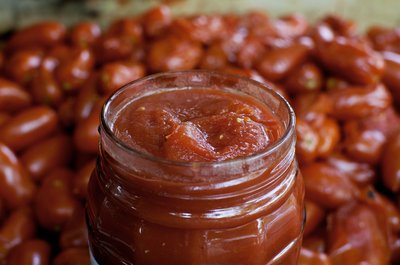
For home bakers who want the premium Italian DOP experience, Gustarosso and La Valle are the brands most consistently cited by pizza professionals and food writers who have done serious comparative tasting.
Gustarosso (DaniCoop cooperative): A cooperative of about 100 farmers in the Agro Sarnese Nocerino — the specific volcanic-soil region south of Naples where authentic San Marzano DOP tomatoes are grown. DaniCoop has been growing in this area since 1991 as a cooperative; the Ruggiero family at the center of the operation has been growing San Marzano tomatoes since 1910. Edoardo Ruggiero, president of both Gustarosso and the Consorzio DOP San Marzano, supervises the production. Low acidity, distinctive mineral-sweet character, firm flesh, no calcium chloride. Gustiamo, the premium Italian food importer, is the main US distributor.
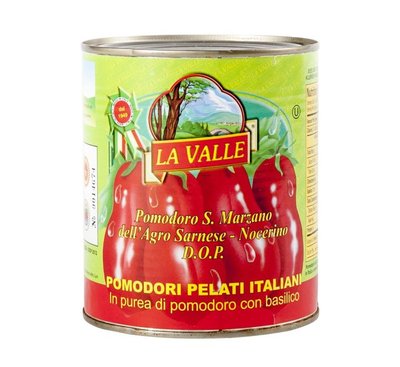
La Valle: Another respected DOP producer from the same Campania region. Packed in tomato puree with basil. Sweet, meaty, low acid. A tier below Gustarosso in terroir depth but noticeably ahead of Cento — and generally easier to find in specialty US retailers. Check price on Amazon.
Who these are for: Bakers who want the truest expression of the Neapolitan margherita tradition, or anyone for whom the sauce is the centerpiece of the pizza rather than a supporting element. For the minimalist two-ingredient sauce (tomatoes plus salt) that Gemignani uses for his competition Napoletana — the kind passed through a food mill until thin enough to see the dough through — premium Italian DOP makes the difference most noticeable. See san marzano vs crushed tomatoes for the underlying DOP criteria.
The honest con: Price and shipping. Gustarosso and La Valle both run $9-12 per 28 oz can retail, with Gustarosso often more expensive once shipping is factored in. For a daily-driver pizza household, this is a special-occasion tomato, not a weekly staple.
The “Rinse the Dark Juice” Technique
Gemignani’s rinse protocol deserves its own section because it changes every brand comparison. When you open a can and drain it in a colander, you’ll notice that the draining liquid varies substantially by brand — in color (bright red to dark reddish-brown), consistency (thin juice to thick puree), and quantity (some cans are tomato-dense; others are mostly liquid).
The dark juice is often tomato puree or concentrate added during canning to fill the can around the whole tomatoes — not the juice that came out of the tomatoes themselves. Rinsing it off before using the tomatoes gives you a clearer read on the fruit itself, both in raw tasting and in the finished sauce. Pizza makers who use this technique consistently report that the sauce tastes cleaner, less processed, and more purely of the tomato.
The technique: drain in a colander 10-15 minutes, then briefly rinse with cold water and drain again before crushing or pureeing. The tomato is already fully hydrated; a quick rinse removes surface packing liquid without washing away tomato solids. Gemignani applies this specifically to San Marzano tomatoes, but it’s useful for any whole-peeled canned tomato.
How to Sauce Your Pizza Without Overcooking It
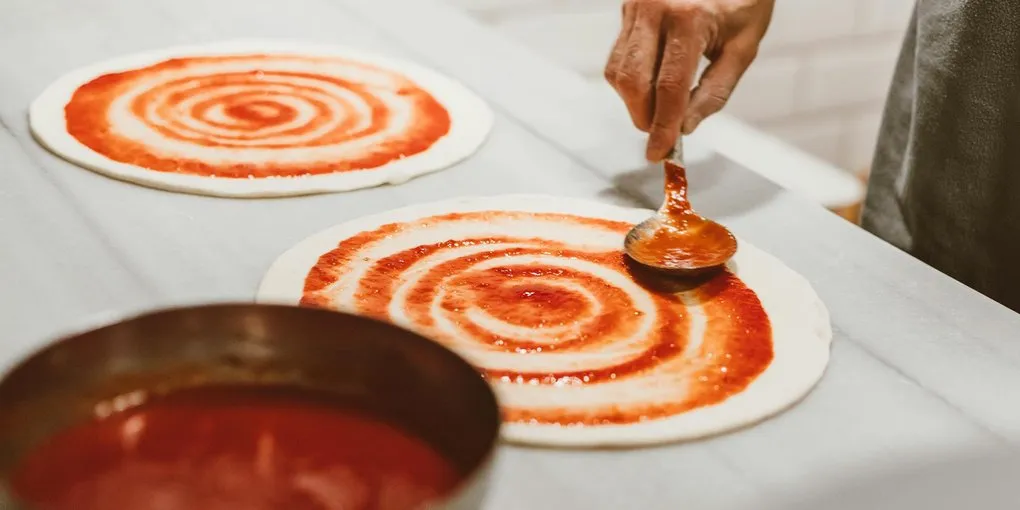
Never cook pizza sauce before putting it on the dough. The canned tomatoes have already been processed at high temperatures during canning, and they’ll cook again during the pizza bake. Simmering beforehand is a third cooking that drives off fresh tomato flavor and produces a flat, overcooked result. Forkish, Gemignani, and Iacopelli all agree on this — the cross-source consensus is unusually strong. Iacopelli’s NY-style sauce is hand-crushed canned tomatoes, salt, sugar, and EVOO, uncooked; Gemignani’s Napoletana is San Marzano passed through a food mill with salt, uncooked.
The exceptions in the serious pizza literature are Chicago deep-dish sauce (which benefits from a light simmer to thicken and concentrate) and Detroit-style sauce (warmed and ladled on top of the finished pizza after baking). For Neapolitan, NY, Roman, and most other styles, raw sauce is the professional standard.
For sauce methods and applications across styles, see how to make pizza sauce. For common misconceptions about no-cook sauce, see pizza myths debunked.
Brand Decision Framework
You want the best flavor money can buy and price isn’t the constraint: Bianco DiNapoli whole peeled for most styles, or Gustarosso DOP if you specifically want the volcanic-soil Campania character. Use for neapolitan pizza and classic Roman applications.
You make NY-style pizza with a sauce that uses ground tomatoes as a base: Stanislaus 7/11. Worth the effort to source; freeze portions from the large can. Pairs with Gemignani’s master dough recipe.
You want good quality at a mainstream grocery store price: Cento Certified San Marzano if you want an Italian tomato that’s reliably on the shelf; Sclafani Jersey Fresh (read the label) if you want a regional American heritage brand with no additives.
You’re in the Northeast and grew up with Italian-American pizza: Sclafani Jersey Fresh. It tastes right because it’s what those pizzerias used. Avoid the standard Sclafani line with calcium chloride for pizza specifically.
You want to stretch the budget: Do the Gemignani raw tasting test with two or three brands from whatever’s available at your store. Trust your palate. A fresh, sweet, low-acid tomato from any brand — crushed with salt — will make better pizza sauce than a mediocre Italian import you bought based on the label. Pair it with the right flour for pizza dough and you’ll outrun most pizzerias on cost per pizza.
Frequently Asked Questions
- Is Bianco DiNapoli actually better than San Marzano DOP for pizza?
- It depends on what you're measuring. Bianco DiNapoli consistently wins for sweetness, flesh density, and can-to-can consistency in blind tastings. Top Italian DOP brands (Gustarosso, La Valle) win for mineral complexity and the specific terroir character of Campanian volcanic-soil tomatoes. For most pizza applications — Neapolitan, Roman, NY style — Bianco DiNapoli is an excellent choice at a lower price and with better domestic availability than the best Italian DOP imports. Neither is objectively superior; they're different expressions of a good pizza tomato.
- Why does the canned tomato rinse technique work?
- Canning processors add tomato juice or puree to fill the can around the whole tomatoes, and this added liquid is often made from different-grade tomatoes — sometimes more acidic, sometimes more processed — than the tomatoes themselves. When you rinse, you remove this extraneous liquid and taste only the actual tomato. In practice, the sauce is less acidic, cleaner in flavor, and more tomato-forward. Gemignani recommends this specifically when evaluating San Marzano brands — it's a useful test for any whole-peeled canned tomato.
- Can I use Stanislaus 7/11 at home, or is it just for restaurants?
- You can, and if you make NY-style pizza with any frequency, it's worth sourcing. The main obstacle is the #10 can size (6 pounds 9 ounces, about 3 kg). Portion it into quart-sized bags and freeze flat — ground tomatoes freeze without quality loss for 2-3 months. Thaw overnight in the refrigerator before a pizza session. The cost per unit is also much lower than specialty retail brands — Stanislaus is a professional product priced for professional volume.
- Do all canned tomatoes labeled "San Marzano" come from the same region?
- No. "San Marzano" on a US label can mean the variety (San Marzano-type plum tomato, grown anywhere) or the certified DOP product (grown specifically in the Agro Sarnese-Nocerino area under EU certification). Only cans with the DOP seal and a traceable consortium certification number are legally the real thing. "San Marzano style" or "packed in the style of San Marzano" cans are simply plum tomatoes with no geographic guarantee. Cento is a particular case — the tomatoes are grown in the Sarnese-Nocerino area but the can no longer carries the Consorzio DOP seal, which Cento removed in 2019. For a genuine DOP product, look for Gustarosso, La Valle, or Strianese with the consortium seal and serial number.
- Should pizza sauce ever be cooked before putting it on the dough?
- Almost never. Canned tomatoes are already pressure-cooked during processing. They'll cook again on the pizza. A third cooking (simmering on the stove) drives off fresh tomato flavor and produces a flat, dull sauce. The two exceptions in the serious pizza literature: Chicago deep-dish sauce (which benefits from a light simmer to thicken and concentrate) and Detroit-style sauce (warmed and freshly pureed, ladled on top of the finished pizza after baking). For Neapolitan, NY, Roman, and most other styles, raw sauce is the professional standard.
- Does calcium chloride in canned tomatoes actually matter for pizza?
- Yes, noticeably. Calcium chloride is a firming agent that strengthens the cell walls of canned vegetables, which is why it's added to pickles and some canned tomatoes. In a pasta sauce simmered for an hour, the effect is mostly masked. In a raw pizza sauce that goes on the dough uncooked, calcium chloride produces a slightly rubbery texture and makes hand-crushing the tomatoes feel firmer and less yielding than it should. The top-tier pizza tomato brands (Bianco DiNapoli, Stanislaus, Gustarosso, La Valle, Cento) do not use calcium chloride. The standard Sclafani line does — which is why the Sclafani Jersey Fresh product is the better choice for pizza despite the standard line being more widely distributed.
Some links above are affiliate links. We earn a commission at no cost to you.