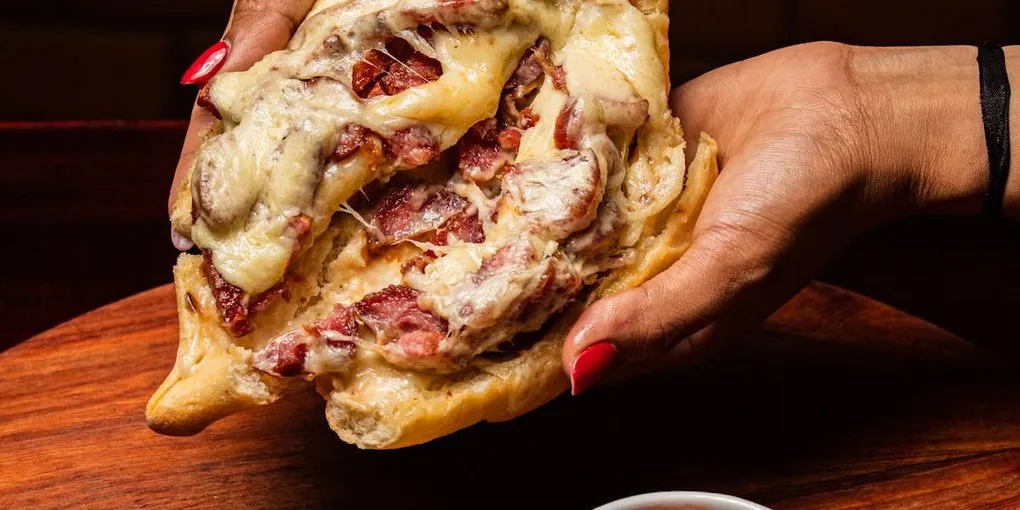
Calzones and stromboli use the same dough, the same fillings, and bake at the same temperature. But they are constructed in fundamentally different ways, and that changes everything about how the filling cooks, how the crust behaves, and how you eat the finished product. A calzone is folded. A stromboli is rolled. That single difference in technique creates two completely different eating experiences from identical raw materials.
Understanding the construction matters more than memorizing the definitions. Once you know why each shape works the way it does, you can fill them with whatever you want and get consistent results every time.
The Calzone: A Sealed Steam Chamber
The calzone originated in Naples, and the name translates literally to “trouser leg” or “stocking” — a reference to the half-moon shape. The original purpose was practical: a portable pizza you could eat while walking, with all the toppings sealed inside.
How It’s Built
Start with an 8oz ball of pizza dough at room temperature (60-65F minimum — cold dough creates problems). Roll it out to a 10-inch round. Place your fillings on one half of the circle only, leaving about a 1-inch border along the edge. Fold the empty half over the filled half to create the half-moon shape, then seal the edge by pressing with fork tines or crimping with the side of a knife.
That’s the entire construction. It’s simple, but there’s a critical principle at work: the calzone is a sealed pocket, and that changes the baking physics.
The Steam Problem
When a calzone bakes, the moisture in the fillings (especially ricotta) converts to steam. Because the pocket is sealed, that steam has nowhere to go. It builds pressure inside the calzone, puffing the top crust upward and cooking the fillings from within — essentially steaming them while the exterior crust bakes dry.
This is why you never overstuff a calzone. More filling means more moisture, which means more steam, which means more pressure. An overstuffed calzone will blow out at the seal — the weakest structural point — and dump its contents onto your baking surface. The half-and-half fill rule (fillings on one half, nothing on the other) keeps the ratio right.
Cut a small vent or two in the top to let some steam escape during baking. This prevents catastrophic blowouts while still keeping enough pressure to puff the crust.
Calzones bake fast: 8-10 minutes at 500F. The sealed environment cooks the fillings quickly, and the relatively thin dough (a single layer on top and bottom) doesn’t need long to crisp.
Classic Fillings
Traditional calzone fillings revolve around ricotta as the base:
- Ricotta + mozzarella + ham or salami
- Ricotta + Italian sausage + roasted peppers
The ricotta serves a structural purpose. It’s wet enough to generate steam for cooking but thick enough to stay in place rather than pooling at the bottom. Mozzarella alone tends to puddle and create uneven hot spots. The ricotta distributes moisture and heat more evenly.
Sauce goes on the side for dipping — not inside. Marinara inside a calzone adds too much liquid, which creates excess steam and a soggy bottom crust.
Stromboli: A Rolled Spiral
The stromboli’s origins are murkier and more contested than the calzone’s. The most common story traces it to Philadelphia in the 1950s, supposedly named after the 1950 Roberto Rossellini film Stromboli. Some Italian-American sources claim it developed independently in multiple East Coast pizzerias. Either way, it’s an Italian-American creation, not a direct import from Italy.
Gemignani calls his version “Pepperoli” — a portmanteau that hints at the classic filling.
How It’s Built
Start with the same 8oz dough ball at room temperature. But instead of a round, roll it out to a 10-inch by 12.5-inch rectangle. The rectangular shape is the key to everything that follows.
Spread your fillings across the entire surface, leaving a 1-inch border on all sides. Then roll the dough like a jelly roll — tight, starting from one of the long edges, rolling toward the other. The filling ends up in a spiral pattern throughout the interior.
Seal the ends gift-wrap style: fold the excess dough inward, then tuck it under the roll. This prevents the filling from leaking out the sides during baking.
Here’s the technique that separates a good stromboli from a dried-out one: brush the entire exterior with olive oil before it goes in the oven. The oil serves two purposes. First, it promotes even browning across the surface. Second — and more importantly — it prevents the crust from shattering. A stromboli has multiple layers of dough spiraling through the interior, and without surface moisture, the outer crust bakes out too aggressively and cracks apart when you slice it. The olive oil keeps the exterior pliable enough to cut cleanly.
Stromboli bakes longer than calzone: 14 minutes at 500F. The rolled construction means the dough is thicker overall (multiple spiral layers), so it needs more time to cook through to the center.
Classic Fillings
Stromboli leans toward deli meats and firmer cheeses:
- Pepperoni + mozzarella, with marinara on the side for dipping
- Capicola + provolone + roasted red peppers
- Ham + salami + mozzarella + provolone
Because the filling is spread across the full surface and then rolled, stromboli can handle drier fillings than calzone. There’s no sealed steam chamber — the spiral layers allow some moisture to escape through the ends and through the dough layers themselves. This means you can use ingredients that would make a calzone too wet, and you can skip the ricotta base that calzone relies on.
Side-by-Side Comparison
The biggest practical difference: when you slice a calzone in half, you see a single filled chamber. When you slice a stromboli, you see concentric rings of dough and filling — a spiral cross-section. This changes the ratio of dough to filling in every bite. Calzone gives you big pockets of filling between two layers of crust. Stromboli gives you thinner layers of filling distributed evenly through multiple layers of dough.
The Recipes
Both recipes use the same pizza dough. Make your dough ahead of time using whatever schedule you prefer — overnight or same-day both work. Bring the dough ball to room temperature before shaping.
Classic Calzone
Dough: 1 ball (8oz) pizza dough, room temperature (60-65F minimum)
Filling:
- 1/2 cup ricotta
- 1/2 cup shredded mozzarella
- 3-4 slices salami or deli ham, chopped
- Pinch of dried oregano
- Salt and pepper to taste
Method:
- Preheat oven to 500F with a baking steel or stone on the middle rack.
- On a floured surface, roll the dough ball to a 10-inch round.
- Mix the ricotta, mozzarella, meat, oregano, salt, and pepper in a bowl.
- Spread the filling over one half of the round, leaving a 1-inch border.
- Fold the empty half over the filled half.
- Seal the edge by pressing firmly with fork tines every half inch.
- Cut 2-3 small steam vents in the top with a sharp knife.
- Transfer to a parchment-lined peel or baking sheet.
- Bake 8-10 minutes until the crust is golden brown and puffed.
- Rest 3-5 minutes before cutting (the interior is extremely hot).
Serve with warm marinara on the side.
Classic Stromboli (Pepperoli)
Dough: 1 ball (8oz) pizza dough, room temperature (60-65F minimum)
Filling:
- 15-20 slices pepperoni
- 1 cup shredded mozzarella
- 1 tablespoon olive oil (for brushing)
Method:
- Preheat oven to 500F with a baking steel or stone on the middle rack.
- On a floured surface, roll the dough ball to a 10-inch by 12.5-inch rectangle.
- Lay pepperoni slices across the surface in an even layer, leaving a 1-inch border on all sides.
- Distribute mozzarella evenly over the pepperoni.
- Starting from one long edge, roll the dough tightly like a jelly roll. Keep it snug — loose rolls create air gaps that expand during baking.
- Seal the ends gift-wrap style: fold the excess dough inward, then tuck it under the roll.
- Place seam-side down on a parchment-lined baking sheet.
- Brush the entire exterior with olive oil.
- Bake 14 minutes until golden brown and firm.
- Rest 5 minutes, then slice into 1.5-inch rounds.
Serve with warm marinara for dipping.
Common Mistakes
Overstuffing
The number one failure mode for both, but especially calzones. More filling feels generous, but it means more moisture, more steam, and a seal under more pressure. The calzone blows out. The stromboli leaks from the ends. Stick to the amounts above — they fill the space without overloading it.
Cold Dough
Dough below 60F is stiff, hard to stretch and roll, and creates large bubbles in the first 2-3 minutes of baking. Those bubbles in a calzone create thin spots that blow out. In a stromboli, they create gaps between the spiral layers. Always temper your dough to room temperature before shaping.
Not Sealing Properly
A calzone with a weak seal opens during baking. Press those fork tines firmly and make sure you’re sealing dough to dough, not dough to filling. If filling gets into the seal area, the dough won’t bond and the edge will separate. Keep that 1-inch border clean.
For stromboli, the gift-wrap seal at the ends is the vulnerable point. Fold the dough in, then tuck it under the body of the roll. Gravity and the weight of the stromboli holds it closed if it’s seam-side down.
Skipping the Olive Oil on Stromboli
The exterior of a stromboli dries out faster than a calzone because there’s more exposed surface area relative to the interior moisture. Without the olive oil brush, the crust bakes too hard and shatters when you try to slice it. This step takes ten seconds and makes the difference between clean slices and a crumbled mess.
Sauce Inside
Neither calzones nor stromboli should have marinara inside. Sauce adds too much liquid, creates a soggy bottom, and in the case of calzones, dramatically increases steam pressure. Sauce goes on the side. Always.
Not Pre-Cooking Wet Fillings
Raw vegetables release water when they cook. Spinach, mushrooms, and peppers should be sauteed and drained before they go into either a calzone or stromboli. Raw spinach in a calzone is a recipe for a wet, collapsed mess.
Bonus: The Bow Tie (Gemignani Variant)
Gemignani includes a decorative variant called the Bow Tie — a two-section calzone joined at the center. The shape lets you put two different fillings side by side: one half meat, one half veggie. Same dough, same calzone technique, but shaped into two connected lobes pinched together at the middle.
It’s a party trick more than a fundamental technique, but it’s a clever solution if you’re serving a mixed group and want variety without making two separate items. The construction is identical to a standard calzone — fold, seal, bake at 500F — but the decorative shape adds a visual element that regular round pizzas don’t have.
Which One Should You Make?
If your fillings are ricotta-based and moist, make a calzone. The sealed pocket steams the filling and keeps everything contained. If your fillings are deli meats and shredded cheese — drier ingredients that benefit from the layered spiral — make a stromboli. Both use the same dough, both bake at 500F, and both taste best with a bowl of warm marinara on the side.
Sources: Gemignani, The Pizza Bible (2014) — Master Dough, Calzone, Pepperoli, and Bow Tie recipes.
Frequently Asked Questions
- Which is better, calzone or stromboli?
- Neither is objectively better -- they suit different fillings and preferences. Calzones work best with ricotta-based, moist fillings because the sealed half-moon pocket steams the interior during baking. Stromboli works best with deli meats and firmer cheeses because the rolled spiral structure distributes drier fillings evenly through multiple dough layers.
- Can you use regular pizza dough for both calzones and stromboli?
- Yes. Both use the exact same dough -- an 8oz ball for each. Any pizza dough that you'd use for a regular pie works for both. The only requirement is that the dough be at room temperature (60-65F minimum) before you shape it. Cold dough is stiff, tears easily, and creates large bubbles during the first few minutes of baking.
- Does a calzone have sauce inside?
- No. Traditional calzones do not have marinara inside. The filling is typically ricotta, mozzarella, and meat or vegetables -- no sauce. Marinara is served on the side for dipping. Adding sauce inside introduces too much liquid, which creates excess steam and increases the risk of the calzone blowing out at the seal.
- Why did my calzone explode in the oven?
- Almost certainly overstuffing. When a calzone bakes, the moisture in the fillings converts to steam inside the sealed pocket. More filling means more steam, more internal pressure. If the pressure exceeds what the sealed edge can hold, the calzone blows out. The fix: fill only half the dough round, keep a clean 1-inch border for sealing, press fork tines firmly, and cut 2-3 small steam vents in the top.
- Can you freeze calzones and stromboli?
- Yes, both freeze well. For calzones, assemble and seal them fully, then freeze on a parchment-lined sheet until solid before transferring to a freezer bag. Bake from frozen at 500F, adding 3-5 extra minutes. For stromboli, wrap tightly in plastic wrap before freezing. Thaw overnight in the refrigerator or bake from frozen at 475F for 18-20 minutes.
- What's the difference between stromboli and a wrap?
- A wrap is an uncooked tortilla or flatbread rolled around fillings and eaten cold or briefly heated. A stromboli is pizza dough rolled around fillings and baked at 500F for 14 minutes -- the dough fully bakes, developing a crisp exterior and soft interior layers. The filling cooks and melds together during baking, and the cheese melts into the spiral layers.
- Is a calzone just a folded pizza?
- Structurally, yes -- it is pizza dough folded over pizza-style fillings. But the sealed construction changes the cooking physics. A pizza bakes open-faced so toppings caramelize and brown. A calzone bakes sealed so fillings steam in their own moisture. The crust is crisp outside but softer where it contacts the steamed filling. Same ingredients, different technique, different result.