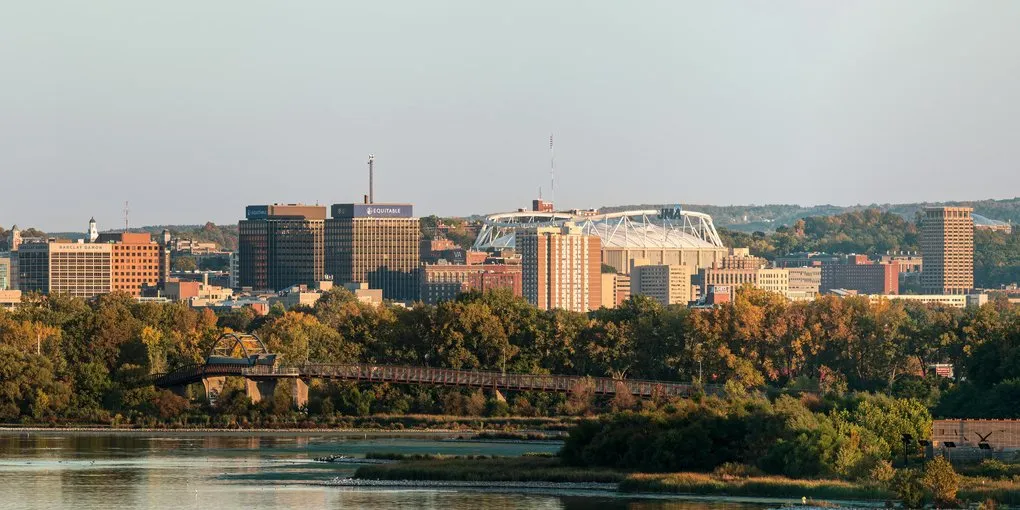
Most national pizza writing skips Syracuse. Not because there’s nothing here — there’s plenty — but because Central New York sits in an awkward geographic gap. Drive about 60 minutes east on the Thruway and you hit Utica, where O’Scugnizzo Pizzeria has been making its sauce-on-top upside-down pizza since 1914 and the related tomato-pie tradition has its own regional identity. Drive about 90 minutes west and you reach Rochester, with Pontillo’s, Salvatore’s, and a pizza culture that radiates outward into the Finger Lakes. Syracuse sits in between, and the pizza here is harder to put a single label on.
That ambiguity is part of the story. The pizza you eat in Syracuse is recognizably part of the upstate New York continuum, but it doesn’t have a flag-planting style of its own. What it has instead is a dense, durable, multi-generational pizzeria culture — family-run shops that opened in the 1950s, 60s, and 70s and are still being run by the same families. And those pizzerias exist inside a broader CNY food scene that’s worth a guide of its own: a 1988 BBQ joint that became a national chain, a 1917 hot dog stand, a downtown pasta institution, and a Westcott Street Mexican place whose catfish burrito is the best argument for Tex-Mex experimentation in any 200-mile radius.
This guide is for two readers. The visitor flying into Hancock for a Syracuse University football weekend who wants to know what to eat besides hotel-bar wings. And the local who’s been eating at the same three places for ten years and wants to know what they’ve been missing. We’ll start with pizza, because that’s why this site exists — but the pizza only makes sense when you understand the food culture it’s embedded in.
The Syracuse Pizza Style: A Question, Not an Answer
Ask ten people in Syracuse what defines Syracuse pizza and you’ll get ten different answers, and most of them will start by talking about somewhere else. “It’s like a thinner Utica tomato pie.” “It’s basically NY-style, just smaller markets.” “It’s whatever your family’s pizzeria did.” None of them are wrong.
Pizza is regional by nature. The cities that get to claim a “style” — New York, New Haven, Detroit, Chicago, Trenton’s tomato pie, St. Louis — earned it through a combination of immigration history, oven technology, and a critical mass of pizzerias doing recognizably similar things at the same time. Syracuse never quite hit that critical mass. The Italian immigration into Central New York in the late 19th and early 20th century was real — Syracuse’s North Side and Westside still carry the imprint — but it was also smaller and more diffuse than what Naples-to-New-York-to-New-Haven produced. The pizzeria culture that emerged here borrowed from the regions on either side and adapted to local tastes.
What you actually find in Syracuse pizzerias today, broadly:
- Hand-tossed, NY-leaning round pies at most independent shops — 14 to 18 inches, high-gluten bread flour, a moderate cornicione, foldable but not floppy. This is the dominant idiom. It’s what Pavone’s, Twin Trees, Mario and Salvo’s, and most neighborhood pizzerias make.
- Sicilian and “Grandpa” sheet-pan slices as a staple secondary option — thicker, sometimes upside-down with cheese under sauce, sometimes cup-and-char pepperoni on top.
- Modern wood-fired Neapolitan-inspired pizza at Apizza Regionale downtown and Toss & Fire’s North Syracuse/Camillus/food-truck orbit. Apizza is the polished sit-down reference; Toss & Fire is the CNY wood-fired-casual counterpart.
- Old-world Italian-American conventions on the topping side — generous cheese, sausage made in-house at a few shops, pepperoni that often uses thicker-cut natural-casing rounds for the cup-and-char effect.
The closest thing to a “Syracuse style” is therefore not really a style at all. It’s a posture: the round pie is hand-tossed, the toppings are generous, the sausage is house-made if you’re at a serious shop, and the slice is comfort food, not performance art. There’s none of the dough-as-craft-fetishism that defines the New York City modern Neapolitan scene, and none of the strict regional codification you find in New Haven. It’s pizza that exists to be eaten on a Friday night with the family and brought home in a stack of boxes.
To understand where that posture comes from, the two reference points east and west matter.
Utica Tomato Pie and Upside-Down Pizza — 60 Minutes East
Utica’s pizza identity has two overlapping but distinct reference points: O’Scugnizzo’s upside-down pizza and bakery-style tomato pie. O’Scugnizzo opened in 1914, making it one of America’s oldest pizzerias and a frequent “second or third oldest” citation depending on whether the list counts Papa’s Tomato Pies in New Jersey ahead of it. Eugenio Burlino emigrated from Naples, and the family story has Maria Burlino making simple tomato-and-cheese pies that he sold at church feasts before the shop opened.
What’s distinctive: O’Scugnizzo’s signature pizza is upside-down — cheese and toppings first, sauce layered on last. The broader Utica tomato-pie tradition is often rectangular, sauce-forward, thicker than NY-style, closer to a sheet-pan focaccia in cross-section, and finished with grated Romano. Tomato pie is often eaten at room temperature, which is part of the point: the style survives takeaway and still reads as tomato-first after it cools.
If you’ve eaten a square slice in Syracuse with sauce riding high or applied after the cheese, you’ve eaten something that feels adjacent to the Utica family of sauce-on-top pizzas, even when it is not a direct descendant. The Sicilian-style sheet-pan slices at many Syracuse pizzerias also share genetic material with Utica tomato pie — it’s the closest regional cousin, and the influence travels west on the Thruway in both directions.
Rochester — 90 Minutes West
Rochester’s pizza scene is louder than Syracuse’s but doesn’t have a single named style either. Pontillo’s, founded in Batavia in 1947, is one of the influential Western New York names. Salvatore’s is the bigger contemporary Rochester brand. Cam’s Pizzeria built a regional counter-service chain on classic NY-style hand-tossed pies. The Rochester pizza idiom is closer to a slightly thicker, slightly cheesier NY-style, often paired with the city’s wider food culture (the Garbage Plate, white hots, the whole Empire State west-of-Syracuse identity).
Syracuse sits between these two poles and pulls from both. The hand-tossed NY-leaning round at Pavone’s or Twin Trees is closer to Rochester. The Sicilian-style square slices on the same menus carry the Utica influence. Most Syracuse pizzerias do both well. None do either as a dogma.
For the broader US context, the bar pizza traditions of New England and the Detroit-style sheet-pan tradition both belong to the same family of regional Italian-American adaptations — Syracuse’s pizzerias are part of that wider story, just less branded.
Syracuse Pizza: The Canonical Stops
These are the Syracuse-area pizzerias worth a deliberate stop. Each is currently operating, family-rooted, and will give you a real answer to the “what’s pizza like here” question.
Pavone’s Pizza & Eatery
The Pavone family came from Linguaglossa, Sicily in the late 1950s and brought their recipes to Central New York in 1971. Five-plus decades later, Pavone’s lists locations on South Warren Street downtown, Butternut Street on the North Side, Bridge Street in East Syracuse, and County Route 37 in Central Square. The downtown Warren Street location is the most accessible if you’re staying in or near Armory Square; the Butternut location is the more old-school neighborhood experience.
What to order: a classic plain cheese slice to gauge the foundation. Pavone’s sauce is moderately sweet, the low-moisture mozzarella hits the right melt-and-brown ratio, and the cornicione is workmanlike rather than dramatic. If you’re getting a whole pie, the sausage and pepperoni combo is the move — the sausage carries fennel, and the pepperoni leans toward the cup-and-char end of the spectrum. Pavone’s also got a pretty serious One Bite review from Portnoy a few years back, which is its own kind of upstate badge.
The Original Twin Trees — Avery Avenue
The Original Twin Trees opened in 1957 when brothers Don “Ross” Rescignano and Joe Rescignano bought a tiny pizzeria on Avery Avenue. Sixty-plus years later, the Twin Trees branches are individually owned and operated but still family-rooted. The original is at 1100 Avery Ave, deep on the Westside near Tipperary Hill, and it’s the place that actual Syracusans bring people who say “show me Syracuse pizza.”
Twin Trees has multiplied — Twin Trees Too, Twin Trees III in North Syracuse, Twin Trees West in Baldwinsville, Twin Trees in East Syracuse — but the Avery Avenue original is the canonical experience. It’s a sit-down Italian-American restaurant first and a pizza joint second, which means you can do this as a real meal rather than a counter slice. The pizza is in the broader hand-tossed NY-leaning idiom but cooked a little crispier and a little thinner than what you’d get at a New York City slice shop. Order a large pepperoni and a side of pasta and observe how the rest of the room knows exactly what they’re doing.
Apizza Regionale — West Genesee
Apizza Regionale is the outlier in this list, and that’s why it matters. This is Syracuse’s most polished sit-down expression of modern wood-fired Neapolitan-leaning pizza, even though Toss & Fire also works the wood-fired lane elsewhere in the metro. The address is 260 W Genesee Street, downtown-adjacent, and the operation has been there long enough to be a fixture rather than a novelty.
The wood-fired oven runs hot, the pies bake quickly, and the cornicione has the puffy, leoparded character you’d expect from a serious wood-fired program. They’re not chasing AVPN certification — the menu has plenty of non-Neapolitan stuff, including pasta and sandwiches — but the basic Margherita and Marinara pies will give you the Naples-meets-New-York reference point that most Syracuse slice shops do not offer.
If you’re a pizza-curious traveler comparing Syracuse to other regional scenes, this is the obligatory comparison stop — and the proof that the modern Neapolitan revival has reached Central New York, just in one address rather than a movement.
Mario & Salvo’s — East Genesee
Mario & Salvo’s has been operating at 4326 East Genesee Street since 1992, and it’s the one most Syracuse residents will name when pressed for “the best NY-style slice in town.” The pies are old-school in the best sense: balanced sauce, herbs that show up but don’t dominate, cheese that browns without burning, a crust that holds its slice integrity through a proper fold test.
Get a plain or pepperoni slice from the case at lunch. The DeWitt-area location means it’s easy to combine with anything happening on the East side of town.
Di Lauro’s Bakery & Pizza — Northside
Di Lauro’s is the bakery-pizzeria hybrid the North Side has had since the early 1900s. The current operation at 502 East Division Street describes itself as more than a century old, with brick ovens that have supplied Syracuse Italian bread for 105-plus years. The Italian breads, biscotti, and Di Luna sandwiches are arguably the headline — Di Lauro’s is a full bakery first — but the pizza by the slice and the calzones are the reason locals make the drive.
This is morning-and-afternoon pizza, not late-night pizza. The bakery hours dictate the pizza hours. Plan accordingly: a sausage slice and a Di Luna for lunch, plus a loaf of crusty Italian bread and a few biscotti for the road.
Original Italian Pizza (OIP) — Eastwood
OIP at 3509 James Street in Eastwood Plaza is one of the local cup-and-char destinations. The current OIP menu specifically calls out cup-and-char pepperoni on specialty pies, and the effect is the whole reason to order it: the pepperoni cups up against the heat of the oven, fills with rendered fat, crisps at the edges, and ends up doing what cup-and-char pepperoni does best — concentrating flavor in dozens of tiny cups across the slice surface.
OIP also runs char-grilled wings as a parallel specialty, which is how a lot of CNY pizzerias position themselves — the pizza-and-wings combo is a regional category in itself.
Honorable Mentions
A few more names that come up consistently in 2025-2026 Syracuse pizza conversations and are confirmed currently operating:
- Paladino’s Pizza — Mattydale, in Northern Lights plaza since 1980. Forty-five years of consistent neighborhood operation.
- Napoli Pizzeria — a newer North Syracuse shop at Taft and Buckley, useful for a quick NY-style lunch rather than a destination dinner.
- Toss & Fire — Neapolitan-inspired wood-fired pizza with locations in North Syracuse, Camillus, and the Harvey’s Garden food-hall orbit, plus CNY food-truck/event service.
- Nick’s Pizza — 6380 Thompson Road, East Syracuse. Locally praised for sausage pizza specifically — a slightly sweet sauce paired with a fennel-forward house sausage.
- Pizza Boys — a Utica-area chain (Utica, New York Mills, Whitesboro, Yorkville, New Hartford) rather than a Syracuse one, but worth knowing if your CNY trip stretches east. It’s the closest you’ll get to actual Utica-style without a full pilgrimage to O’Scugnizzo.
Beyond Pizza: The Broader Syracuse Food Scene
This is where the article earns its breadth. Syracuse’s pizza is good but not isolated — it exists inside a food culture that punches above its weight for a city of 145,000. If you’re spending more than a single meal in CNY, here’s the rest of the map worth knowing.
BBQ and Wings: Dinosaur, Heid’s, and the CNY Hot Dog
Dinosaur Bar-B-Que is the Syracuse food story that achieved national distribution. It opened on October 11, 1988 as a single-room, cafeteria-style biker bar with a smoker out back. John Stage, the co-founder, was selling barbecue at motorcycle rallies before he had a building. Thirty-seven years later, Dinosaur’s New York footprint includes Rochester, Harlem, Troy, Hamburg, and — for now — Brooklyn, whose Gowanus location has announced a spring 2026 closure. The original at 246 West Willow Street in Syracuse is still the destination version. The ribs are the headline, the brisket is honest, and the Dino’s Mutha Sauce is a real thing that locals stock at home.
If you’re ordering for a table: half rack of ribs, brisket, and a pulled pork sandwich split three ways, plus mac and cheese, collards, and the cornbread. The dining room is loud, the bar is good, and the line on a Saturday night is long enough that an early-evening arrival pays off.
Heid’s of Liverpool is the other side of CNY meat culture: Hofmann franks and coneys at 305 Oswego Street in Liverpool, continuously since 1917. Heid’s doesn’t make pizza — it’s a hot dog institution and we’re not going to pretend otherwise — but no Syracuse food guide is complete without it. The Hofmann frank is a regional product, snappy-cased, made in Syracuse for over a century, and Heid’s is the canonical place to eat one. They’ve added Heid’s Sweet Treats next door, on the lot where a four-lane bowling alley used to sit. Hot dog, fries, ice cream cone after. That’s the order.
Italian Beyond Pizza: Pastabilities, Armory Square
Pastabilities is the downtown Syracuse pasta institution. Located in historic Armory Square, it’s been an anchor of that neighborhood for decades and remains popular as ever. The hot tomato oil bread that arrives at every table is the calling card — bread, butter, and a dish of warm tomato oil with garlic and pepper that ends up requiring a second order of bread halfway through the meal. The hand-cut pasta is the headline. The dining room turns over reservations briskly, and the patio space converts parking spots into outdoor seating in the summer.
For a Syracuse weekend trip, Pastabilities is the obligatory pasta dinner the same way Apizza Regionale is the obligatory wood-fired pizza stop. Reservations are not optional on weekend nights — the waitlist opens daily at 4 PM.
Burgers: The Liverpool Corridor
The Liverpool and Old Liverpool Road corridor just north of Syracuse has quietly become a local burger destination. The address at 920 Old Liverpool Road has hosted multiple burger operations over the past decade or so — the location is physically suited for a burger-and-fries operation and the tenants have come and gone — and is currently home to Better Burger, a smashburger and hot chicken operation that’s open seven days a week. Fresh-ground beef, hand-cut fries, milkshakes, the whole format. If you’re driving through the north side of the metro and want a non-pizza, non-BBQ option, this is the move.
Get Smashed (3600 Court Street, inside On The Fly) is the parallel Syracuse smashburger operation that’s been picking up “Best Burger” mentions in 2025. The smashburger trend has settled in CNY the way it has in most American food cities, which means you can now get a thin-patty, lacy-edged smashburger almost anywhere in the metro.
Mexican: The Westcott Catfish Burrito and Tipp Hill
Alto Cinco at 526 Westcott Street has been serving fresh-ingredient Mexican food in Syracuse’s Westcott neighborhood since 1995. The catfish burrito is the dish that locals send visitors after. The exact build has shifted over time, but the core is the same: fried catfish, rice, cabbage, salsa, and chipotle mayo wrapped into the kind of burrito that justifies the trip even if you weren’t planning to eat in Westcott.
Alto Cinco runs a full Mexican menu — vegetarian and vegan options, gluten-aware choices, and a respectable margarita program — but the catfish burrito is the artifact. Order it once.
The other Mexican stop worth knowing is Steve’s Cantina and Grill at 401 Milton Avenue, on Tipperary Hill. The setup is unusual: it’s a small neighborhood Irish bar with what’s effectively a hidden Mexican restaurant in the back. Tipperary Hill, the Far Westside neighborhood famous for its upside-down traffic light (green over red, the result of a long-running Irish-American protest against a 1925 traffic-control decision), is one of the more distinctive walking neighborhoods in Syracuse, and Steve’s is the local-for-locals dinner spot. Hours are limited — check before you go. The smothered burrito and the homemade salsa are the orders.
Asian: Downtown Tea, Marshall Street, Erie Boulevard
The downtown Syracuse tea-and-bubble-tea scene relocated and rebooted recently. Tea House by Cake Bar, which opened December 12, 2025 at 108 East Washington Street in the historic White Memorial Building, is the current downtown destination for serious tea, bubble tea, and Vietnamese-inspired cafe culture. The address is the same one that previous tea operations occupied for over twenty years — the second-floor space has been a downtown loose-leaf-tea fixture across multiple generations of owners, and the 2025 reopening from Duyên Nguyễn (who immigrated from Vietnam in 2012 and worked in this exact space before opening her own) is a thoughtful continuation. The Vietnamese cafe goods, daily High Tea service, and quiet third-space atmosphere have made it an immediate downtown anchor.
For Chinese food in Syracuse, the contemporary go-to options spread across multiple neighborhoods rather than concentrating in any single Chinatown-style strip. Red Chili on Erie Boulevard East specializes in Sichuan and is the place locals send the spice-hunters. Chang Jiang on Buckley Road in the northern suburbs runs the more traditional Chinese-American playbook. Su Su Dim Sum at 549 East Brighton Avenue is the dedicated dim sum and noodle stop, with bao, dumplings, shumai, noodle soups, and house-made tofu rather than cart service. Marshall Street, the strip closest to Syracuse University that has historically hosted a rotating cast of Chinese restaurants, continues to turn over — worth a wander if you’re in the SU campus area, but I’d point a one-meal visitor at Red Chili.
Beer: Middle Ages Brewing
Syracuse’s craft beer scene took some hits in the late 2010s and reorganized around survivors and new entrants. Middle Ages Brewing Company at 120 Wilkinson Street has been producing British-inspired ales since 1995, making it the oldest brewery in Syracuse. The taproom is open seven days a week, the event calendar regularly includes music and other programming, and the beer itself — particularly the cask-ale lineage, which is not a thing many American breweries take seriously — is worth the visit on its own. Wagon Tracks, Druid Fluid, and the various dragon-themed brews have been Syracuse staples for thirty years.
For a casual sit-down meal with a beer focus, CopperTop Tavern is the family-owned regional chain with locations in DeWitt, North Syracuse/Cicero, Camillus, Vestal, and Binghamton University. It’s been family-owned since the original 2007 opening and runs a serviceable mid-priced American menu with the kind of casual-dining-with-craft-beer-on-tap format that fills a specific niche between fine dining and strip-mall chain.
How to Eat Your Way Through Syracuse in a Weekend
If you’re in town for a Syracuse University football weekend, a Hancock Airport layover, or a weekend trip from Buffalo, Rochester, or downstate, here’s the 48-hour itinerary that hits one stop in each category.
Friday night arrival: Dinner at Pastabilities in Armory Square. Walk it off through downtown Syracuse afterward — the Salt City Market, the Erie Canal Museum, the historic warehouse architecture. Drinks at Kitty Hoynes Pub a block over if you’re still going.
Saturday lunch: Pizza by the slice at Pavone’s downtown (S. Warren Street) or, if you’re already on the east side of town, Mario and Salvo’s on East Genesee. This is the Syracuse pizza acclimation meal — order plain, observe the local cheese-to-sauce ratio, then add a sausage slice or a Sicilian for the comparison.
Saturday dinner: Dinosaur Bar-B-Que at 246 West Willow. Get there before 7 or after 8:30 to dodge the worst of the wait. Order generously and split everything.
Saturday late night or Sunday brunch: Bar at Middle Ages Brewing for a flight, or breakfast pastries and coffee at Tea House by Cake Bar downtown.
Sunday lunch: Catfish burrito at Alto Cinco on Westcott. Wander the Westcott neighborhood afterward — the bookstore, the coffee shop, the residential blocks of Victorian houses south of Euclid.
Sunday afternoon out: Heid’s of Liverpool for a Hofmann frank and a sweet treat on the drive out toward I-90, particularly if you’re heading west.
That’s six stops in two days, hitting pizza, pasta, BBQ, beer, Mexican, and the regional hot dog — a fair representation of what Syracuse food culture actually does well. None of these are tourist traps. They’re real local institutions that you’d be eating at if you lived here.
If you’re stretching the trip to a third day, the Apizza Regionale wood-fired Neapolitan dinner is the obvious add. If you’re driving in from the east on the Thruway, build a 60-minute eastward detour to O’Scugnizzo in Utica for the upside-down pizza reference point, then compare it with one of Utica’s room-temperature tomato pies if you have time. That contrast with Syracuse’s hand-tossed pizzerias is the whole point of the upstate-pizza-curious trip.
Local Conditions Worth Knowing
A few practical notes that matter if you’ve never spent time in Syracuse.
Winter is real. Syracuse is one of the snowiest large cities in the United States, averaging roughly 115 to 120 inches of snow in a typical year. From late November through early April, factor in that restaurants close early on weather nights, that the lake-effect snow off Lake Ontario can shut down the I-81 corridor with no warning, and that Friday-night dining plans during a storm should default to whatever’s within walking distance of where you’re staying. The upside: snow-day pizza delivery culture in Syracuse is a real thing, and you’ll be impressed by what local pizzerias will get to your door in conditions that would shut down a New York City delivery operation.
The salt history isn’t decorative. Syracuse is “the Salt City” because in the 1800s the brine springs around Onondaga Lake supplied a meaningful percentage of the country’s salt. The industry shaped the city’s geography (Salina Street is named for the salt works), its immigration patterns (Italian, Irish, German, and later Eastern European labor came for the salt and adjacent industries), and its food culture (preservation-heavy old-world cooking traditions, charcuterie at the Italian markets, the strong cured-meat showing on local pizza menus). The Salt Museum at Onondaga Lake is worth ninety minutes if you’ve got the curiosity.
The neighborhoods do the work. If you’re staying downtown, you’ve got Armory Square (Pastabilities, Apizza Regionale, Tea House) within walking distance and Pavone’s downtown a short walk away. The Westside (Twin Trees on Avery, Steve’s Cantina on Tipperary Hill) is a fifteen-minute drive. The Eastside (OIP in Eastwood, Mario and Salvo’s on East Genesee) is another fifteen. Westcott (Alto Cinco, the SU-adjacent neighborhood) is its own micro-scene. Liverpool (Heid’s, Better Burger) is on the north shore of Onondaga Lake. Hancock Airport is north of Liverpool, easy to reach in twenty minutes from anywhere in the metro outside a snowstorm.
The I-81 reconstruction is ongoing. As of 2026 the elevated viaduct that bisected downtown Syracuse for decades is being replaced with a community grid. Travel times through downtown are unstable, surface-street routing has changed, and parking patterns will continue to shift through the rest of the decade. Use a current navigation app rather than trusting older routing intuition.
The Pizza Comes First, but the Rest Matters
The reason this guide started with pizza is that pizza is the most efficient way into a regional food scene. Pizzerias in Syracuse have been continuously operating across multiple generations, their family histories trace the immigration history of the city, and their menus reflect the full breadth of what local cooks consider worth making. Pavone’s, Twin Trees, Di Lauro’s, Mario and Salvo’s, OIP — these are the through-lines. They’re the places that connect 1957 to 2026 and the East Side to the North Side.
The rest of the food scene — the BBQ at Dinosaur, the pasta at Pastabilities, the catfish burrito at Alto Cinco, the cup-and-char pepperoni at OIP, the Hofmann franks at Heid’s, the cask ale at Middle Ages, the Vietnamese-inflected tea program at Tea House — all of it exists because Syracuse’s food culture grew up around the same blue-collar, multi-generational, immigration-driven dynamic that produced the pizzerias. They’re the same story in different ingredients.
If you’re a pizza person who wants to compare CNY to other regional scenes, our NYC pizza tour tasting guide frames the methodology for tasting downstate, our New Haven apizza-at-home guide handles the Connecticut coast, and our bar pizza deep-dive covers the New England side. Syracuse fits into the upstate-NY pocket between Utica’s tomato-pie tradition and Rochester’s NY-style continuum, and it’s a scene that rewards eating at the family-run originals before the chains get to you.
Ten meals into a Syracuse trip, you’ll have a better feel for the upstate-NY hand-tossed-round-with-cup-and-char-pepperoni idiom than any single article can give you. The pizzerias are mostly listed in this guide. The rest of the city is up to you.
Frequently Asked Questions
- Is there a 'Syracuse pizza style'?
- Not in the formally-codified sense that New York, Chicago, Detroit, or Trenton-style tomato pie are codified. Syracuse's pizza idiom sits between Utica's sauce-on-top tomato-pie and upside-down-pizza traditions (about 60 miles east) and Rochester's NY-style continuum (about 90 miles west). The dominant Syracuse pizza is hand-tossed, NY-leaning round pie at independent neighborhood pizzerias, with Sicilian-style square slices as a strong secondary tradition that pulls from the Utica influence. Pavone's, Twin Trees, Mario and Salvo's, and Di Lauro's all work in this hand-tossed-round-plus-sheet-pan-Sicilian dual format.
- What is the best pizza in Syracuse?
- There is no single best -- there's a half-dozen places that are consistently excellent and different from each other. Pavone's (since 1971) for the canonical Syracuse hand-tossed pie. Twin Trees on Avery Avenue (since 1957) for the family-run sit-down Italian-American original. Apizza Regionale on West Genesee for modern wood-fired Neapolitan-leaning pizza. Mario and Salvo's on East Genesee for the best-balanced NY-style slice. Original Italian Pizza in Eastwood for cup-and-char pepperoni and char-grilled wings. Di Lauro's on Division Street for the bakery-pizzeria hybrid that's been operating for more than a century.
- What is Utica tomato pie and how is it different from Syracuse pizza?
- Utica has two related reference points: O'Scugnizzo's upside-down pizza, from the 1914 pizzeria, and the broader bakery-style tomato-pie tradition. O'Scugnizzo's signature pizza puts cheese and toppings down before the sauce. Utica tomato pie is usually rectangular, sauce-forward, thicker and focaccia-like, finished with grated Romano, and often eaten at room temperature. Syracuse pizza is dominated by hand-tossed NY-leaning round pies with cheese on top of sauce -- closer to the New York City tradition than the Utica tradition. The Utica influence shows up in Syracuse mainly through sauce-on-top and sheet-pan instincts.
- Does Heid's of Liverpool serve pizza?
- No. Heid's of Liverpool, at 305 Oswego Street, has been serving Hofmann franks and coneys since 1917 and has never been a pizza operation. It's the canonical Central New York hot dog destination -- a regional institution that absolutely belongs in any CNY food guide, but as a hot dog stand, not a pizzeria. Heid's Sweet Treats next door handles the ice cream side of the operation.
- What's special about Dinosaur Bar-B-Que?
- Dinosaur Bar-B-Que opened on October 11, 1988 in downtown Syracuse as a single-room cafeteria-style biker-bar BBQ joint. Co-founder John Stage was selling barbecue at motorcycle rallies before the storefront opened. The Syracuse original at 246 West Willow Street is the flagship, and the chain's New York footprint includes Rochester, Harlem, Troy, Hamburg, and Brooklyn, though the Brooklyn location has announced a spring 2026 closure. The ribs are the signature, the brisket is honest, and the Mutha Sauce is a regional product locals stock at home. It's the most successful Syracuse-born restaurant export to date.
- Is Apizza Regionale really the only modern wood-fired Neapolitan pizza in Syracuse?
- No. Apizza Regionale is the most polished sit-down version in downtown Syracuse, but Toss & Fire is also a Neapolitan-inspired wood-fired pizza concept with restaurants, food-hall service, and food trucks in CNY. If you want the puffy, leoparded, Naples-meets-New-York reference point in a full-service downtown setting, Apizza Regionale is the address. If you want the casual local wood-fired counterpart, add Toss & Fire.
- What's the catfish burrito at Alto Cinco?
- Alto Cinco at 526 Westcott Street has been serving fresh handmade Mexican food since 1995, and the fried catfish burrito has become one of the most-recommended dishes in Syracuse for visitors. The exact build has shifted over time, but the core is fried catfish with rice, cabbage, salsa, and chipotle mayo in a flour tortilla. It's worth a deliberate trip to Westcott Street even if you weren't planning to eat in that neighborhood.
- What neighborhoods should a visitor focus on for food in Syracuse?
- Five neighborhoods cover most of the food map. Armory Square (downtown) for Pastabilities, Apizza Regionale, Kitty Hoynes, Tea House by Cake Bar. The Westside, including Tipperary Hill, for Twin Trees on Avery, Dinosaur Bar-B-Que on West Willow, and Steve's Cantina on Milton. The Eastside (Eastwood, DeWitt) for OIP, Mario and Salvo's, Pavone's East Syracuse. Westcott for Alto Cinco and the SU-adjacent neighborhood. Liverpool for Heid's, Better Burger, and the north-shore-of-Onondaga-Lake corridor including Hancock Airport access.
- Is Pizza Boys in Syracuse?
- No -- Pizza Boys is a Utica-area chain with locations in Utica, New York Mills, Whitesboro, Yorkville, and New Hartford. It's worth knowing if your CNY trip extends 60 miles east to Utica, where it's a serviceable introduction to the Utica idiom without making the full pilgrimage to O'Scugnizzo. But there is no Pizza Boys location in Syracuse itself.