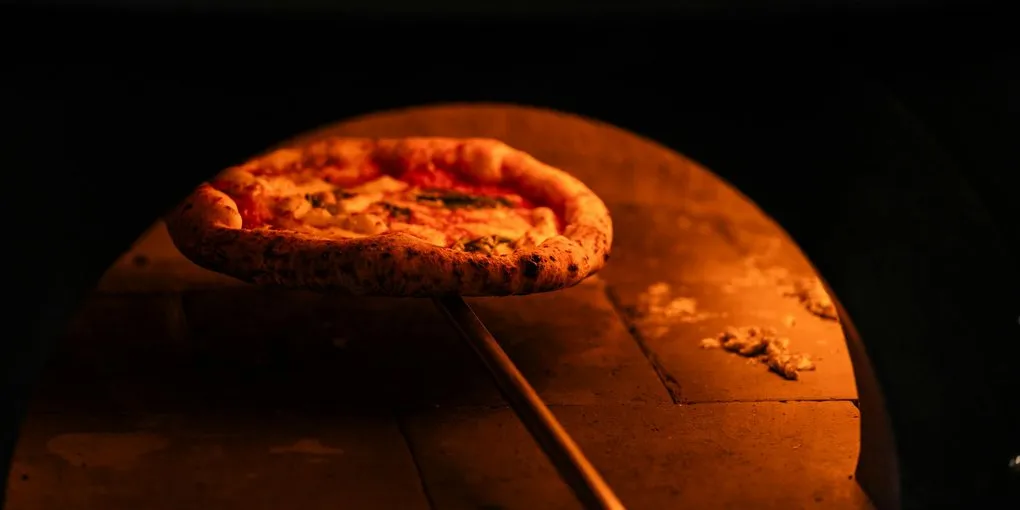
There are now more than 1,000 pizzerias in 58 countries that can legally claim to make Vera Pizza Napoletana. They span from Naples (where you would expect them) to Tokyo, Sao Paulo, Sydney, and Pupatella in Arlington, Virginia. The label is not casual marketing. It is a certification mark issued by the Associazione Verace Pizza Napoletana (AVPN), a non-profit organization founded in Naples in June 1984 that defines, audits, and protects the standard for authentic Neapolitan pizza. The certification process involves a written application, an in-person inspection, dough analysis, and ongoing audits. Failing any of those means losing the right to display the mark.
The AVPN standard is interesting for two reasons. First, it is the only pizza style with EU-protected legal status (Traditional Speciality Guaranteed, granted under Commission Regulation (EU) No 97/2010 on 4 February 2010), which makes it the only kind of pizza whose name is protected by international law. Second, the rules are unusually specific — they cover the flour, the water hardness, the mixer type, the oven temperature, the bake time, the diameter, the rim height, the toppings, and even the way the dough must be stretched. If you have wondered why some pizzerias call themselves “AVPN-certified” and others do not, this is what they signed up for.
A note before we dive in: this article is about the certification standard itself — the founding history, the rules, the audit process, the legal framework. It is not a how-to guide for making Neapolitan pizza in your kitchen. For the home version (which is necessarily a compromise, as the standard requires equipment most home cooks do not own), see our Neapolitan pizza at home guide and recipe for Neapolitan margherita.
The 1984 Founding
AVPN was founded in June 1984 by a group of Naples pizzaioli concerned that Neapolitan pizza was being diluted, copied, and misrepresented as the dish spread globally. The first Disciplinare — the regulatory document that defines what Vera Pizza Napoletana means in technical terms — is dated 14 June 1984. The Association itself was registered in Naples on 3 July 1984 by 17 of the most prominent master pizzaioli of the time. The University of Naples Federico II is not a founding institution, but its Department of Food Science (Faculty of Agriculture) collaborates with AVPN on supplier authentication and on scientific research into dough, including work led by Prof. Vincenzo Fogliano on flour and digestibility.
The mission, then and now, is to protect, codify, and promote the traditional method of making Neapolitan pizza. The original Disciplinare has been revised several times as the certification has expanded internationally and as the equipment landscape has changed (most notably with the recognition of certain electric and gas ovens that were not contemplated in the wood-fired-only era).
AVPN’s authority is reinforced by two layers of legal status:
-
Italian recognition. AVPN is a non-profit cultural and commercial association under Italian law. The “Verace Pizza Napoletana” wordmark is a registered collective trade mark, and the association’s UNI Mark certification was obtained in 1997 to formalize quality control across affiliated pizzerias.
-
EU Traditional Speciality Guaranteed (TSG) status, granted 2010. Under Commission Regulation (EU) No 97/2010 of 4 February 2010 (entered into force 5 February 2010), “Pizza Napoletana” was entered into the Register of Traditional Specialities Guaranteed — meaning the EU recognizes it as a traditional product whose name and production method are protected across the European Union. This is the same legal framework that protects products like Mozzarella di Bufala Campana DOP and Parmigiano-Reggiano DOP, although TSG (rather than DOP/PDO) is the specific category for Pizza Napoletana.
This is what separates AVPN from most food certifications. The TSG status gives the standard the force of EU law, not just trade-association preference.
The Four-Ingredient Rule
The most famous AVPN requirement is also the simplest: the dough has four ingredients only — flour, water, salt, and yeast. No oil, no sugar, no malt, no commercial dough conditioners, no eggs, no diastatic enzyme additions. This is not a stylistic preference. It is a hard rule that defines the pizza category at the regulatory level.
Each of the four ingredients has further specification:
Flour: Italian “Tipo 00” or “Tipo 0” (a small percentage of “Tipo 1” up to 5-20% is allowed). The Disciplinare specifies W (strength) values of 250-310 for type 00 and 250-320 for type 0, with protein 11-13.5%, P/L of 0.50-0.70, and ash content of 0.55% or less for 00. Caputo “Pizzeria” blue bag is the most commonly used flour in certified pizzerias and the brand is sometimes informally called “the AVPN flour” — though AVPN does not require a specific brand. The flour must be unmalted, because in the 60-90 second bake at the oven’s 485 degC dome, malt is not needed for browning — the Maillard reaction happens almost instantly at those temperatures.
Water: Tap water within specific hardness and pH ranges. The Disciplinare specifies pH 6-7, “moderately hard,” with a recommended production temperature of 16-22 degC. The practical effect is that Naples water (slightly hard, slightly alkaline) is the reference, and most Italian and Western European tap water complies easily. Highly soft water or heavily mineralized water can require treatment. (See our deep-dive on water for pizza dough for what actually matters in the home kitchen.)
Salt: Sea salt, ideally fine-grain. The Disciplinare specifies 40-60g per litre of water (i.e., roughly 2-3% of flour weight at typical hydrations). Salt slows fermentation, strengthens the gluten network, and seasons the crust. (More on salt in pizza dough.)
Yeast: Fresh compressed (cake) brewer’s yeast (Saccharomyces cerevisiae), 0.1-3 g per litre of water depending on temperature, humidity, and ferment length. Dry yeast is permitted at 1/3 of the fresh quantity. Mother yeast (sourdough) is allowed at 5-20% of the flour weight.
That is the entire dough. The genius of the AVPN system is that within these four ingredients, the variables that matter most — hydration, fermentation length, dough temperature, and shaping technique — are tightly controlled by other parts of the standard. (For the specific role of the strength index, see W value and P/L ratio explained.)
The Mixing and Fermentation Specs
The Disciplinare is specific about how the dough is mixed and fermented:
- Mixing: low speed, until a single, compact mass is formed. Twenty minutes at low speed is the figure most commonly cited in technical references for the traditional method, although the regulation itself frames it as “the time needed to reach the optimal point,” dependent on dough and mixer.
- Mixer type: double-speed fork mixer, spiral mixer, or dipping-arm mixer are all permitted by the Disciplinare. Fork mixers are traditional in Naples because they rotate at an angle and transfer minimal heat to the dough; the article-of-faith claim that AVPN was “fork-mixer only” never reflected the actual rules.
- First fermentation: ~2 hours at room temperature, covered, at 23-25 degC.
- Hand-divide into panetti (dough balls), 180-250 g each (200 g for a 22-24 cm pizza, up to 280 g for a 28-35 cm pizza in the AVPN’s larger-format spec).
- Second fermentation: 4-6 hours at room temperature in mattarelle (rising boxes) per EU Reg. 97/2010. (The full AVPN Disciplinare allows minimum 8 / maximum 24 hours of total leavening when matched against flour W and yeast quantity.)
- Use within ~6 hours of the second fermentation completing.
Notably, AVPN dough is not refrigerated by default. Cold fermentation is a 20th-century innovation that AVPN treats as a deviation from the historical Naples method. (In practice, many AVPN-certified pizzerias outside Naples do use some cold fermentation for logistical reasons, and the modern Disciplinare tolerates it.)
The single-burst, room-temperature ferment is one of the most distinctive parts of the standard. Most professional pizzerias outside the AVPN system either use long cold ferments or run on different mixer/yeast pairings entirely. (For the underlying biochemistry, see our piece on maturation vs fermentation.)
The Oven and Bake Requirements
This is where AVPN diverges most sharply from “Neapolitan-style” pizza made at home or in non-certified restaurants:
- Cooking surface (floor) temperature: 380-430 degC (~716-806 degF). The dome runs at approximately 485 degC (~905 degF). The “905 deg” figure that gets quoted constantly in pizza media refers to the dome, not the floor.
- Bake time: 60-90 seconds. Faster than 60 seconds is too aggressive; longer than 90 seconds is grounds for disqualification in AVPN competitions (a fact Tony Gemignani documents from his 2007 World Pizza Cup STG Napoletana win in Naples, where he baked at 89.5 seconds).
- Oven type: traditionally wood-fired. Recent updates to the Disciplinare have also recognized certain gas and electric ovens that can match the temperature and bake-time profile. Until the 2010s, AVPN was strictly wood-fired only. (See wood-fired vs gas pizza ovens for the science of why fuel source itself does not matter as much as people assume.)
The traditional oven floor is biscotto di Sorrento clay, the Neapolitan refractory material described in the Disciplinare’s notes on traditional construction. Cordierite stones (used in most home and portable ovens) do not match the thermal-conductivity profile that biscotto delivers. Biscotto’s lower thermal conductivity (~1-2 W/m K vs cordierite’s 2-3 W/m K) gives the gentler heat release that lets the bottom char without burning during the 60-90 second bake. (Full breakdown in our biscotto stone guide.)
The Stretching Rule — Schiaffo, Not Rolling Pin
One of the most aesthetically charged AVPN rules: dough must be hand-stretched, not rolled with a pin or pressed mechanically. The technique is called schiaffo (“slap and pull”), and the EU TSG specification (Reg. 97/2010) is explicit about it:
- Work from the centre outward, pressing with the fingers of both hands and turning the dough over several times.
- Centre thickness: 0.4 cm maximum (with +/-10% tolerance) per EU Reg. 97/2010. (The older 2008 AVPN Disciplinare specified 0.25 cm; the EU-registered TSG harmonized to 0.4 cm.)
- Edge/rim (cornicione): 1-2 cm wide.
- No rolling pin and no mechanical press is authorized for TSG certification.
The schiaffo technique requires properly matured dough that can sustain both uniaxial (lengthening) and biaxial (finger stretching) forces without tearing. Insufficiently matured dough resists shaping, springs back, and leaves the centre too thick. Excessively matured dough has weakened gluten, tears easily, and develops holes.
The “no rolling pin” rule has practical consequences for certified pizzerias: the pizzaiolo must master the schiaffo technique, and dough management becomes a daily skill. Many AVPN-certified pizzerias outside Italy require all pizzaioli to attend AVPN’s training school before they can work the line. (For the home-kitchen version of this skill, see how to stretch pizza dough.)
The Toppings — Two Specified Versions
The Disciplinare specifies two pizzas that meet the Vera Pizza Napoletana standard:
Marinara: Tomato (San Marzano dell’Agro Sarnese-Nocerino DOP, Pomodorino del Piennolo del Vesuvio DOP, Corbara, or other certified long-Italian peeled tomato), extra virgin olive oil, fresh garlic (one clove, ~3 g), oregano (~0.5 g), salt. No cheese. The Marinara is the older Neapolitan pizza, predating the addition of mozzarella to the canon.
Margherita: Tomato (San Marzano DOP or equivalent), fior di latte (cow milk mozzarella, fresh) or Mozzarella di Bufala Campana DOP (water buffalo, the premium option), fresh basil, EVOO, salt. The Margherita has its own STG (Specialita Tradizionale Garantita) protection layered on top of the AVPN/EU TSG framework.
Disciplinare quantities, per pizza: Marinara — 70-100 g peeled tomato; 6-8 g extra virgin olive oil (variance +20%); 0.5 g oregano; one clove of garlic. Margherita — 60-80 g peeled tomato; 80-100 g mozzarella/fior di latte; 6-7 g olive oil (+20%); 5-7 g grated hard cheese (optional, traditional pecorino/parmigiano dusting); a few fresh basil leaves. (Some technical references, including Masi, cite a slightly tighter EU-TSG version of these ranges.)
Note that AVPN does not say these are the only Neapolitan pizzas. Naples has dozens of regional variations — pizza fritta, ripieno, mastunicola, the focaccia-style filled “calzoni” — but the AVPN certification specifically protects the Marinara and Margherita as the canonical Vera Pizza Napoletana versions. (Our San Marzano vs crushed tomatoes breakdown covers what the DOP requirement actually buys you.)
The Certification Process
Becoming AVPN-certified is not a transaction. The process involves:
-
Application. The pizzeria submits paperwork, photos, ingredient lists, equipment specifications, and the pizzaiolo’s training history.
-
Initial inspection. An AVPN-trained inspector visits the pizzeria, observes a service, samples the pizza, and verifies the equipment.
-
Dough analysis. In some cases the dough is sent to a lab for compositional verification, particularly when the flour or water source raises questions. Supplier products are independently analyzed for authenticity at the University of Naples Federico II.
-
Pizzaiolo training. Most certifying pizzerias send their head pizzaiolo (and often the entire team) to AVPN’s official school in Naples — the Scuola Nazionale Pizzaioli AVPN — for hands-on training in the schiaffo technique, dough management, and certified ingredient sourcing. Some pizzerias send pizzaioli to AVPN’s regional schools (Tokyo, New York, etc.).
-
Ongoing audits. Certification is not permanent. AVPN reserves the right to inspect annually or in response to complaints. Failed audits result in temporary suspension; repeated failures result in permanent decertification.
The certification fee structure is tiered, with annual membership dues, training costs, and audit fees. Total costs for a new certifying pizzeria typically run several thousand euros plus travel for training. The certification mark — a stylized “VPN” badge or the longer “Vera Pizza Napoletana” plaque — is then licensed for use on storefront signage, menus, and marketing.
The 1,000+ Certified Pizzerias
AVPN’s roster has grown from a handful of Naples pizzerias in 1984 to more than 1,000 affiliated establishments in 58 countries as of 2026. Notable certified pizzerias include:
- Pupatella (Arlington, Virginia, USA) — one of the most prominent US AVPN pizzerias, with multiple locations.
- Roberto Caporuscio’s Keste (NYC, multiple) — influential US AVPN ambassador and a regular in 50 Top Pizza US rankings.
- Una Pizza Napoletana (Anthony Mangieri, NYC) — though Mangieri’s certification status has shifted over the years; he has occasionally chosen to operate without AVPN affiliation while still serving traditional VPN.
- Sorbillo family pizzerias (Naples) — multi-generational Naples certifying establishment.
- Pizzeria Bianco (Phoenix, Arizona) — Chris Bianco is famously not AVPN-certified, but his approach overlaps significantly. Listed here as a notable absence.
The certification is dense in Italy (especially Naples), Japan, the US, Brazil, Australia, and parts of Western Europe. Asia overall is the fastest-growing AVPN region, with Tokyo having a notably high density of AVPN-certified pizzerias per capita.
Where AVPN Bends and Where It Doesn’t
The AVPN standard has had to evolve as the equipment landscape has changed. The most significant updates:
-
Gas and electric ovens: Originally wood-fired only. Updated Disciplinare versions now permit certain certified gas and electric ovens that can reach the required temperatures and bake times. This was controversial within AVPN — some traditionalists argued wood fire was inseparable from the style. The pragmatic counter-argument prevailed: AVPN-certified pizzerias in cities with strict wood-burning regulations (Tokyo, parts of California) needed alternative oven options, or the certification would have died in those markets.
-
Mixer types: The Disciplinare has long permitted fork, spiral, and dipping-arm mixers. Fork mixers are traditional and often informally treated as “the AVPN mixer,” but spiral mixers have always been allowed provided that mixing time and dough temperature targets are met.
-
Cold fermentation: Tolerated, though not the original method. The room-temperature single-rise ferment is still the reference, but global supply-chain logistics have made some cold fermentation acceptable.
What does not bend: the four-ingredient dough rule, the schiaffo stretching, the bake-time window (60-90 seconds), the dome temperature (~485 degC), the dimensional specs (max 35 cm diameter, 0.4 cm centre, 1-2 cm rim), the topping list for Marinara and Margherita, and the requirement to use specific Italian DOP-certified ingredients (San Marzano dell’Agro Sarnese-Nocerino DOP tomatoes, Mozzarella di Bufala Campana DOP).
VPN Americas, Gambero Rosso, and the Other Authorities
AVPN is not the only standard-setting body in the Italian pizza world. A few peers and competitors:
-
VPN Americas (Vera Pizza Napoletana Americas) — a sister organization that operates a parallel certification process, primarily in the Americas. Certification overlap with AVPN is high but not complete; some pizzerias certify with both, some with only one. The two organizations have an occasionally tense relationship rooted in 1990s-2000s organizational disputes.
-
Gambero Rosso — an Italian food journalism authority that publishes annual rankings of the best pizzerias in Italy and increasingly worldwide. Tre Spicchi (“three slices”) is the highest rating. Gambero Rosso ratings layer on top of AVPN certification: a pizzeria can have AVPN certification and earn Gambero Rosso recognition independently, and the two together signal both “authentic” and “excellent.”
-
50 Top Pizza — a more recent ranking system, also Italian-based, that has become increasingly influential as a global guide. 50 Top Pizza uses its own criteria, not AVPN’s, but most of its top-rated pizzerias are AVPN-certified or operate to AVPN-equivalent standards.
The relationships among these authorities matter to working pizzaioli but are mostly invisible to consumers. The AVPN mark is the legal-regulatory standard; the Gambero Rosso and 50 Top Pizza ratings are the editorial-quality standard.
What This Means for Pizza Outside Naples
The most important practical consequence of the AVPN standard is that it has given a global community of pizzaioli a shared reference point. A pizzaiolo trained at AVPN’s Tokyo school can move to Naples or Brazil and immediately understand what is expected. The schiaffo technique, the 60-90 second bake, the four-ingredient dough — these are universal vocabulary among certified pizzerias.
For consumers, the AVPN mark is one of the few reliable shortcuts to a specific style of pizza. If you are in a city you do not know and you see a “Vera Pizza Napoletana” plaque, you know the dough was hand-stretched, the bake was 60-90 seconds in a high-temperature oven, and the toppings were specific Italian DOP ingredients. You may or may not love the result, but you know what you are getting.
For home pizza makers, the AVPN standard is informative but not directly applicable. Without a wood-fired oven running at 485 degC dome temperature, you cannot literally meet the spec. The good news is that home-oven adaptations exist and produce excellent results: 70% hydration dough, 00 flour, and a 7-minute bake at 525-550 degF with broiler finish, which is what our Neapolitan pizza at home guide covers. American home bakers should also see can you use bread flour for Neapolitan? and our Caputo flour comparison for substitutes that actually work in a 550 degF oven.
A note on what AVPN does not cover: this article and the certification process focus on the standard itself. For broader debunking of pizza myths — including AVPN-related misconceptions about how rigidly even certified Naples pizzerias actually follow the rules — see our pizza myths debunked overview.
The Bottom Line
AVPN is the regulator, codifier, and global ambassador of authentic Neapolitan pizza. Founded in June 1984, it grew from a Naples association of 17 pizzaioli to an organization of more than 1,000 certified pizzerias across 58 countries with EU-protected legal status as of 2010. The standard is rigorous, traceable, and non-trivial to meet: the four-ingredient dough, the schiaffo stretching, the 60-90 second bake, the 485 degC dome temperature, the specific Italian DOP toppings. The certification process involves training at AVPN’s school, an audit, and ongoing inspections.
Whether the standard is the “best” pizza is a separate question. Modernist Pizza documented that not a single AVPN-certified pizzeria its team visited in Naples followed all the rules, and many of the most respected innovative pizzerias (Pizzeria Bianco, several canotto-style innovators) are not AVPN-certified. But “best” is editorial; AVPN is regulatory. The two roles are different, and both serve a real purpose in the pizza ecosystem.
Frequently Asked Questions
- What does AVPN stand for and when was it founded?
- AVPN stands for Associazione Verace Pizza Napoletana (Association of True Neapolitan Pizza). The first Disciplinare is dated 14 June 1984, and the Association was registered in Naples on 3 July 1984 by 17 of the most prominent master pizzaioli of the time, including Antonio Pace and Raffaele Surace. It is a non-profit cultural and commercial association under Italian law. The University of Naples Federico II is not a founder but collaborates on supplier authentication and on dough/digestibility research.
- How is AVPN different from the EU TSG designation?
- They work together. AVPN is the trade association that certifies individual pizzerias and trains pizzaioli. The EU Traditional Speciality Guaranteed (TSG) designation, granted under Commission Regulation (EU) No 97/2010 of 4 February 2010, is separate legal protection that protects the production method for 'Pizza Napoletana' across the European Union. A pizzeria can be AVPN-certified, operate to TSG specifications, both, or neither. AVPN certification implies TSG compliance, but the TSG framework exists in EU law independently of AVPN.
- What are the four ingredients allowed in AVPN dough?
- Flour, water, salt, and yeast. No oil, no sugar, no malt, no commercial dough conditioners, no eggs. The flour must be Italian Tipo 00 (or Tipo 0, with up to 5-20% Tipo 1 allowed) at W 250-310 (00) or 250-320 (0) and protein 11-13.5%. Salt is sea salt at 40-60 g per litre of water, and yeast is fresh compressed brewer's yeast at 0.1-3 g per litre of water (or dry at one-third of the fresh quantity). This four-ingredient rule is one of the most distinctive elements of the AVPN standard and a hard requirement for certification.
- How long is an AVPN pizza baked, and at what temperature?
- 60-90 seconds with the cooking surface (oven floor) at 380-430 degC and the dome at approximately 485 degC (the 905 degF figure that gets quoted everywhere refers to the dome, not the floor). Bake times under 60 seconds are too aggressive; over 90 seconds is grounds for disqualification in AVPN competitions. The traditional oven is wood-fired with a biscotto di Sorrento clay floor, though the updated Disciplinare now also recognizes certified gas and electric ovens that can match the temperature and bake-time profile.
- Can a home oven produce an AVPN-certified pizza?
- No. The AVPN standard requires a wood-fired (or certified gas/electric) oven at ~485 degC dome and a 60-90 second bake, which is impossible in a domestic kitchen oven that maxes out at 500-550 degF. Home pizza-makers can produce an excellent Neapolitan-style approximation -- 70% hydration dough, 00 flour, 7-minute bake at 525-550 degF with broiler finish -- but the result is not AVPN-certified and does not legally qualify as Vera Pizza Napoletana. Outside the certification, the home version is what most non-Italian pizza enthusiasts call 'Neapolitan-style' or 'Neapolitan-inspired' pizza.
- Is AVPN the same as VPN Americas?
- No, but they are related. AVPN (Italy-based, 1984) and VPN Americas (the sister organization, primarily US-focused) operate parallel certification processes. The two have a shared origin but a tense organizational history dating to disputes in the 1990s-2000s. Certification overlap is high but not complete -- some pizzerias certify with both, some with only one. AVPN is the larger, EU-recognized authority; VPN Americas operates more regionally.
- What pizzerias are AVPN-certified?
- As of 2026, more than 1,000 worldwide across 58 countries. Notable examples in the United States include Pupatella (Arlington, VA), Keste (NYC), Una Pizza Napoletana (status varies year to year), and several Roberto Caporuscio establishments. In Italy, multi-generational Naples pizzerias like Sorbillo are major certifying establishments. Asia (especially Japan) has the fastest-growing AVPN density per capita -- Tokyo alone has a notably high density of AVPN-certified pizzerias per capita. Notable absences: Pizzeria Bianco in Phoenix (Chris Bianco is not AVPN-certified, though his approach overlaps significantly).
- How do you become AVPN-certified?
- The process involves an application with photos, ingredient lists, and equipment specifications; an in-person inspection by an AVPN-trained inspector; in some cases lab analysis of the dough; and most importantly, training at the AVPN's Scuola Nazionale Pizzaioli AVPN in Naples (or an authorized regional school in Tokyo, New York, etc.). Total costs typically run several thousand euros plus travel for training. Certification is annually renewed and subject to ongoing audits; failed audits can result in suspension or permanent decertification.