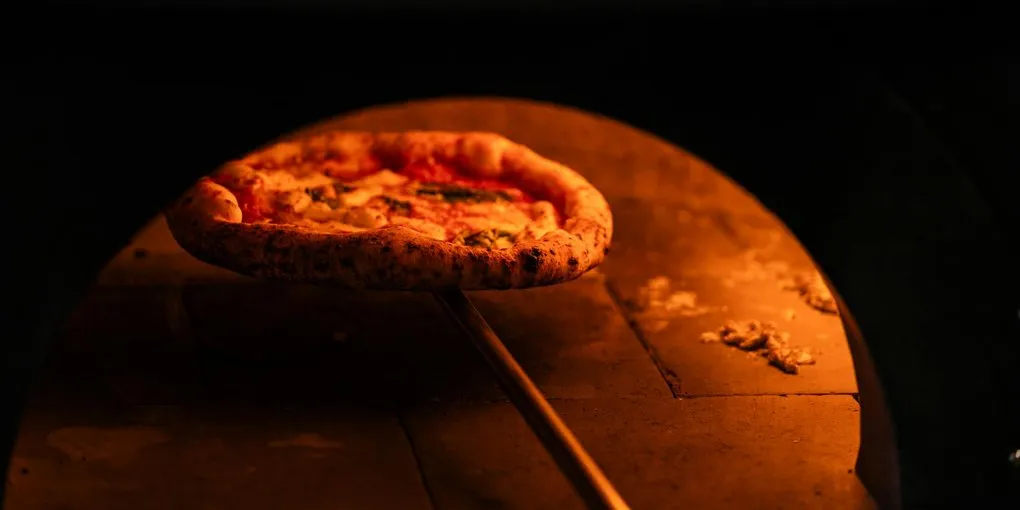
Every portable pizza oven ships with a cordierite stone. It works. It produces pizza. And at temperatures above 850F, it scorches the bottom of your pizza before the top finishes cooking. This is not a defect in your technique — it is a predictable consequence of cordierite’s thermal properties meeting extreme heat.
The biscotto di Sorrento stone is the single most impactful aftermarket upgrade for Ooni and Gozney owners. It is a traditional Neapolitan clay stone, handmade near Naples from a mix of clay and volcanic ash — the same material used in the floors of authentic AVPN-certified wood-fired ovens. Understanding why it works requires a brief detour into material science. Understanding whether you need one requires an honest look at your baking results.
The Bottom-Scorching Problem
If you own an Ooni Koda 16 or a Gozney Roccbox, you have probably experienced this: you launch a pizza, and within 40 seconds the bottom is charred black while the cornicione is still pale and the cheese has barely started to melt. You turn the heat down, but then the top never finishes. You try launching on a cooler part of the stone, but the temperature gradient means one edge is always too hot.
The root cause is thermal conductivity. Cordierite has a thermal conductivity of approximately 2-3 W/mK. When your oven is running at 900F, the cordierite stone has absorbed an enormous amount of heat during the 30-40 minute preheat. The moment raw dough contacts that surface, the stone dumps heat into the dough base aggressively. In a 60-second Neapolitan bake, the bottom can go from raw to perfectly spotted to burnt in the span of about 15 seconds.
Professional Neapolitan pizzerias manage this with a massive oven floor and decades of experience reading heat zones. Home oven owners manage it with constant rotation every 15-20 seconds. But the fundamental material mismatch remains: cordierite releases heat faster than clay, and at 900F+ there is almost no margin for error. For a deeper look at how oven thermodynamics shape this bake, see our pizza oven thermodynamics guide.
What Biscotto Stone Is
Biscotto di Sorrento is a fired clay material traditionally produced in the Sorrento Peninsula region near Naples. The clay is mixed with volcanic ash from the surrounding geology, shaped, and kiln-fired. The resulting material is porous, relatively soft compared to cordierite, and has significantly lower thermal conductivity.
These are the same clay stones that line the floors of the wood-fired ovens at the most respected pizzerias in Naples. When the AVPN (Associazione Verace Pizza Napoletana) certifies a pizzeria, the oven specification calls for a refractory brick dome with emissivity of 0.93 [Masi p. 85]. The biscotto floor material is part of that traditional construction.
The key property is not that biscotto stores less heat — it stores plenty. The key is that it releases heat more gently. Think of it as the difference between touching a hot cast iron pan versus a hot ceramic mug. Both are at the same temperature, but the cast iron burns you immediately because it conducts heat faster. The ceramic feels hot but does not sear your skin because it releases thermal energy more slowly.
The Material Science Comparison
Here is how the common pizza baking surfaces compare on the properties that matter most:
The critical comparison is between cordierite (2-3 W/mK) and biscotto (~1-2 W/mK). That difference — roughly half the thermal conductivity — translates directly to a more forgiving bake at extreme temperatures. The biscotto stone allows 40-80 second bakes at full temperature without the bottom burning.
What Changes When You Install a Biscotto Stone
The practical effects are immediate and consistent:
Bottom scorching virtually eliminated. At 900F+, the stock cordierite stone scorches pizza bottoms before the top finishes. The biscotto’s gentler heat release gives you substantially more margin. You can run your oven hotter without burning the base, which means better leopard spotting on the cornicione and more complete cheese melt.
Rotation becomes less frantic. On cordierite at full heat, you need to turn every 15-20 seconds or the side facing the burner chars. With biscotto, you gain an extra 10-15 seconds per turn cycle. This sounds minor. In a 60-second bake where you are managing flame, monitoring cheese, and wielding a turning peel in a cramped oven mouth, those seconds are significant. If you are still dialing in your launching and rotating technique, the extra margin is genuinely welcome.
More even baking overall. The lower conductivity means the entire stone surface releases heat more uniformly. The temperature gradient between the hot zone (back near the burner) and the cooler zone (front near the mouth) still exists in the air, but the stone itself is less punishing at the hot end.
The tradeoff: slightly softer bottoms. There is no free lunch. Biscotto’s gentler heat release means the underside of your pizza will not be as aggressively crisped as it would on cordierite or steel. If you prefer a hard, cracker-crisp bottom, biscotto may be too gentle. If you prefer the traditional Neapolitan result — spotted but pliable, with char marks but not rigidity — biscotto is ideal.
Emissivity and Why It Matters
Emissivity is a measure of how efficiently a surface radiates heat. A perfect emitter (blackbody) has an emissivity of 1.0. The higher the emissivity, the more thermal radiation a surface produces at a given temperature.
Masi documents the refractory brick dome of a Neapolitan oven at 0.93 emissivity [Masi p. 85]. This is relevant because thermal radiation follows the T-to-the-fourth power law (Stefan-Boltzmann). At 400C, the oven produces dramatically more thermal radiation than at 200C. Small differences in emissivity translate to meaningful differences in how aggressively the stone radiates heat upward toward the pizza and downward into the dough.
Myhrvold’s testing revealed a counterintuitive finding about emissivity and oven floors: a clean firebrick floor (emissivity ~0.68) reaches a much higher equilibrium temperature than a sooty floor (emissivity ~0.95) [Myhrvold pp. 384-385]. The clean floor reflects more energy from the fire back onto the pizza, increasing burn risk. A sooty floor absorbs and re-radiates more evenly. Italian pizzaioli confirmed this: pizza on a black (sooty) floor bakes slowly and uniformly, while pizza on a clean stone scorches in spots.
Biscotto’s porous, matte clay surface has high emissivity — closer to the sooty-floor end of the spectrum. Combined with its low thermal conductivity, this creates a surface that radiates gently and conducts gently. It is, by material science, the most forgiving baking surface available.
Pricing and Compatibility
Biscotto stones are available cut to fit specific oven models:
Vendors: biscotto stones on Amazon (ItalX), plus biscottostones.com, biscottopizzastone.com, biscottodisorrento.com, and various Etsy sellers.
The total cost including shipping typically runs $150-220 for the Ooni Koda 16 and $130-180 for the 12-inch models. For the Roccbox, the stone itself is cheaper but shipping from Italy can be steep depending on the vendor.
Installation Notes
Ooni models: Direct swap. Remove the stock cordierite stone, place the biscotto stone in the same position. No modifications required. The stone should sit flat on the oven floor supports.
Gozney Roccbox: This is the exception. The Roccbox factory stone is glued in place. Swapping it requires prying out the old stone, which is discussed extensively in the Gozney Facebook community but is not officially supported by Gozney. The procedure is doable but requires care to avoid damaging the oven interior. Search for “Roccbox biscotto swap” in the Gozney Community Facebook group for detailed walkthroughs with photos.
Preheat Adjustment
Biscotto takes longer to fully saturate than cordierite because of its lower conductivity. Add 5-10 minutes to your preheat time. If you were preheating your Ooni Koda 16 for 30-40 minutes with the stock stone, expect 40-50 minutes with biscotto before the center reads 750F+ on an infrared thermometer.
The IR thermometer check is non-negotiable regardless of stone material. Built-in oven thermometers and ambient readings do not tell you the stone surface temperature. Check center stone temp before every pizza. See our full infrared thermometer guide for pizza for emissivity settings and model recommendations.
One additional note on IR readings: emissivity settings matter. Steel surfaces (emissivity ~0.3-0.5 depending on seasoning) read very differently than stone (~0.9-0.95) on the same thermometer. A gun calibrated for stone will give wildly inaccurate readings on steel. Biscotto, being a clay material, has high emissivity and reads accurately on standard pizza IR thermometers.
Biscotto vs. Steel in a Portable Oven
Some owners install a baking steel in their Ooni or Roccbox instead of (or in addition to) the stock cordierite. Steel conducts heat approximately 18-20 times faster than cordierite. In a portable oven, this means lightning-fast heat recovery between pizzas but substantially higher burn risk at full flame.
Steel in a portable oven is the opposite direction from biscotto. It is a valid choice for experienced users who manage flame carefully and want maximum bottom crispness with rapid recovery between pies. Brands like DareBuilt, 222Steel, and Chef Pomodoro make steels cut for Ooni models. For a deeper comparison of baking surfaces, see our pizza stone vs pizza steel guide.
The decision framework is straightforward:
- Biscotto if you want forgiveness, gentler bottoms, and the traditional Neapolitan floor material
- Steel if you want maximum crispness, fastest recovery, and you are comfortable managing aggressive heat
- Stock cordierite if you are happy with your current results and do not mind the rotation demands
Most home pizza makers who switch to biscotto do not switch back. The reduction in burnt-bottom failures is dramatic enough that the slightly softer underside is a welcome tradeoff.
The Complete Portable Oven Upgrade Stack
Biscotto is one of two upgrades that transform the stock pizza oven experience. The other is a flame guard or heat diffuser, which addresses the 200-250F temperature gradient across the stone. Together, these two upgrades — roughly $220-240 combined — solve the two most common sources of frustration for new portable oven owners: bottom scorching (biscotto) and uneven side-to-side baking (flame guard).
For the oven itself, our Ooni vs Roccbox vs home oven comparison covers which portable is the right starting point. If you are baking in a home oven rather than a portable, see our home pizza oven temperature guide — biscotto is not the right choice there.
The Bottom Line
The biscotto di Sorrento stone is not a gimmick or a luxury upgrade. It solves the most common complaint among portable pizza oven owners — bottom scorching at high temperatures — through straightforward material science. Lower thermal conductivity means gentler heat release, which means more margin for error at 900F+. The tradeoff is softer bottoms and longer preheats. For most home pizza makers running an Ooni or Gozney, that tradeoff is overwhelmingly worth it.
Sources: Myhrvold & Migoya, Modernist Pizza Vol 1 (2021); Masi et al., The Neapolitan Pizza: A Scientific Guide (2015); Forkish, Flour Water Salt Yeast (2012); PIZZA_KNOWLEDGE_SYNTHESIS aftermarket upgrades & material science compilation; community reports from pizzamaking.com, r/ooni, and the Gozney Community Facebook group.
Frequently Asked Questions
- What is a biscotto stone made of?
- Biscotto di Sorrento is made from traditional Neapolitan clay mixed with volcanic ash, handmade near Naples. It is the same material used in the floors of authentic AVPN-certified wood-fired pizza ovens. The clay is kiln-fired into a porous, relatively soft stone with low thermal conductivity (~1-2 W/mK), roughly half that of cordierite.
- Will a biscotto stone fit my Ooni Koda 16?
- Yes. Biscotto stones are sold pre-cut to fit specific oven models, including the Ooni Koda 16 (16.7" x 20.4"), Ooni Koda/Karu/Fyra 12 (13" x 13"), and Gozney Roccbox (13" x 13.77"). They are a direct drop-in replacement for the stock cordierite stone on Ooni models. The Roccbox requires prying out the factory-glued stone.
- Does a biscotto stone make the bottom of pizza soggy?
- Not soggy, but softer than cordierite. The lower thermal conductivity means the bottom chars less aggressively, producing a spotted, pliable underside rather than a hard, cracker-crisp one. This is actually closer to the traditional Neapolitan result. If you prefer maximum bottom crispness, a baking steel is a better choice.
- How long should I preheat a biscotto stone?
- Add 5-10 minutes beyond your normal preheat time. If your stock cordierite stone needed 30-40 minutes, budget 40-50 minutes for biscotto. Always verify center stone temperature with an infrared thermometer before launching your first pizza — target 750F+ for Neapolitan.
- Is a biscotto stone worth the price?
- For Ooni Koda 16 owners, expect $149-169 plus approximately $50 shipping from Italy — roughly $200 total. Most owners who switch report dramatically fewer burnt-bottom failures and a more forgiving baking experience. If bottom scorching is your primary frustration, biscotto solves it through material science rather than technique adjustment.
- Can I use a biscotto stone in my home oven?
- You can, but it is not the best choice for a 500-550F home oven. At home oven temperatures, you want more aggressive heat transfer to compensate for the lower overall temperature. A carbon steel baking surface (A36 steel, 3/8" thick) conducts heat approximately 18-20 times faster than cordierite (and dramatically faster than biscotto) and is the better choice for home ovens.
- Where can I buy a biscotto stone?
- Primary vendors include biscottostones.com, biscottopizzastone.com, biscottodisorrento.com, various Etsy sellers, and Amazon (ItalX brand). Prices and shipping costs vary — compare total landed cost including Italy-to-US shipping before ordering. Italy-to-US shipping can reach $250+ total for the Roccbox on some vendors.
- Does biscotto work with a flame guard or heat diffuser?
- Yes — they are complementary upgrades. Biscotto addresses bottom scorching (heat transfer from stone to dough), while a flame guard addresses the side-to-side temperature gradient (heat distribution from burner to air and surfaces). Together, the two upgrades transform a stock portable oven into a significantly more forgiving pizza-making tool.