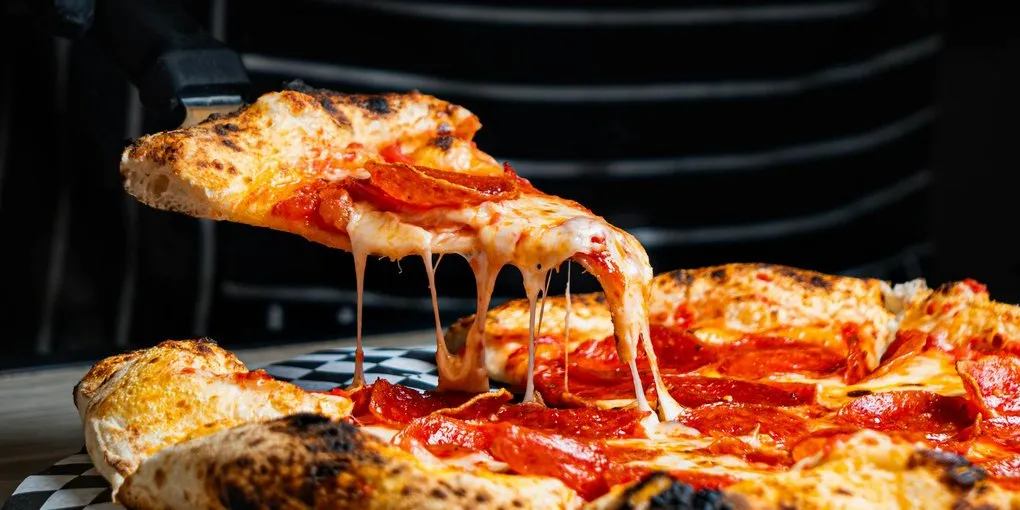
Hot honey on pizza is not a trend that appeared and vanished. It has been on Paulie Gee’s menu in Greenpoint, Brooklyn continuously since 2010. Mike Kurtz discovered chili-infused honey while studying abroad in Brazil, started making his own at home, and — when Paulie Giannone opened Paulie Gee’s in 2010 — brought a bottle in. Giannone put it on a soppressata pizza and called it the Hellboy. That pizza is still one of Paulie Gee’s best sellers fifteen years later, and the rest of the restaurant industry caught up eventually. Hot honey went from cult Brooklyn condiment to grocery store staple.
The combination works on a fundamental level: honey adds sweetness and a slight floral character, chili adds progressive heat, and fatty, salty cured meat (soppressata is the classic) provides the counterweight that anchors everything. Together they hit the same salt-sweet-heat axis that makes certain flavor pairings stick in culinary memory.
This article covers the origin, the brand comparison, the DIY version, and a full recipe — plus honest notes on which variations do not actually work.
The Classic: Soppressata, Mozzarella, and Hot Honey
The base formula that made this combination famous is simple. Stretched dough, crushed San Marzano tomato sauce spread thin, good low-moisture mozzarella (or fresh if you are Paulie Gee), soppressata piccante (the spicy Calabrian variety, not sweet soppressata), baked until the crust has color and the meat has crisped at its edges, then a drizzle of hot honey over everything immediately after the pizza comes out of the oven.
The mechanics behind why it works:
Soppressata piccante is a dry-cured salumi seasoned with hot Calabrian peppers. During baking, the fat renders, the edges develop a slight crisp, and the pepper oils intensify. This gives you heat from the meat layer as a baseline.
Mozzarella provides the dairy fat and mild lactate character that moderates the heat. The cheese is the cushion between meat and honey.
Hot honey goes on after baking, not before — this is important. Honey is roughly 70% sugar (mostly fructose and glucose), and it begins to caramelize aggressively above about 320F. In a 550F home oven, a drizzle baked for 7 minutes turns into a sticky, bitter glaze rather than a bright sweet-heat drizzle. Applied after the pizza exits the oven, it stays floral and bright.
For construction guidance that applies to any pizza build, see how to build a pizza.
Brand Review: Mike’s Hot Honey
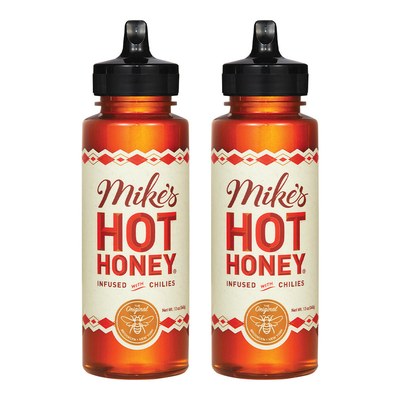
Mike’s Hot Honey is the product that created the modern hot honey pizza category, and it is still the benchmark everything else is compared against. Kurtz launched commercial distribution in 2011, got into Whole Foods in 2014, and by 2024 the product was in over 30,000 retail locations across the US. The commercial formulation is chili-infused American wildflower honey with a touch of apple cider vinegar.
Heat level: Low to medium — a gentle build that does not overwhelm the pizza flavors.
Honey character: Rich, slightly tangy from the vinegar. The vinegar note is subtle but present, and it works well with fatty cured meats — acids cut fat. The honey character is prominent rather than the chili character.
Pizza performance: Excellent. The viscosity is right for drizzling — not so thin it floods the pizza, not so thick it clumps. The heat level is broadly accessible.
Con: It is the most expensive option per ounce, and the dominance of honey over heat means it will not satisfy anyone who wants genuine chile-pepper heat on their pizza. For a more heat-forward application, you will need more product or a different brand.
Where to buy: Major grocery stores (Whole Foods, Target, Kroger-affiliated chains), online, and directly from mikeshothoney.com. 10oz runs about $12; 24oz bulk about $22. View Mike’s Hot Honey on Amazon.
Brand Review: Bushwick Kitchen Bees Knees Spicy Honey
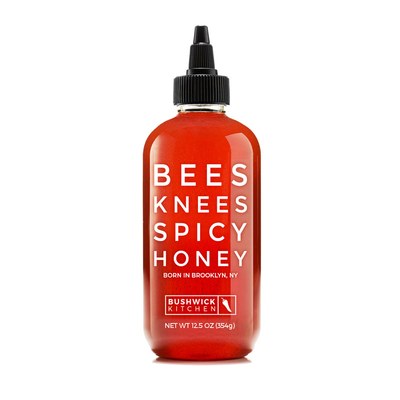
Bushwick Kitchen’s Bees Knees Spicy Honey is the second most recognized name in the category. It uses habanero peppers, which gives it a distinctly different heat profile — higher heat and a more tropical, fruity character rather than the mild, rounded warmth of Mike’s.
Heat level: Medium to high. This is meaningfully hotter than Mike’s, and the heat builds.
Honey character: Lighter floral character than Mike’s, with the habanero’s tropical fruit note coming through. Some people find this pairs better with milder toppings where the honey itself can be a featured flavor rather than a supporting one.
Pizza performance: Good. The higher heat level means a smaller amount goes further — useful if you are cost-conscious or if you are topping a pizza for a mixed-heat-tolerance crowd.
Con: The habanero forwardness can clash with already-spicy toppings like soppressata piccante. The pairing that works with Mike’s (spicy meat + gentle honey) does not quite land the same way with Bees Knees (spicy meat + also-spicy honey). Better on milder pairings: plain mozzarella, ricotta, or prosciutto.
Where to buy: Sur La Table, specialty grocery stores, Amazon. Available at about $14 for 8.8oz. View Bees Knees on Amazon.
Brand Review: Wild Hive Hot Honey
Wild Hive is the smaller-batch option from Hudson Valley, New York — raw honey infused with dried chilies. It is less widely available than Mike’s or Bees Knees but has a loyal following in the Northeast.
Heat level: Medium, similar to Mike’s but with a cleaner chili flavor.
Honey character: More pronounced honey terroir than either large brand — this reads as a better-quality honey with heat added rather than a branded chili condiment with honey as the base. If you are interested in the honey’s flavor itself, Wild Hive is worth trying.
Pizza performance: Strong. The raw-honey character and medium heat work well across a range of pizza styles.
Con: Significantly harder to find. Online ordering adds shipping cost to an already-premium price. If you are outside the Northeast, this becomes impractical for regular use. Distribution is also thinner on Amazon — often routed through third-party sellers rather than a dedicated brand storefront — so buy direct from the producer when you can.
DIY Version: Calabrian Chili Oil Honey
Making your own hot honey takes about 10 minutes and costs less per application than any brand. The flavor is customizable and — done right — genuinely good.
What you need:
- 1 cup good-quality wildflower or clover honey (raw is best if available)
- 2 tablespoons Calabrian chili oil — jarred Calabrian chilies in olive oil, strained, or the oil from the jar
- Optional: a pinch of red pepper flakes for additional heat and visual texture
- Optional: a small pinch of salt
Method: Combine honey and Calabrian chili oil in a small saucepan. Heat over low heat, stirring, until just warmed through — 3 to 4 minutes. The goal is to infuse the chili flavor into the honey without cooking it. Do not boil. Remove from heat. Taste and adjust — more chili oil for more heat, more honey to pull it back. If using red pepper flakes, add off heat. Let cool to room temperature.
Calabrian vs generic: Calabrian chilies have a specific fruity, slightly smoky heat that is different from generic crushed red pepper, which tends toward more astringent heat. The Calabrian oil also carries olive oil’s body, which slightly alters the honey’s texture in a way that works well on pizza. Grocery stores increasingly stock jarred Calabrian chilies (look for Tutto Calabria brand); Whole Foods and specialty markets are reliable.
Storage: Room temperature for up to a month. Refrigeration can cause the honey to crystallize and the oil to solidify — let it come back to room temperature before using.
Con: You need a source for quality Calabrian chilies, which is a more niche ingredient than any of the commercial brands. Red pepper flakes work as a substitute but produce a different result.
The Hellboy Recipe: Soppressata Pizza with Hot Honey
This is the Paulie Gee’s-inspired recipe adapted for a home oven at 550F with a pizza steel. Scale adjusts if you are making Neapolitan-style in a portable oven. The pizza sauce and construction principles come from our pizza sauce guide.
For one 12-inch pizza:
Dough: One 280-370g ball of your preferred recipe, tempered to 60-65F.
Sauce: 3-4 tablespoons crushed San Marzano tomatoes, drained briefly, seasoned with a pinch of salt. Spread thin — you should almost be able to see through the sauce to the dough.
Cheese: 80g low-moisture whole-milk mozzarella, grated from a block. Or 80g fresh fior di latte, drained overnight in the refrigerator and torn.
Meat: 8-10 slices soppressata piccante (spicy variety), arranged across the pizza. Do not overlap — they will cup and crisp better with spacing.
Optional: 1 tablespoon grated Parmigiano Reggiano, distributed before baking.
Hot honey: 1-2 tablespoons, applied after baking.
Method:
- Preheat pizza steel on upper rack at maximum temperature (500-550F) for 45 minutes minimum.
- Stretch dough to 12 inches on a semolina-dusted peel.
- Apply sauce, cheese, then soppressata.
- Do the hovercraft test (shake peel — pizza must slide freely).
- Launch onto steel. Bake 6-7 minutes, rotating 180 degrees at the halfway point.
- If using the broil finish: switch to broil for 60-90 seconds at the end to finish the cornicione and put char on the soppressata edges.
- Remove and let rest on a rack 60 seconds.
- Drizzle hot honey over the pizza immediately.
- Optionally finish with fresh basil torn after the hot honey goes on.
For a Neapolitan-style version with a portable oven, see neapolitan pizza at home and neapolitan margherita recipe.
Variations Worth Trying
Bacon and hot honey: Cooked bacon crumbled over mozzarella with a drizzle of hot honey after baking. The smokiness of bacon plays differently than soppressata — longer on the palate, less chili complexity in the meat layer. Works well.
Prosciutto and hot honey: Prosciutto applied after baking (not before — raw prosciutto shrinks and crisps if baked; post-bake application preserves its texture). Drizzle honey over. The delicacy of prosciutto works well against the lighter heat of Mike’s.
Brussels sprouts and hot honey: Shaved or roasted Brussels sprouts on a white pizza base (mozzarella, garlic oil, no tomato sauce), finished with hot honey. A genuinely good combination — the bitterness of the sprouts and the sweetness-heat of the honey is a more interesting contrast than meat pairings. This has gotten traction at restaurants looking for a vegetarian version.
What does not work: Hot honey on a plain margherita. The delicate basil-mozzarella-tomato balance of a margherita is genuinely disrupted by hot honey — the honey overwhelms the tomato’s natural sweetness and competes with the basil’s aromatics. A margherita needs a cleaner palate. The Hellboy works because soppressata’s aggressive spice and fat can anchor the honey. Margherita cannot. For the classic, see neapolitan margherita recipe.
The Bigger Picture: Where Hot Honey Actually Fits
Hot honey works when the pizza has enough fatty, salty, rich character to absorb the sweetness and push back against the heat. Soppressata, pepperoni, bacon, and prosciutto all have this. Very lightly topped pizzas — margherita, bianca — generally do not. The more cured meat fat in the pizza, the more hot honey can give without overwhelming.
The pepperoni-hot honey combination also deserves mention. Pepperoni is milder than soppressata piccante — the heat comes less from chili and more from paprika, with beef fat driving the richness — which makes it a better canvas for a more assertive hot honey like Bees Knees. For more on pepperoni specifically, see pepperoni science.
Finishing oils are the cousin concept: a post-bake fat drizzle that lifts flavors the bake alone cannot. For olive-oil-based finishes, see EVOO on pizza.
Hot honey is not a universal upgrade. It is a specific flavor system that works brilliantly in its intended context — and the intended context is a bold, fatty, salty cured meat as the primary topping.
Frequently Asked Questions
- Can I put hot honey on the pizza before baking instead of after?
- You can, but you will get a different -- and generally worse -- result. Honey is roughly 70% sugar (mostly fructose and glucose), which caramelizes aggressively above about 320F. Baked for 7 minutes at 550F, honey darkens into a bitter, sticky glaze rather than a bright sweet-heat drizzle. Caramelization is the dominant mechanism here; honey has very little free amino acid content, so the Maillard reaction is minor relative to the sugar browning. Some bakers add a small drizzle pre-bake intentionally for caramelized sweetness on the crust edges, but for the Hellboy-style result, always apply after baking.
- What's the difference between soppressata and regular pepperoni for hot honey pizza?
- Soppressata piccante (spicy Italian soppressata) has more chili complexity and is typically coarser in grind and more intensely seasoned than American pepperoni. Pepperoni is milder, higher in beef fat, and has a characteristic cupped shape that crisps at the edges. Both work with hot honey. Soppressata's natural spice from Calabrian peppers creates a layered heat effect with the honey -- meat heat plus honey heat. Pepperoni gives a richer, fattier base with the honey providing most of the heat. Neither is wrong; they are different flavor profiles.
- How much hot honey is too much?
- About 1-2 tablespoons for a 12-inch pizza. Beyond that, the sweetness starts to dominate and the pizza becomes cloying. A common mistake is applying honey the way you'd drizzle maple syrup on pancakes -- heavy-handed. Think of it as a finishing accent, not a sauce. Start with a single tablespoon distributed evenly in a spiral pattern, taste a slice, and decide if you want more. You can always add; you cannot remove.
- Is there a non-meat version of hot honey pizza that works?
- Yes -- the Brussels sprouts version specifically works. Shaved or roasted Brussels sprouts on a mozzarella and garlic oil base (no red sauce), finished with hot honey. The bitterness of the sprouts provides the counterweight that cured meat normally supplies. Goat cheese or ricotta in the build also works well. A plain four-cheese pizza (mozzarella, provolone, fontina, Parmesan) with a post-bake honey drizzle is solid. What does not work is hot honey on delicately flavored pizzas -- margherita, bianca -- where the honey overwhelms the primary flavors.
- Does hot honey need refrigeration?
- No -- store at room temperature. Honey is naturally shelf-stable due to its low water activity and antimicrobial properties. Commercial hot honey products (Mike's, Bees Knees) are shelf-stable unopened and for several months after opening at room temperature. DIY Calabrian honey should also be stored at room temperature -- refrigeration causes crystallization and oil separation. If your honey crystallizes (thickens and clouds), set the jar in warm water briefly to return it to liquid.
Some links above are affiliate links. We earn a commission at no cost to you.