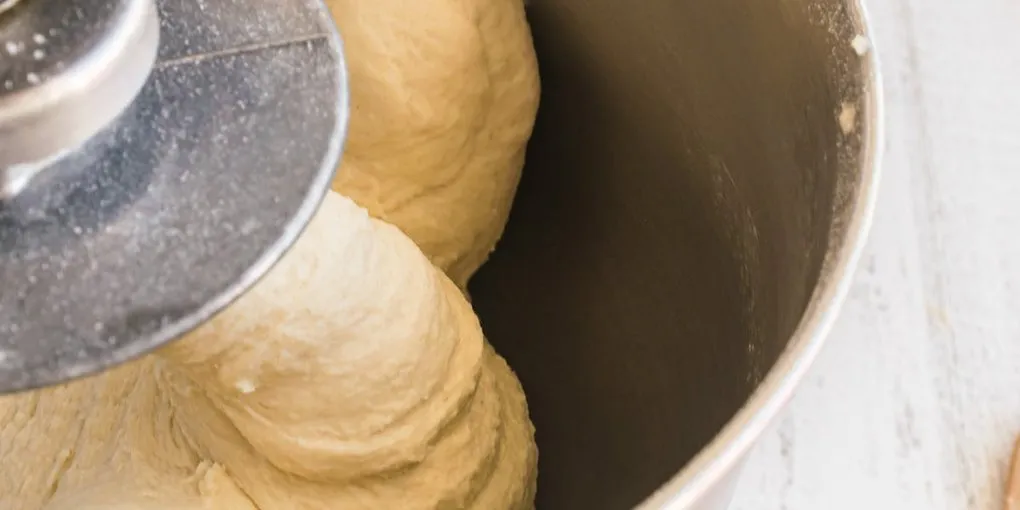
Home pizza dough is harder on mixers than most home bakers realize. A 70% hydration Neapolitan dough at 500g of flour is manageable for most machines. Scale that to a 1kg batch at 65% hydration for a party, or push into 75% territory for a focaccia-style pan pizza, and you start stressing motors that were designed for cake batter and cookie dough.
The four mixers covered here represent genuinely different design philosophies for dough: planetary action (KitchenAid, the household standard), central-motor radial action (Bosch, the serious home baker workhorse), rolling-arm rotation (Ankarsrum, the cult Swedish machine), and spiral action (Ooni Halo Pro, purpose-built for dough in 2024). Each has real strengths — and real limits that reviewers tend to gloss over.
Why Mixer Design Matters for Pizza Dough
The synthesis from Forkish, Masi, and Gemignani is consistent: pizza dough is unforgiving of heat. The target finished dough temperature is 80-82 degrees F (27-28 degrees C) — if your mixer generates significant friction heat, you are fighting against your fermentation timeline before the dough even hits the container. Over-warm dough ferments too fast and loses the complex flavor that long, cold fermentation builds. See our full desired dough temperature formula for the math behind calculating water temperature to hit your target.
Pizza dough is also tackier than bread dough at comparable hydrations because of the lower mixing time the pizza tradition demands — most pizza doughs are mixed just until cohesive, not until fully developed. That stickiness means the dough grabs at hooks and spirals, putting torque load on motors that planetary mixers handle with varying success depending on their size.
The kneading science is clear: for hydrations above 65%, hand mixing or a machine designed for wet doughs outperforms aggressive planetary action. Machine mixing is most appropriate for stiffer doughs below 65% hydration — the Forkish 48-72 hour NY dough at 64% is the canonical example. At higher hydrations, overmixing creates too much gluten organization too quickly, producing an elastic, chewy crust rather than a delicate, extensible one.
KitchenAid: The Artisan (5qt, 325W) and the Pro 600 (6qt, 575W)
KitchenAid’s planetary action — where a single attachment orbits a stationary bowl — is optimized for aeration tasks (whipping, creaming) and moderate doughs. For pizza specifically, the two relevant models are the Artisan 5qt (325W, tilt-head) and the Pro 600 6qt (575W, bowl-lift).
KitchenAid Artisan 5qt (about $400-450): The Artisan’s 325W motor is underpowered for serious pizza dough. It can handle a single 500-600g flour batch at 65% hydration reasonably well. Beyond that — two balls at 370g each in a single mix, or anything pushing 70%+ hydration — the motor strains. Long-term owners report the Artisan running hot on back-to-back pizza sessions, and the machine has been known to “walk” on the counter when fighting stiff dough. The 5-quart capacity means you are limited to two 370g balls (roughly two 12-inch pizzas) per batch. That is fine for a weeknight, not fine for feeding six people.
KitchenAid Pro 600 6qt (about $400-500): The Pro 600’s 575W motor is meaningfully stronger — roughly 75% more power than the Artisan. The bowl-lift design is more stable for heavy dough. You can reliably mix three 370g balls in a single batch (about 1.1kg total flour at 65% hydration). At 70% hydration, the dough becomes harder to manage as it climbs the hook — a known planetary mixer limitation with wet doughs. The spiral and roller designs below handle high-hydration dough more cleanly.
The honest con: Both KitchenAid models use a planetary hook that moves through stationary dough. The dough’s tendency to climb the hook at high hydration requires stopping the machine and pushing dough back down, which is frustrating and slows development. For Neapolitan-style doughs at 70%, the hook attachment is not the right tool.
Best for: Bakers doing 1-3 pizzas weekly, NY-style dough (64%), same-day doughs, and occasional pizza rather than obsessive weekly production. If you already own an Artisan and make pizza, it works — just keep batches below 700g of flour.
Bosch Universal Plus: The Serious Home Baker’s Machine
The Bosch Universal Plus ($400-450) is built around a center-post motor and a 6.5-quart bowl with a unique double dough hook arrangement. It is not as well-known as KitchenAid but has a devoted following among heavy home bread bakers for good reason.
The 500W motor is rated for up to 14 pounds of dough — significantly more capacity than either KitchenAid. For pizza, this means you can routinely mix 1.5-2kg of flour in a single batch, covering a large party prep in one pass. The Bosch handles the load without straining.
The center-post design keeps the dough from climbing like it does on a hook-based planetary. The bowl and dough hooks work together to fold and stretch the dough rather than simply dragging it around, which means less heat generated per minute of mixing. The result: dough temperatures tend to stay cooler, and fermentation stays on schedule.
Capacity for pizza: Three to five 370g dough balls per batch (roughly 1.1-1.85kg of flour). With a 48-72 hour cold ferment, you can prep an entire week’s worth of weeknight pizza in one Sunday session. This is the Bosch’s real superpower.
Limitations: The Bosch’s bowl design makes it slightly awkward for small batches — it is best suited to larger volumes. A single 500g flour batch floats around the bowl and does not get worked efficiently. Also, the Bosch does not handle the same range of baking tasks as a KitchenAid — it is a dough machine first. If you bake a wide range of things (cakes, meringue, whipped cream), you will want a machine with better whipping attachments.
Best for: Dedicated home pizza bakers making large batches, multiple pizza nights per week, or anyone who bakes bread and wants the same machine for both.
Ankarsrum Assistent Original: The Rolling-Arm Cult Favorite
The Ankarsrum Assistent Original ($699-749) is a Swedish machine that has been made in essentially the same form since 1940. Its roller-and-scraper dough system is fundamentally different from every other mixer here: a roller presses and folds the dough against the inside of a rotating 7-liter (7.4-quart) stainless bowl. The bowl rotates; the roller stays in contact. It looks strange until you understand what it is doing: it simulates hand kneading far more closely than any hook-based system.
The rolling action is exceptionally gentle — it develops gluten without overheating the dough, which is critical for high-hydration work. Users running 70-75% hydration Neapolitan and focaccia doughs consistently report the Ankarsrum handles them without the dough-climbing problem that plagues planetary machines.
Temperature advantage: The rolling action generates minimal friction heat. For cold-fermented pizza dough where dough temperature control matters, this is a genuine practical advantage — not a marketing point.
Capacity: 7 liters handles batches up to 5kg of dough. That is enough for 10+ pizza balls in a single mix, making it the choice for party prep and bulk baking.
Learning curve: The Ankarsrum is not intuitive. The roller position, the speed settings, and the timing for adding ingredients are all different from what you are used to if you have only used planetary mixers. Most new users report a 3-4 session adjustment period before the machine starts feeling natural.
The honest con: $700 is a lot for a mixer, and it takes counter space. The whisk bowl is a separate plastic insert that works fine but does not feel as premium as the main stainless setup. If you are a casual pizza maker, the price is hard to justify.
Best for: Serious pizza obsessives, high-hydration dough specialists, and anyone who also bakes bread and wants the best kneading machine available regardless of price.
Ooni Halo Pro: The Purpose-Built Spiral Mixer
Ooni launched the Halo Pro in 2024 at $799 — a spiral mixer designed specifically for pizza and bread dough. The Halo Pro uses a dual-kneading spiral hook that moves through the dough while the 7.3-quart bowl rotates, mimicking the professional spiral mixers used in pizzerias.
Capacity: Up to 11 pounds of dough (around 5kg) — enough for 20 pizzas. The 650W motor handles that load without straining. With 58 speed settings from 60 to 1,000+ RPM, you have fine control over development.
Spiral action and pizza dough: Professional spiral mixers are the commercial standard for pizza dough for good reason. The spiral hook moves through the dough rather than dragging the dough around the bowl, which produces more uniform gluten development with less heat. The Halo Pro brings this approach to a home-scale machine.
Reviewers comparing it directly to KitchenAid report that the Halo Pro produces notably better-developed dough at 70%+ hydration — more cohesive, less sticky, with the airy structure that is harder to achieve with planetary hooks.
The honest cons: $799 is expensive even compared to the Ankarsrum. This is a single-purpose machine — it does dough and bread, and that is it. There is no whipping bowl, no pasta attachment ecosystem, no grinder. If you bake pizza weekly and also want a mixer for other tasks, the Halo Pro forces you to own two machines.
The brand also matters: Ooni is primarily an outdoor pizza oven company expanding into countertop appliances. Long-term reliability data is limited compared to the decades of track record from Bosch and Ankarsrum. It is a compelling machine, but you are betting on a newer product from a company whose core expertise is ovens, not mixers.
Best for: Committed pizza makers who already own an Ooni oven, want a matching ecosystem, and make pizza frequently enough to justify a dough-only appliance.
Dough Temperature and High-Hydration Dough: The Cross-Cutting Issue
All four machines can produce good pizza dough. The difference that matters most for serious pizza makers is dough temperature control. Every 1 degree C increase in dough temperature above the target accelerates fermentation significantly — this is Masi’s data from the Neapolitan pizza science research. Over-warm dough is the root cause of many pizza failures that bakers blame on other variables.
If you mix in a warm kitchen (above 75 degrees F), the Ankarsrum’s roller action and the Halo Pro’s spiral are genuinely cooler-running than the KitchenAid planetary hook. The Bosch, with its center-post design, sits between the two extremes.
For autolyse-based pizza dough — where you mix flour and water, rest 20-30 minutes, then add yeast and salt — any of these machines works well. The autolyse period handles much of the early gluten development, reducing total machine mixing time and the associated heat. This technique is worth learning regardless of which mixer you own.
See pizza dough hydration guide for the full hydration-by-oven-type reference, and baker’s percentages explained for scaling dough batches to your machine’s capacity.
Which Mixer for Which Baker
You make 1-2 pizzas occasionally and already own a KitchenAid Artisan: Keep it. Use it for batches up to 600g of flour. For NY-style at 64% hydration, it is perfectly adequate.
You make pizza weekly and are shopping now: The KitchenAid Pro 600 is the practical choice — available everywhere, well-supported, handles 3-ball batches. Worth the upgrade over the Artisan.
You make large batches, bake bread, or push high hydrations regularly: The Bosch Universal Plus is the value leader. More dough capacity than either KitchenAid at a similar price, and better suited for the volumes serious home bakers actually work with.
You are obsessive about pizza dough quality and budget is not the constraint: The Ankarsrum. The rolling action is genuinely superior for high-hydration work, and the reliability track record is unmatched.
You own Ooni ovens and want a matching purpose-built dough machine: The Halo Pro delivers spiral-mixer quality at home scale. Just know you are buying a specialty single-purpose appliance.
No mixer is the right call more often than people admit. For 65-70% hydration pizza dough, hand mixing with the pincer method produces a more delicate crust than any machine — Forkish’s own preference. The kneading guide covers the technique. A machine is fastest and easiest for large batches and stiff doughs. Hand mixing wins for texture when you have the time.
This article contains affiliate links. If you purchase through these links, JayArr Pizza earns a small commission at no extra cost to you. We only recommend products we have researched thoroughly.
Sources: Forkish, The Elements of Pizza (2016); Masi et al., The Neapolitan Pizza: A Scientific Guide (2015); Gemignani, The Pizza Bible (2014); Myhrvold & Migoya, Modernist Pizza Vol 1 (2021); Iacopelli, YouTube (2019-2023).
Frequently Asked Questions
- Can you use a stand mixer for pizza dough at 70% hydration?
- Yes, but the results depend heavily on the mixer design. Planetary-hook mixers like KitchenAid struggle with 70%+ hydration doughs because the dough climbs the hook and develops unevenly. Spiral mixers (Ooni Halo Pro) and rolling-arm mixers (Ankarsrum) handle high-hydration doughs more cleanly because their mechanisms move through the dough rather than pulling it. For 65% and below, all four machines covered here work reliably.
- Why does the KitchenAid Artisan struggle with pizza dough but work fine for bread?
- The Artisan's 325W motor and 5-quart bowl are undersized for large, dense dough batches. Bread dough is typically developed further (more organized gluten) before baking, while pizza dough is mixed less aggressively. But the raw volume and stiffness of a multi-ball pizza batch still exceeds the Artisan's design intent. The Pro 600's 575W motor handles the load considerably better.
- Should I mix pizza dough in a stand mixer or by hand?
- For doughs at 65% hydration and above, hand mixing with the pincer method actually produces more delicate, extensible dough than machine mixing. The less mechanical work you do to high-hydration pizza dough, the more open and airy the finished crust. Use a stand mixer for stiff doughs below 65% hydration (NY style), for large batches where hand mixing is impractical, or when you want speed over maximum texture finesse.
- What is the best stand mixer for making large pizza batches for a party?
- The Bosch Universal Plus handles up to 14 pounds of dough at a price comparable to the KitchenAid Pro 600. The Ankarsrum's 7-liter bowl also handles large batches. For true party-scale production (20+ pizzas), the Ooni Halo Pro's 11-pound dough capacity is the home machine that gets closest to a commercial spiral mixer.
- Does a stand mixer heat up pizza dough?
- Yes, friction from mixing raises dough temperature. The target for pizza dough after mixing is 80-82 degrees F (27-28 degrees C). If your kitchen is warm and the mixer runs hot, you can exceed this and accelerate fermentation unpredictably. Planetary hook mixers (KitchenAid) generate more friction heat than rolling-arm (Ankarsrum) or spiral (Halo Pro) designs. Compensate by using colder water when mixing in a warm environment.