Gozney Arc XL vs Ooni Karu 2 Pro: 2026 Flagship Pizza Oven Head-to-Head
Update (April 2026): The Ooni Karu 16 has been officially discontinued and replaced by the Karu 2 Pro. This comparison covers the Gozney Arc XL against the Karu 2 Pro — the current 2026 flagships from each brand. If you already own a Karu 16, the Karu 2 Pro’s operational characteristics are nearly identical; this article applies to you.
Two brands have dominated the premium portable pizza oven market for five years. Gozney built its reputation on the Roccbox and Dome. Ooni scaled the category with the Koda and Karu lines. In 2025–2026, both brands converged on the same class of oven: large-format (16-inch capable), high-temperature (950°F), designed for backyard Neapolitan. The Arc XL and Karu 2 Pro are the results.
This article does not revisit the Roccbox, older Karu, or entry-level Koda lineup. That comparison lives at Ooni vs Roccbox vs home oven. Here, the question is simple: if you’re shopping the flagship dual-capable class in 2026, which one do you buy?
The Core Difference: Gas-Only vs True Multi-Fuel
The most important distinction between these two ovens is not performance — it is fuel flexibility.
Gozney Arc XL
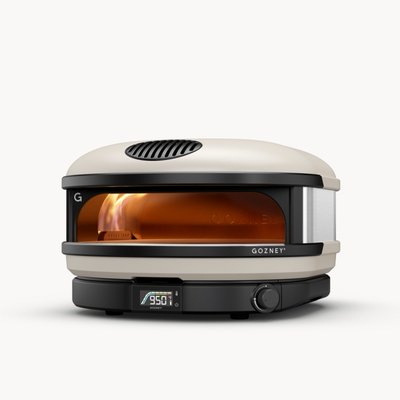
The Gozney Arc XL is propane gas only. There is no wood or charcoal option. Gozney built the Arc line explicitly around gas convenience: a lateral side burner that creates a rolling flame across the dome (the same principle as the Roccbox’s baffle-plate design), a removable 20mm cordierite stone floor, and dense two-layer insulation. It is a gas appliance designed to be as close as possible to plug-and-play. Bottom line: the simplest path to 950°F with the most forgiving flame profile in the class. Check price on Amazon → Gozney Arc XL on Amazon.
Ooni Karu 2 Pro
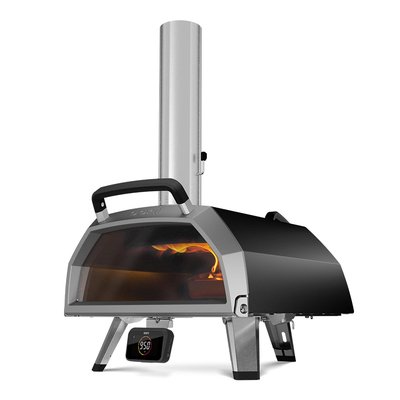
The Ooni Karu 2 Pro is genuinely multi-fuel. It ships with a wood-and-charcoal fuel tray and chimney. The gas burner attachment (about $100 additional) converts it to gas. Unlike the original Karu series, the Karu 2 Pro runs either fuel type with comparable competence — Ooni spent significant engineering effort on the wood-fire chamber to tighten temperature control relative to its predecessors. Bottom line: the only flagship portable that lets you cook with actual wood logs. Check price on Amazon → Ooni Karu 2 Pro on Amazon.
If you want to cook with actual wood logs and get the real open-fire experience, the Karu 2 Pro is the only option here. If you want convenience and do not care about wood, the Arc XL is simpler to operate and arguably easier to master.
Temperature Performance: Both Hit the Number, But Differently
On paper, both ovens reach 950°F. In practice, the heating architecture produces different cooking environments.
The Arc XL’s lateral side burner fires from the left across the stone, creating a rolling wave of heat that distributes more evenly across the dome ceiling. This is the same principle as the Roccbox’s baffle-plate design. The practical benefit: a smaller temperature differential between front and back (roughly a 150–200°F gradient vs the Ooni Koda 16’s 200°F-plus gradient in the same class), which means less aggressive rotation management.
The Karu 2 Pro’s gas burner fires from the rear. This creates a stronger hot spot at the back — the classic Ooni behavior — which requires turning the pizza every 20–30 seconds for even baking. On wood, the fire itself creates the hot zone, and the Karu 2 Pro’s taller internal ceiling gives wood-fire bakes a more authentic dome-heat character.
The key synthesis finding on portable oven flame: the flame itself contributes no meaningful radiation — it is the superheated surfaces (stone, dome ceiling, oven walls) that bake the pizza. Myhrvold’s team (and corroborating wildfire-science researchers) measured this directly: in gas and wood ovens alike, flames are “optically thin” and transfer heat indirectly by heating surfaces [Myhrvold pp. 386–387]. What matters for your pizza is how evenly those surfaces heat and how quickly they recover between pizzas.
Stone recovery is where the Arc XL’s thicker 20mm stone provides a measurable advantage over the Karu 2 Pro’s 15mm. Thicker stone stores more heat and loses less per pizza. For sessions of 4-plus pizzas, the Arc XL stone recovers faster between bakes. Ooni’s solution — the Karu 2 Pro’s Connect Hub for stone temperature monitoring — addresses the awareness problem but not the thermal mass issue.
Preheat: Neither Oven Is as Fast as Advertised
Both manufacturers advertise 15–20 minute preheat times. Both are wrong in the way that matters — 20 minutes heats the oven air and the stone surface, but not the stone core. For consistent baking from pizza to pizza, you need the stone thermally saturated.
Realistic preheat times verified against community testing and the synthesis’s portable oven data:
- Arc XL: 40–45 minutes to stone saturation at full flame
- Karu 2 Pro (gas): 35–45 minutes
- Karu 2 Pro (wood): 45–60 minutes (depends on log quality and airflow)
Verify center stone temperature with an infrared thermometer before your first launch — 750°F is the minimum for Neapolitan. The synthesis’s Ooni operational guide note applies to both ovens: always measure the CENTER with an IR thermometer, because the back reads artificially high. Both ovens now include some form of built-in temperature display (the Arc XL has a digital probe; the Karu 2 Pro has the Ooni Connect Bluetooth hub with food probe), but a handheld IR gun is still non-negotiable for reading the stone surface directly.
Flame Management: Arc XL Is Simpler to Learn
The Arc XL’s flame control is more intuitive for beginners. One dial, one fuel, one flame direction. The lateral burner’s rolling-flame behavior means you can bake on a lower setting than a comparable Ooni rear-burner oven and get similar top-heat results. Less aggressive flame also means less risk of incinerating the cornicione.
The golden rule for portable ovens applies to both: pizza in, flame down — pizza out, flame up [Iacopelli]. But the Arc XL’s rolling flame is more forgiving if you forget: the lateral design distributes heat rather than concentrating it on the back of the pizza.
Karu 2 Pro on gas behaves like its Koda siblings with the same “pizza in, turn to low” protocol. On wood, managing the fire itself is a separate skill — you are managing fuel addition, airflow, and ash buildup in addition to the pizza rotation. Wood fire rewards experience; it will burn your first several pizzas while you calibrate.
The throughput reality for both ovens: expect about 10–12 pizzas per hour in a well-managed session, not the theoretical maximum the 60-second cook time implies. Stone recovery, dough prep time, and rotation take the real throughput down to one pizza every 4–6 minutes.
The Door Question
The Karu 2 Pro has a large borosilicate glass door with ClearView technology (an air-wash effect that keeps the glass clear of soot). The Arc XL has no door.
The door is not trivial. It creates a more enclosed oven environment that holds heat more efficiently, particularly in cold or windy conditions. On the Karu series, the door adds meaningful heat efficiency — less gas or wood required for the same bake temperature — and lets you watch the pizza without heat loss.
On the original Ooni Karu 16, the door was metal (no visibility). The Karu 2 Pro’s glass door is a real improvement. For year-round outdoor use in cooler climates, the Arc XL’s open-face design is a disadvantage.
The Gozney Dome (Gozney’s heavyweight flagship at $1,700–2,000) has a full door. The Arc line is the mid-tier gas-only product, and Gozney made the door tradeoff to keep the design simpler. Aftermarket baffle doors exist for the Roccbox but no equivalent has emerged for the Arc XL as of April 2026.
Weight and Portability
Neither oven is truly portable in the “take it camping” sense. The Arc XL at approximately 58 lbs and the Karu 2 Pro at about 63 lbs are patio fixtures.
The difference is 5 lbs. For most buyers, this distinction does not matter — both ovens will live on a table or stand in the backyard and occasionally get moved to a garage for winter. If you genuinely need something lighter, neither of these is the right oven — look at the Ooni Koda 12 or the Gozney Arc (non-XL).
Who Should Buy the Arc XL
The Arc XL is the right choice if: you want the simplest gas-only operation, you value the slightly more even heat distribution of a lateral burner, you want faster stone recovery for multi-pizza sessions, and you do not care about wood or charcoal cooking. It is also the choice if you are specifically comparing on stone recovery capacity — the 20mm stone is a measurable advantage.
The con: no door (cold weather performance suffers), gas-only (no authentic wood-fire option), and the lateral burner mounting means it is somewhat harder to service if the igniter fails than Ooni’s more modular hardware.
Who Should Buy the Karu 2 Pro
The Karu 2 Pro is the right choice if: you want multi-fuel flexibility, you intend to cook with wood at least occasionally, you value the glass door for cold-weather efficiency and visibility, or you want Ooni’s ecosystem (Connect Hub integration, larger accessory range).
The con: gas burner is a separate purchase (about $100), the rear-burner flame requires more active rotation management, wood-fire management has a steeper learning curve, and at about 63 lbs it is the heavier of the two. The 15mm stone also recovers more slowly than the Arc XL’s 20mm during high-volume sessions.
For Flame Management and Heat Diffusion Upgrades
Both ovens benefit from aftermarket flame guards and heat diffusers — see pizza oven flame guard and heat diffuser for the full breakdown of community-tested options. NU2U makes diffusers for the Ooni ecosystem. The Arc XL aftermarket is still developing, but community solutions are emerging on the Gozney Community Facebook group.
For context on how these ovens compare to older-generation options like the Roccbox and standard Koda, see Ooni vs Roccbox vs home oven. For the wood vs gas question specifically, see wood-fired vs gas pizza ovens.
The Honest Assessment
These two ovens are closer in performance than their marketing suggests. Both reach 950°F. Both make excellent Neapolitan pizza with good technique. Both have real flaws that the manufacturers’ specifications do not mention.
The Arc XL’s advantages (lateral burner evenness, thicker stone, simpler operation) are meaningful but not transformative. The Karu 2 Pro’s advantages (multi-fuel, glass door, established ecosystem) are equally real.
If you are buying gas-only: Arc XL at about $999. If you want wood as an option and are willing to spend about $949 total with the gas burner: Karu 2 Pro. Neither oven makes bad pizza with bad technique, and neither makes transcendent pizza on its own. The technique — managing preheat, stone temperature, flame level, and rotation timing — matters more than the brand on the oven. For the Neapolitan baking protocol that applies to either oven, start with 750°F stone minimum, a properly puffed cornicione, and a 60–90 second bake.
Frequently Asked Questions
- Is the Ooni Karu 16 still available in 2026?
- The Karu 16 has been officially discontinued by Ooni and replaced by the Karu 2 Pro. You may still find new Karu 16 units at reduced prices through third-party retailers or open-box channels — it remains a capable oven and the operational principles are nearly identical to the Karu 2 Pro. Ooni continues to sell spare parts for the Karu 16. If you find one at a significant discount (over $150 below current Karu 2 Pro pricing), it remains a reasonable buy; just account for the shorter stone recovery time and the older metal door vs the Karu 2 Pro's glass door.
- Does the Gozney Arc XL work with wood or charcoal?
- No. The Arc XL is propane gas only. Gozney's dual-fuel products are the Dome (wood + gas simultaneously) and the Roccbox with its separate Wood Burner 2.0 attachment. The Arc line was designed from the ground up as a gas-only product focused on convenience and simplicity. If wood-fire cooking matters to you, the Ooni Karu 2 Pro is the correct oven in this price class.
- How long does it actually take to preheat either oven for Neapolitan pizza?
- Manufacturer preheat claims (15–20 minutes) refer to surface temperature only. For stone thermal saturation — which is what you need for consistent results across multiple pizzas — budget 40–45 minutes for the Arc XL and 35–45 minutes for the Karu 2 Pro on gas. Verify stone temperature at the center with an infrared thermometer; 750°F minimum for Neapolitan. Do not rely on ambient dome thermometers or the oven's analog gauge — stone surface temperature is the only number that matters for launch.
- What size pizza can these ovens actually make?
- Both ovens are rated for 16-inch pizza. In practice, 14 inches is the comfortable operational maximum. A 16-inch dough ball on a 16-inch stone has no margin for rotation — the turning peel cannot get under it without scraping the oven walls. The synthesis recommendation for 16-inch-rated portable ovens: stretch to 12–14 inches. This gives you the room to turn with a 7-inch turning peel without the pizza catching the oven mouth.
- What infrared thermometer should I buy for either oven?
- The Etekcity Lasergrip ($25–35) is the budget choice and performs adequately for home use. The ThermoWorks IR-Gun ($50) is the reliability upgrade. Both ovens have cordierite stones with emissivity around 0.9–0.95, which most basic IR thermometers are calibrated for. If you upgrade either oven to a steel baking surface, you need a thermometer with adjustable emissivity, since steel emissivity varies significantly with seasoning (0.3–0.6).
- Which oven has the bigger usable cooking area?
- Both are sold as 16-inch ovens with comparable interior stones. The Karu 2 Pro's 16.7-inch-square stone is nominally larger than the Arc XL's 16-inch interior, but because neither oven lets you realistically turn a full 16-inch pizza, the practical size ceiling for both is 14 inches. If you regularly cook for groups, stretch 300–350 g dough balls and bake back-to-back rather than chasing a bigger pizza.
Some links above are affiliate links to Amazon. If you purchase through them, JayArr Pizza earns a small commission at no extra cost to you. We only recommend equipment we have researched against the underlying thermodynamics — not manufacturer marketing.
Sources: Gozney Arc XL product specifications (gozney.com, April 2026); Ooni Karu 2 Pro product specifications (ooni.com, April 2026); PIZZA_KNOWLEDGE_SYNTHESIS.md (Ooni Koda 16, Gozney Roccbox, and Gozney Dome operational guides; Myhrvold & Migoya, Modernist Pizza Vol 1, pp. 386–387 on flame radiation); Iacopelli, YouTube home-oven and portable oven series (2019–2023); community testing on Gozney Community and Ooni Pizza Oven Facebook groups.