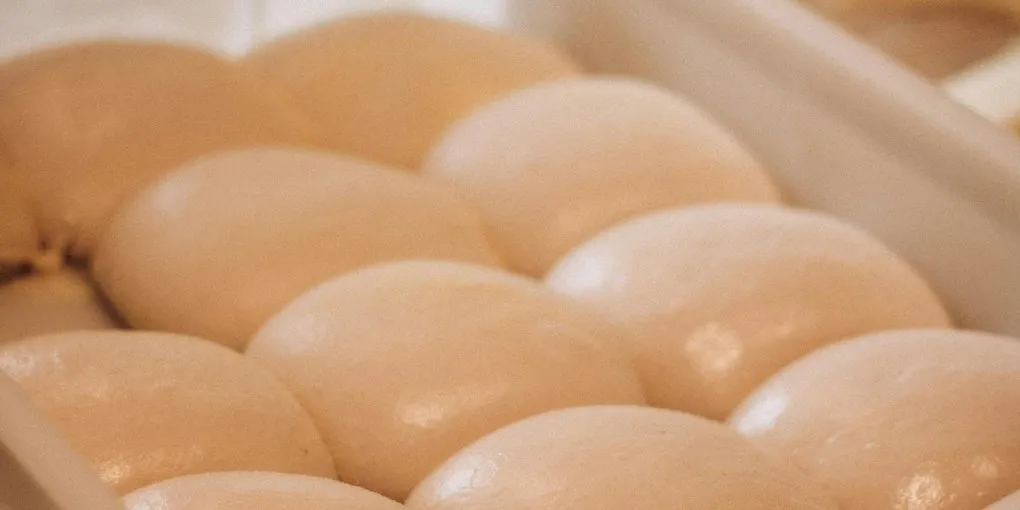
Equipment
(Updated ) |

Best Pizza Dough Bulk Fermentation Containers (2026)

Cambro round and square, Gi Metal and GSM dough trays, and the glass-bowl trap. Which container actually helps your dough — and why straight sides matter.

Best Pizza Dough Bulk Fermentation Containers (2026)

Most home pizza makers ferment their dough in whatever container happens to be the right size — a mixing bowl, a large pot, a random piece of Tupperware. It works, technically. But the container you ferment in affects more than just storage: it shapes how you track the rise, how evenly the dough ferments, and whether you’re set up for easy dough ball extraction when it’s time to shape.

Professional pizzerias use dedicated vessels. The Neapolitan TSG standard calls for panetti (individual dough balls) fermented in low, wide trays at controlled humidity. The American dough-prep tradition uses commercial straight-sided containers for bulk ferment before balling. Both choices are deliberate — and both have direct home equivalents.

Why the Container Shape Matters

Bulk fermentation is where most of the chemistry happens. Yeast produces CO₂, ethanol, and flavor precursors. Enzymes — amylases breaking starch into fermentable sugars, proteases degrading gluten proteins into free amino acids — work continuously through the entire fermentation window. At refrigerator temperatures (around 4°C / 39°F), yeast activity drops to roughly 10% of its room-temperature rate, but enzyme activity stays at 40-50%. This is the fundamental advantage of cold fermentation: the flavor-building enzymes keep working long after the yeast slows down.

The container interacts with this chemistry in two key ways.

Surface area and temperature equalization. A tall, narrow container creates a temperature gradient — the dough near the walls experiences different conditions than the dough in the center. A wide, shallow container equalizes temperature more evenly because no part of the dough is far from the container wall. For a cold ferment in the refrigerator, even temperature distribution means more even gluten development.

Rise tracking. A container with straight, vertical sides lets you mark the starting dough height and track rise as a percentage. Bowls and rounded containers make this impossible — you can’t accurately measure a curved surface. If you’re following a recipe that says “refrigerate until 50% rise,” you need a straight-sided container to actually achieve that precision.

The Neapolitan TSG standard is specific: at the end of the leavening period, the individual loaf (panetto) should increase by approximately 50% in volume. You cannot verify this without a container that gives you a consistent reference line. Gemignani’s 24+24 method — bulk ferment 24 hours in the fridge (expecting only 25-50% rise, not doubling), then degas, reball, and refrigerate another 24 hours — only works if you can accurately read that 25-50% target. Eyeballing a bowl of dough in a rounded glass bowl is not accurate.

Container material is also relevant. Polycarbonate (rigid, clear) and polypropylene (translucent, slightly flexible) are both food-grade, non-reactive, odor-resistant, and dishwasher-safe. Glass bowls are also non-reactive but have low thermal conductivity — they insulate poorly relative to thin plastic walls, creating slower temperature equilibration when moving dough between room temperature and the fridge. Food-grade plastics with thinner walls equalize to refrigerator temperature faster.

Cambro Containers: The Commercial Standard for Bulk Ferment

Round translucent food-grade plastic container with dough inside, similar to a Cambro

Cambro is the dominant foodservice container manufacturer in the US, and their polypropylene and polycarbonate food storage containers are the default choice at American pizzerias, bakeries, and home bakers who’ve done the research.

The key Cambro products for pizza dough bulk fermentation are the round containers in 6qt and 8qt sizes. What makes them work:

Straight sides. Cambro’s round containers have vertical walls with molded graduation markings (in quarts and liters). You can mark your starting dough level with a dry-erase marker or rubber band, then track rise to 50% or 100% without guesswork. This sounds minor until you’ve ruined a batch by over-proofing because you were eyeballing a curved bowl.

Translucent walls. The frosted polypropylene lets you see dough without opening the container. Gas bubble formation is visible at the walls, giving you an early visual cue of active fermentation. The clear polycarbonate version is even more transparent.

Tight-fitting lid. Proper humidity during proofing matters: below 70% relative humidity, the surface of the dough can dry and form a skin that cracks during shaping. The Neapolitan standard from Masi specifies 70-80% relative humidity for leavening; a Cambro lid maintains that at the dough’s local microclimate without additional plastic wrap.

6qt vs 8qt for pizza dough:

Price point: Cambro containers sell for roughly $8-15 each without lids; lids are sold separately for another $4-8. Commercial restaurant supply stores (WebstaurantStore, Restaurant Depot, US Foods CHEF’STORE) often stock them cheaper than Amazon. Check price on Amazon →

Temperature stability: Cambro polypropylene containers are generally rated for the freezer through hot-water prep — well within the range needed for fermentation, refrigeration, and tempering. Some bakers use the same Cambro for both bulk fermentation and for tempering (bringing dough to 60-65°F before baking). The container handles both ends of the temperature range without issue.

The honest limitation: The round Cambro is excellent for bulk ferment but awkward in a standard refrigerator if you have multiple containers. They don’t stack neatly with lids on, and the round footprint wastes shelf space relative to rectangular containers. If your refrigerator is consistently full, the square Cambro variant solves the footprint problem.

Pizza Dough Trays: The Italian Pro Standard

Pizza dough balls resting in a flat plastic dough tray

The Italian professional standard is not bulk fermentation in a single large container — it’s individual dough balls proofed in a dedicated tray system. Low, wide, stackable trays with snap-on lids. After shaping the dough balls, each ball goes into a tray slot, the tray gets lidded, and the stack goes in the fridge.

Gi Metal dough trays are the professional Italian benchmark. Made of food-grade polyethylene, in the standard 60 x 40 cm (roughly 23.6 x 15.7 inch) European GN-style footprint, with depths of 7, 10, or 13 centimeters depending on the model. The 7cm depth fits finished dough balls snugly; the 10cm version gives room for significant rise. The trays stack cleanly and a stack of four takes up the space of one sheet pan in the fridge.

Why wide-and-shallow wins for dough balls: A dough ball in a flat tray ferments differently than a dough ball in a deep ball-shaped container. The wide, flat bottom means the ball spreads slightly as it ferments, becoming the flat disk shape that Gemignani describes — a shape that gives you a head start on even stretching because you’re working from a disk, not reshaping a ball. The dough comes out of the tray pre-shaped for the counter.

Home-scale options: Full-size Italian dough trays are sized for commercial operations — 23.6 inches is too big for most home refrigerators. The practical home alternatives:

Stackable home-scale pizza dough proofing tray New Star Foodservice commercial dough tray

The honest limitation: Tray systems are optimized for individual dough balls, not bulk ferment. If your workflow involves a long bulk ferment before balling (Forkish’s approach), you still need a Cambro-style container for the bulk phase, then transfer to trays after balling. The TSG-style workflow at home is: bulk ferment 1-2 hours room temperature in a Cambro, divide into balls, transfer to trays for the 4-12 hour secondary ferment.

Square Cambro Containers: The Rectangular Alternative

Square food-grade plastic storage container

Cambro’s square containers offer the same straight-sided, marked, tight-lidded benefits as the round versions — with a stackable, space-efficient footprint. The 8qt square container fits standard shelves better than the round version and stacks cleanly with the lid in place.

For home bakers who cold-ferment in a dedicated container rather than proofing individual balls, the 12qt square is a versatile option that handles bulk batches up to 2kg of flour. The square version is also easier to use for marking with a permanent marker along a flat edge. Bottom line: the right choice if your fridge is always full. Check price on Amazon →

One practical note: square containers with 90-degree corners are slightly harder to clean thoroughly than round containers, and dough can pack into corners during fermentation. The rounded-square Cambro variants (with slightly curved interior corners) reduce this issue.

Glass Bowls with Plastic Wrap: Why This Is the Worst Option

Glass mixing bowl with dough — the worst option for tracking rise

The standard home-baker setup is a glass mixing bowl covered with plastic wrap. It’s functional, but it fails on almost every useful dimension:

If this is what you’re using and you make pizza more than twice a month, the $12-20 investment in a Cambro container with lid is among the highest-ROI upgrades in home pizza making. It’s not glamorous, but it changes the experience.

Oiled Zip-Lock Bags: The Travel Hack

For traveling pizza dough (camping, vacation house), quart or gallon zip-lock bags lightly coated with olive oil work well. The dough ferments fine, the bag compresses around it to maintain humidity, and you can track approximate rise visually. Don’t use them as your primary home setup — they’re disposable, they tear when dough gets sticky, and they’re useless for precise rise tracking.

Recommendation by Use Case

Solo weeknight pizza (1-2 balls): Cambro 6qt round with lid. Mark the level, refrigerate, check the timing without opening. About $12-18 total for container and lid.

Family pizza night (3-5 balls): Cambro 8qt round or 12qt square. The square version stores more easily in a full refrigerator. Alternatively, a Cambro 6qt for the bulk phase plus a set of GSM individual ball trays for the secondary proof after balling — covered in detail in the maturation vs fermentation breakdown.

Party prep or batch cooking (6+ balls): Dedicated dough tray system. New Star or GSM proofing trays for the individual ball proof, plus a 12qt Cambro for bulk ferment. The stacking system makes a large prep feasible in a standard residential fridge.

Competition-level workflow: The full Italian setup — mix, bulk ferment in a straight-sided Cambro until 25-50% rise, ball, transfer to Gi Metal stackable trays for secondary ferment. This is Gemignani’s 24+24 workflow adapted for home scale, paired with the scaling pizza dough math for batch sizing.

For detailed cold ferment timing and the science behind why refrigerator fermentation produces better flavor, see the guide to cold fermentation and how long pizza dough lasts in the fridge. For batch scaling, baker’s percentages explained has the math for sizing any recipe to your container capacity.

Some links above are affiliate links — if you buy through them, we earn a small commission at no additional cost to you. We only recommend equipment we’d buy ourselves.

Frequently Asked Questions

What size Cambro container do I need for pizza dough?
For most home pizza sessions (2-3 dough balls, 500-750g of flour), a 6-quart Cambro round container is the right size — it gives the dough room to expand without swimming in empty space, and the straight sides make it easy to track the rise. For bigger batches (4-6 balls, 1-1.5kg of flour), move up to an 8-quart. The key is choosing a container where the dough occupies roughly half the volume before fermentation, leaving room for the dough to double.
Do I need a separate container for bulk fermentation and dough ball proofing?
Yes, if you follow a two-stage workflow — and you should. Bulk fermentation (the first rise, before balling) is done in a single large straight-sided container like a Cambro. After balling, the individual dough balls need their own space where they won't press against each other as they rise. Stackable individual dough trays (Gi Metal, GSM Brands) handle the second stage. Some bakers skip bulk fermentation and go straight to individual ball proofing — Enzo Coccia's famous method at La Notizia, for instance, balls the dough within 10-20 minutes of mixing.
Can you ferment pizza dough in Tupperware?
Generic Tupperware can work, but most Tupperware containers have tapered or rounded sides rather than true vertical walls, which makes rise tracking inaccurate. They also often have loosely fitting lids that allow moisture to escape, which can dry the dough surface. Food-service containers like Cambro are specifically designed with straight sides, calibrated markings, and tight-fitting lids — advantages that matter when you're trying to replicate a consistent 50% rise batch after batch.
Should pizza dough containers be airtight?
They should be tightly lidded to maintain humidity, but the dough itself produces CO2 that needs somewhere to go. Most professional pizza containers aren't fully hermetically sealed — their lids sit tight but aren't pressure-locked. Cambro lids snap on firmly but can be slightly opened by building gas pressure. For cold fermentation at 38-40 degrees F, this is fine: gas production is slow enough that it doesn't matter.
How do I track the dough rise in a round container?
Use a rubber band or dry-erase marker on the outside of the container at the dough's starting level immediately after you add the dough. On Cambro containers, you can also use the molded graduation marks as a reference. When using a rubber band, stretch it around the container's circumference at the dough height — it stays level as you move the container and gives you an unambiguous reference line.
What's the difference between polycarbonate and polypropylene Cambro containers?
Polycarbonate Cambro containers are clear and rigid (the brand calls these the 'Camwear' line), while polypropylene versions are translucent (frosted) and slightly more flexible. Both are food-grade, non-reactive, and dishwasher-safe. For pizza dough, the practical difference is visibility — polycarbonate lets you see the dough more clearly, polypropylene is sturdier under repeated use and slightly less expensive. Either works.
Share Copied!