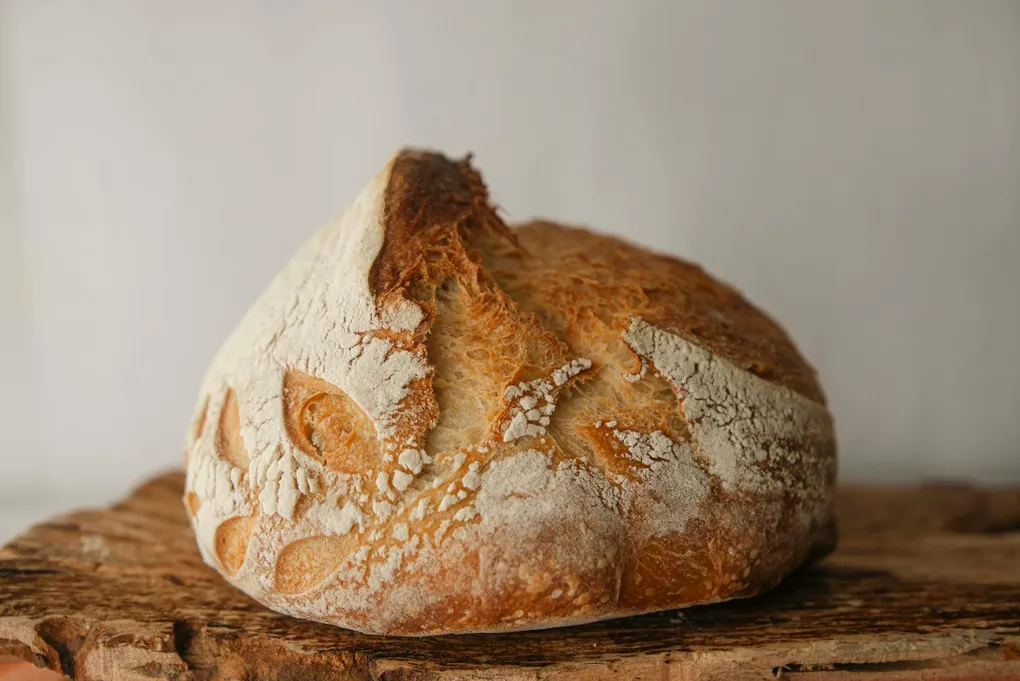
If you maintain a sourdough starter for bread, you already have the most powerful flavor tool available for pizza dough. Sourdough pizza produces a crust with depth that commercial yeast simply cannot replicate — complex organic acids, subtle tang, better browning, and a texture that is simultaneously crisp and tender. But adapting a bread-focused starter for pizza requires adjustments. Pizza dough operates under different rules than bread dough: lower hydration, less gluten development, shorter bulk ferments, and a finished crust that prizes delicacy over volume.
This article draws on Forkish’s levain-based recipes from both The Elements of Pizza and Flour Water Salt Yeast, Gemignani’s Bran Starter method from The Pizza Bible, and Myhrvold’s pragmatic second-chance levain technique from Modernist Pizza — three fundamentally different approaches to the same goal.
The Sourdough Advantage for Pizza
Sourdough fermentation introduces lactic acid bacteria (LAB) alongside wild yeast. This dual-organism culture produces a different acid profile than commercial yeast alone:
- Lactic acid (milder, creamy) from LAB
- Acetic acid (sharper, more complex) — favored by cold fermentation
- Esters and alcohols from extended fermentation — aromatic compounds that develop during long, slow rises
- Free amino acids from protease activity — these participate in Maillard browning, producing deeper crust color
The practical result: sourdough pizza dough browns better, tastes more complex, and has a distinctly different crumb texture than straight-yeast doughs. Forkish calls his Overnight Levain his personal favorite of all his pizza dough recipes — “best texture and flavor” — and it is the recipe he reaches for most at home. [Forkish, Elements Ch6]
Managing Acidity: The Young Levain Strategy
The biggest risk with sourdough pizza is excessive acidity. Bread benefits from some tang. Pizza, with its thin crust and shorter bake time, amplifies sour flavors in ways that can overwhelm the toppings. A sharp, vinegary crust fights the tomato sauce rather than complementing it.
The solution: use a young levain.
A young levain is one that has recently been fed and is in the early-to-mid stages of its rise — still sweet-smelling, actively expanding, not yet peaked and collapsing. At this stage, the yeast population is vigorous and the LAB has not yet produced the heavy acid load that comes as the culture matures past peak.
Practical guidelines for young levain:
- Feed your starter 6-8 hours before you plan to mix dough (at room temperature around 70F)
- Use it when it has roughly doubled — before it starts to dome and certainly before it collapses
- A sweet, yeasty, mildly tangy aroma is ideal. If it smells sharply acidic or boozy, it has gone too far.
- Forkish’s levain build: 50g culture + 100g water + 100g flour, fermented 6-8 hours [Forkish, Elements Ch6]
Temperature Controls Acid Profile
Cold fermentation shifts the acid balance toward acetic acid (sharper) while warm fermentation favors lactic acid (milder). This means:
- If your pizza is too tangy, try bulk fermenting at a warmer room temperature (75-80F) for a shorter time before refrigerating the dough balls.
- If you want more complexity with some tang, an extended cold ferment (24-48 hours after balling) intensifies the acetic character.
- Forkish’s Overnight Levain targets a 70F environment during the 6-8 hour ball proof, producing moderate acid development. [Forkish, Elements Ch6]
Inoculation Rate: How Much Starter to Use
The percentage of starter relative to total flour in the final dough — the inoculation rate — determines fermentation speed and flavor intensity.
| Inoculation Rate | Approximate Proof Time | Flavor Profile |
|---|---|---|
| 10-15% | 10-14 hours | Mild sourdough character, subtle complexity |
| 20-25% | 6-8 hours | Moderate tang, good balance for most palates |
| 30%+ | 4-6 hours | Pronounced sourdough flavor, faster timeline |
Forkish’s Overnight Levain uses approximately 250g starter against 375g flour in the final dough — an effective inoculation rate around 25% (accounting for flour within the levain). This produces a moderate sourdough character that complements rather than dominates. [Forkish, Elements Ch6]
Gemignani’s Organic dough uses an even higher rate — 140g Bran Starter against 451g flour (~30%) — reflecting the lower potency of his bran-based starter compared to a mature wheat levain. [Gemignani]
Forkish’s Overnight Levain Pizza Dough
This is Forkish’s personal favorite. It is a pure sourdough — no commercial yeast at all. The tradeoff is scheduling: you need to be home around lunchtime on pizza day to shape the dough balls, and you need an active starter.
The Formula
Levain build (day before, evening):
- 50g mature starter culture
- 100g water
- 100g flour (same as final dough — 00 for Neapolitan/Roman)
- Ferment 6-8 hours at room temperature
Final dough (pizza day, morning/midday):
| Ingredient | Amount | Baker’s % |
|---|---|---|
| 00 flour | 375g | 100% (of new flour) |
| Water | 225g | 60% (of new flour) |
| Salt | 14g | 2.8% (of total flour) |
| Levain | 250g (all of it) | — |
Total effective hydration: ~70%. Total flour (including levain): ~475g. Yields 3 dough balls.
Method:
- Combine water and levain, mix to dissolve.
- Add flour and salt. Mix by hand with pincer method until cohesive — about 2 minutes.
- Rest 15-20 minutes.
- Brief knead (30 seconds to 1 minute) until smooth.
- Bulk ferment 2 hours at room temperature.
- Divide into 3 balls (~280g each). Shape tightly.
- Ball proof 6-8 hours at room temperature (~70F).
- Bake when dough balls are soft, relaxed, and show small gas bubbles on the surface.
The FWSY Variant (larger batch): Forkish’s Flour Water Salt Yeast version scales up to 5 balls using 900g flour + 620g water + 20g salt + 180g levain, with an autolyse step (20-30 minutes of flour+water rest before adding salt and levain). The FWSY version uses whole wheat in the levain feed (200g white flour + 50g whole wheat + 200g water) for more complexity. Total time from levain feed to bake: approximately 24 hours. [Forkish, FWSY Ch13]
Gemignani’s Bran Starter: An Alternative Path
Gemignani takes a completely different approach to wild fermentation. Rather than maintaining a traditional flour-and-water starter, he developed a Bran Starter — fermented bran water used to inoculate pizza dough.
Building the Bran Starter
- Bran water: 20g organic wheat bran + 200g cold water. Ferment 2-3 days at room temperature until bubbling.
- First feed: Strain out bran solids. Combine 50g bran water + 50g flour. Ferment 24 hours.
- Subsequent feeds: 40g existing starter + 50g flour + 50g water. Feed every 12 hours.
- Ready: After 3 feeds minimum, better after 5. Will have a mild, slightly sweet-sour aroma.
The Bran Starter is used in Gemignani’s Organic dough at a relatively high rate (140g starter per ~450g flour). It produces a milder, less assertively sour flavor than a traditional wheat levain — more about complexity and aroma than tang. [Gemignani]
When to Choose Bran Starter vs. Traditional Levain
- Traditional wheat levain (Forkish): Stronger fermentation power, more pronounced sourdough flavor, requires ongoing maintenance (feeding schedule). Best if you already bake sourdough bread and have an active culture.
- Bran Starter (Gemignani): Milder flavor, slightly easier to build from scratch, good for pizza makers who want wild-yeast complexity without the full commitment of maintaining a perpetual culture. Can be rebuilt from scratch in about a week when needed.
Myhrvold’s Second-Chance Levain: The Pragmatic Shortcut
Myhrvold offers perhaps the most unconventional approach in Modernist Pizza: freeze your levain, kill the organisms, and add commercial yeast back later.
The Method
- Take unused or overripe levain — the stuff most bakers discard.
- Freeze in ice cube trays. Once solid, transfer cubes to a freezer bag.
- Freezing kills the yeast and lactobacillus, BUT the flavor compounds survive — organic acids, esters, free amino acids, and Maillard precursors remain intact for up to 2 months.
- When ready to make pizza: thaw the levain cubes, add 0.4-0.5% instant dry yeast (IDY) to the final dough.
- The thawed levain contributes sourdough flavor while the commercial yeast handles leavening.
This is heresy to sourdough purists, and Myhrvold knows it. But the approach solves a real problem: maintaining a living starter requires consistent feeding, and many home pizza makers do not bake frequently enough to justify the waste and attention. The second-chance levain lets you stockpile sourdough flavor in your freezer and deploy it on demand. [Myhrvold pp. 342-344]
Important caveat: This technique directly contradicts Gemignani, who says freezing “causes the moisture in the cells to expand, which can break the cell wall and kill the yeast” and advises against it entirely. [Gemignani] The contradiction is the point — Myhrvold is intentionally killing the organisms and replacing them with commercial yeast. The organisms are gone; the flavor persists.
The Float Test: Stop Using It
The traditional “float test” for levain readiness — drop a spoonful in water, and if it floats, it is ready — is unreliable for pizza applications. Myhrvold’s testing demonstrated that levain can float when it is past peak (overripe, collapsing) and can sink when it still has adequate leavening power. [Myhrvold p. 340]
Better approach: volume tracking. Mark the level of your levain in its container immediately after feeding. Watch for 2-2.5x rise from the feed mark. This is when your levain is at peak vitality — maximum yeast activity, moderate acid production, and strong enough to leaven pizza dough.
Other readiness indicators:
- Domed surface (not flat or concave)
- Sweet, yeasty aroma with mild tang (not sharp vinegar or alcohol)
- Consistency is bubbly and slightly looser than when first mixed
- Springs back slowly when poked
The float test originated in bread baking communities and became widespread through social media. It was never validated scientifically, and the physical principle it relies on (gas retention = buoyancy) does not correlate reliably with fermentation vitality.
Hydration Adjustments for Sourdough Pizza
Sourdough levain introduces additional water into your dough. If you are adapting a straight-yeast recipe, you need to account for this.
A 100% hydration levain (equal parts flour and water, like Forkish’s) contributes its water weight directly to the total dough hydration. If your target is 70% hydration and you are adding 250g of levain (containing roughly 125g water and 125g flour), your water calculation for the remaining flour must account for that 125g already present. Understanding baker’s percentages makes this calculation straightforward.
Forkish handles this naturally in his published recipes — the numbers are pre-calculated. But if you are converting a straight-dough recipe to sourdough, do the math:
- Determine total flour (recipe flour + flour in levain)
- Determine total water (recipe water + water in levain)
- Total water / total flour = actual hydration
- Adjust recipe water up or down to hit your target
Scheduling: Planning Your Pizza Day
Sourdough pizza requires more planning than commercial yeast doughs. Here are realistic timelines for the three approaches:
Forkish Overnight Levain
- Day before, 8-10 PM: Feed levain (50g culture + 100g flour + 100g water)
- Pizza day, 8-10 AM: Mix final dough (levain should have roughly doubled)
- Pizza day, 10 AM - noon: Bulk ferment 2 hours
- Pizza day, noon: Divide and ball
- Pizza day, 6-8 PM: Bake (after 6-8 hours of ball proof)
- Total active time: ~20 minutes. Total elapsed time: ~22 hours.
Gemignani Bran Starter Path
- Week before: Build Bran Starter (3-5 feeds over 5-7 days)
- Day before pizza: Mix dough with Bran Starter, refrigerate 24 hours
- Pizza day: Pull from fridge, temper 1-2 hours, bake
- Total active time: ~30 minutes (plus starter building). Total elapsed time: ~48 hours from dough mix.
Myhrvold Frozen Levain Shortcut
- Anytime (weeks/months before): Freeze levain cubes from discard
- Day before pizza: Thaw cubes, mix dough with thawed levain + 0.4-0.5% IDY
- Ferment: Follow any cold-ferment schedule (24-48 hours)
- Pizza day: Temper and bake
- Total active time: ~15 minutes. Total elapsed time: 24-48 hours.
Common Mistakes with Sourdough Pizza
Using overripe levain. A collapsed, alcohol-smelling starter produces excessively sour, slack dough. Use your levain young — at or just before peak.
Not accounting for levain’s flour contribution. Your total flour includes what is in the levain. Ignoring this means your actual hydration and salt percentages are off from your target.
Treating sourdough pizza dough like bread dough. Pizza wants less gluten development than bread. Hand-mix gently (Forkish’s pincer method), keep kneading minimal, and resist the urge to do multiple stretch-and-folds. The goal is a delicate crust, not a chewy loaf.
Extending bulk ferment too long. Sourdough’s acid production progressively weakens gluten. A 2-hour bulk ferment is plenty for pizza — beyond that, the dough loses structure. The real development happens during the subsequent ball proof.
Neglecting temperature. A 5-degree difference in room temperature can shift your timeline by hours. If your kitchen is 75F instead of 70F, your 6-hour ball proof becomes a 4-hour ball proof. Monitor dough state (soft, relaxed, gassy) rather than following a clock.
Which Approach Should You Use?
| Your Situation | Best Approach |
|---|---|
| Already maintain a sourdough starter | Forkish Overnight Levain |
| Want wild-yeast flavor, no ongoing commitment | Gemignani Bran Starter or Myhrvold Frozen Levain |
| Make pizza infrequently (monthly) | Myhrvold Frozen Levain — stockpile and deploy |
| Make pizza weekly | Forkish Overnight Levain — starter stays active from bread baking |
| Want mildest sourdough flavor | Gemignani Bran Starter (lowest acid production) |
| Want most pronounced sourdough flavor | Forkish FWSY Overnight Levain (whole wheat in feed, no commercial yeast) |
All three approaches produce superior pizza to straight commercial yeast. The differences between them are about scheduling, maintenance commitment, and how aggressively sourdough-forward you want the final flavor. Start with whichever fits your life, and you can always experiment with the others later.