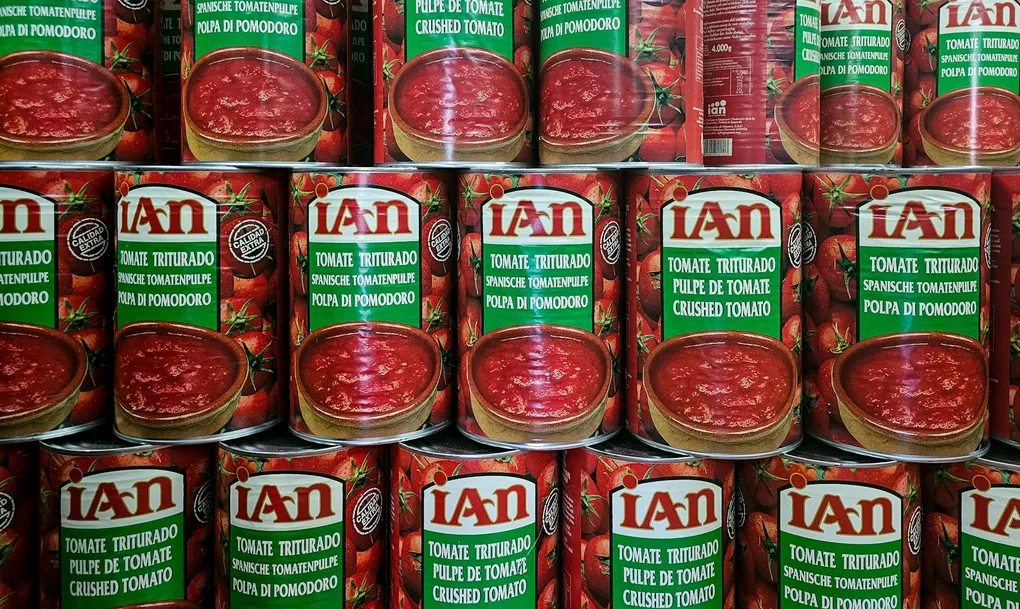
Walk into any grocery store’s canned tomato aisle and you’ll face a wall of options: San Marzano DOP, San Marzano-style, whole peeled, crushed, diced, pureed, fire-roasted, organic. Prices range from $1.50 to $8 a can. You’re making pizza sauce. Do you actually need the expensive ones?
The honest answer: the tomato matters enormously, but the DOP label on the can is not the full story. Here’s what the best pizza makers in the world actually look for, what makes a good pizza tomato, and how to navigate the market without overpaying for marketing.
What “San Marzano DOP” Actually Means
DOP (Denominazione di Origine Protetta, or Protected Designation of Origin) is a European Union certification that specifies where and how a product is made. For San Marzano tomatoes, it means:
- Variety: San Marzano type (elongated plum) grown in the Agro Sarnese-Nocerino area near Mount Vesuvius, in volcanic soil
- Processing: Peeled whole, packed in tomato juice, no citric acid
- Certification: Each can carries a DOP seal, a certification number, and the name of the consortium (Consorzio San Marzano dell’Agro Sarnese-Nocerino)
The volcanic soil gives these tomatoes low acidity, high natural sweetness, and a firm, meaty texture with few seeds. When you hand-crush a genuine DOP San Marzano, you get a thick, sweet, low-acid pulp that needs nothing but salt.
The problem: the DOP label has been plagued by fraud. Investigations have found cans bearing DOP markings that contained tomatoes from entirely different regions. If you’re buying San Marzano DOP, look for the consortium seal with a traceable serial number — not just the words “San Marzano” on the label.
What Makes a Good Pizza Tomato
Strip away the branding and certifications, and what actually matters for pizza sauce comes down to four qualities that every serious pizza maker evaluates:
Low seed count and firm flesh. Seeds and surrounding gel contribute bitterness and excess moisture. Plum-type tomatoes (San Marzano, Roma, and similar elongated varieties) have fewer seeds and more thick-walled flesh than round tomatoes. More flesh means more concentrated tomato flavor per ounce.
Balanced acidity. Too acidic and the sauce fights with everything else. Too flat and it tastes dull. San Marzano types from volcanic soil tend toward lower acidity and higher natural sugar, which is why they work so well raw — they don’t need cooking to mellow out.
High pectin content. Pectin gives the sauce body and cling. A good pizza tomato, crushed by hand, produces a thick sauce that stays put on the dough rather than pooling. Masi’s research on tomato moisture management emphasizes this: fresh tomatoes have roughly 94% water content. Excessive passata (thin tomato sauce) slows heat transfer during baking and can produce a rubbery, undercooked center.
Brix sugar content. This measures dissolved sugar solids. Higher Brix means sweeter, more concentrated tomato flavor. Good canned pizza tomatoes typically fall between 4.5 and 6 Brix. You can taste this directly: open a can, taste a raw tomato. If it tastes flat, watery, or aggressively acidic, it will taste that way on your pizza.
The Brand Comparison
Gemignani provides the most comprehensive brand guidance, split between professional and supermarket availability. Forkish is more focused, recommending a smaller set of favorites. Here’s how the key brands shake out:
Top Tier: The Go-To Choices
Bianco DiNapoli (Organic) California-grown, organic, packed in organic juice with sea salt and basil. Co-founded by Chris Bianco (Pizzeria Bianco, Phoenix). These are Forkish’s favorite domestic option and appear on Gemignani’s recommended list. They’re sweet, thick-fleshed, and remarkably consistent can to can. Available in whole peeled and crushed.
Stanislaus (7/11 Ground, Valoroso Whole Peeled, Alta Cucina) Professional-grade California tomatoes, available online. Stanislaus is the industry standard at high-end American pizzerias. Their 7/11 ground tomatoes are Gemignani’s go-to for sauce bases, and their Valoroso whole peeled are a professional’s workhorse. Not cheap, but quality is extremely consistent.
Strianese DOP San Marzano Gemignani’s preferred Italian DOP brand for Napoletana sauce. Also recommended by multiple competition pizza makers. Genuine DOP with consortium seal. Sweet, low-acid, dense flesh. His Napoletana sauce is nothing but Strianese tomatoes through a food mill with salt.
Strong Middle: Reliably Good
Cento San Marzano Widely available in US grocery stores. DOP certified. Solid quality, though some batches can be slightly more acidic than Strianese. A good entry point into Italian canned tomatoes without the price premium of specialty brands. Forkish recommends buying several brands and tasting side-by-side — Cento holds up well in these comparisons.
Escalon 6 in 1 Ground tomatoes available in larger cans. A professional product that Gemignani lists as a strong option for ground tomato applications. Less commonly found in retail.
DiNapoli (non-Bianco) Standard DiNapoli canned tomatoes appear on Gemignani’s recommended list for both whole peeled and ground. Not to be confused with Bianco DiNapoli, which is a separate (and generally higher-end) product.
Contadina Gemignani recommends specifically for tomato paste (not whole or ground). Good quality paste that’s widely available.
The Budget Question
Generic store-brand crushed tomatoes can work for pizza, but they often have issues: higher acidity, more seed content, thinner flesh, added calcium chloride (which affects texture), and citric acid (which adds sharpness). The cost difference between a $1.50 generic can and a $4 can of Bianco DiNapoli is $2.50 — on a pizza that might cost $8-12 in total ingredients. The tomato upgrade is one of the highest-impact improvements you can make per dollar spent.
No-Cook Sauce: The Cross-Source Consensus
Here’s something remarkable: virtually every authoritative pizza source agrees that pizza sauce should not be cooked before it goes on the dough. For full recipes and technique, see our complete guide to making pizza sauce.
Forkish: “The sauce is nothing more than canned tomatoes — whole peeled tomatoes from southern Italy — pureed with salt.” No cooking required.
Gemignani: “No-cook sauce is the default — tomatoes are already ‘cooked’ by canning pressure and will cook again on the pizza. Simmering beforehand = overcooked, burnt, lost fresh flavor.”
Iacopelli: Hand-crushed canned tomatoes with salt, sugar, and olive oil. Uncooked.
The logic is sound. Canned tomatoes have already been processed at high temperatures during the canning process. They’ll cook again during the 7-15 minutes they spend on a pizza in a 500-550F oven (or 60-90 seconds in a wood-fired oven). Simmering them on the stovetop first is a third cooking — by that point, you’ve driven off the fresh, bright tomato flavor that makes pizza sauce compelling.
The notable exception: Chicago deep-dish sauce, which Gemignani lightly simmers. And his Detroit sauce, which gets pureed with an immersion blender and warmed before being ladled onto the finished pizza in “racing stripes.” But for Neapolitan, New York, Roman, and most other styles, the sauce goes on raw.
How to Make the Sauce
Neapolitan (Gemignani’s competition recipe): Two cans of DOP San Marzano (Strianese), passed through a food mill fitted with a fine screen. Add salt. That’s it. The sauce should be thin enough that you can see the dough through it in places. This is intentionally minimal.
New York/New Jersey (Gemignani’s NY-NJ Tomato Sauce): 120g ground tomatoes (7/11 or DiNapoli) + 65g tomato paste (Contadina or SuperDolce) + a pinch of dried oregano + a pinch of fine sea salt + 5g EVOO, pureed with an immersion blender, then stir in 55g hand-crushed tomatoes. Uncooked. Make a day ahead for flavors to meld.
Forkish’s Smooth Red Sauce (enough for 5 pizzas): One 28-oz can whole San Marzano tomatoes, drained 10-15 minutes. Add 1.5 tbsp EVOO, 1 clove garlic (optional), 0.5 tsp sea salt, 0.25 tsp dried oregano, 0.25 tsp chile flakes (optional). Blend until smooth. Not cooked.
Forkish’s Chunky Red Sauce (enough for 2-3 pizzas): Same drained tomatoes, pushed through a colander with a wooden spoon for about 30 seconds to break into chunky pulp. Stir in 1.5 tbsp EVOO and salt to taste.
Gemignani’s Tomato Test
Gemignani offers a practical method for comparing tomato brands that’s worth doing at least once:
- Buy 3-4 different canned tomato brands
- Open each can and drain the tomatoes in separate colanders
- Rinse off the dark red juice — this is often added during canning and doesn’t come from the tomatoes themselves
- Compare the actual tomato color, texture, and flavor side-by-side
The differences are striking. Some brands produce bright red, firm, sweet tomatoes. Others reveal pale, mushy, acidic fruit once the added juice is washed away. This 10-minute exercise will tell you more about which tomato to buy than any amount of label-reading.
Sauce Application: Less Than You Think
A common home baker mistake is drowning the pizza in sauce. Masi’s research quantifies the target: the EU TSG standard specifies 60-80g of tomato per pizza when cheese is present, or 70-100g without cheese. That’s roughly a third of a cup — far less than most home bakers use instinctively.
Gemignani’s application method: sauce in a spiral from the center outward, leaving a 3/4-inch border (the “sauce line”). Use less sauce in the center than the edges, because toppings and cheese naturally migrate inward during baking. His Commandment #4: “Never put cold sauce on pizza dough.” Pull the sauce from the fridge when you pull the dough — both should reach room temperature before assembly. For a full walkthrough of the assembly process, see our guide on how to build a pizza.
The Tomato-Oil Partnership
One detail from Masi’s tomato science is worth knowing: lycopene (the red carotenoid that gives tomatoes their color) is lipophilic — it bonds with fats before the body can absorb it. This is why tomato and olive oil is such a nutritionally effective combination. Baking doesn’t compromise lycopene; it actually increases its bioavailability compared to raw tomatoes.
This is your scientific permission to drizzle EVOO on your pizza. Before baking for function (antioxidant, moisture barrier), after baking for flavor (heat activates the aromatics in high-quality olive oil). For more on post-bake finishing, see our piece on finishing oils and flaky salt.
The Bottom Line
The tomato matters. Not because you need a DOP label, but because pizza sauce is so simple — just tomatoes and salt in most cases — that the quality of the tomato is the entire game. A great canned tomato, hand-crushed with salt, uncooked, is a better pizza sauce than an elaborate simmer of mediocre tomatoes.
Buy a few brands. Drain them. Taste them. The one that tastes best raw will taste best on your pizza. Then stop cooking your sauce, trust the oven to do that work, and spend the money you would have spent on six cans of generic on one can of something excellent.