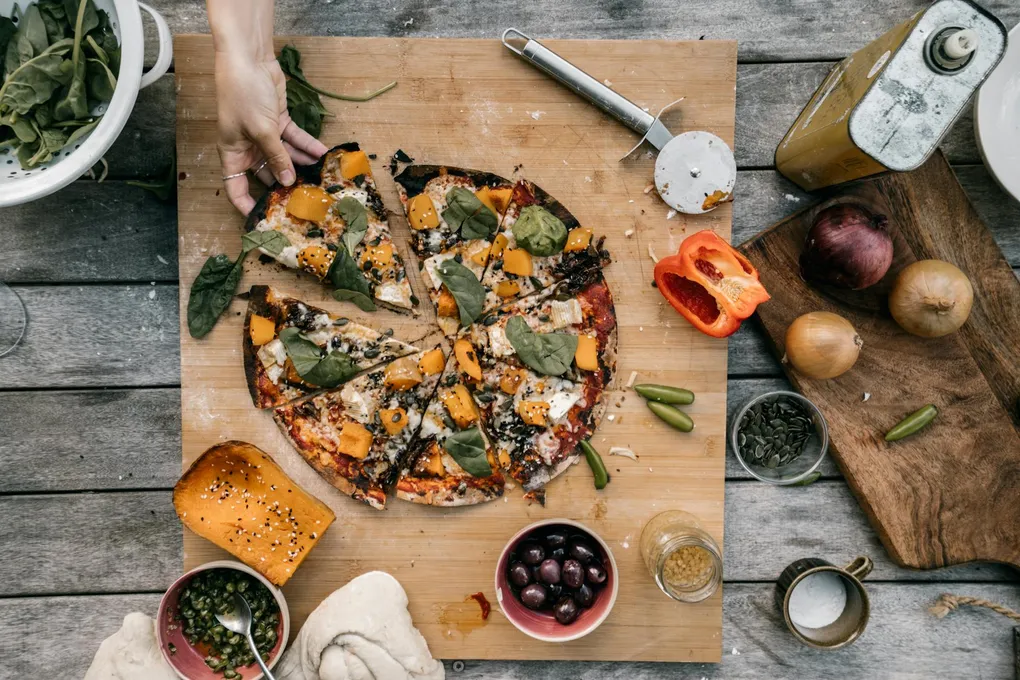
The enemy is moisture. Every topping you put on pizza either releases water during baking or absorbs it. Get this wrong and you end up with a soggy center, pooling liquid under the cheese, or dense toppings that are still raw when the crust is done.
The pre-cook question isn’t a matter of preference — it’s physics. A Neapolitan pizza bakes in 60-90 seconds at 900F. A home oven pizza bakes in 7-8 minutes at 500-550F. A deep-dish takes 25-30 minutes at 425-500F. In 60 seconds, a chunk of raw broccoli barely warms through. In 25 minutes, a thin slice of pepperoni can go from perfect to jerky. The answer to “should I pre-cook this topping?” always depends on your bake time and oven temperature.
The Decision Framework
Every topping falls into one of three categories:
Always raw (never pre-cook): Toppings that cook perfectly within any standard pizza bake time, or that lose their best qualities when pre-cooked.
Always pre-cook: Toppings that release too much moisture, need longer cooking than the pizza allows, or won’t reach food-safe temperatures in a fast bake.
Depends on your oven: Toppings that work raw in a slow home-oven bake but need pre-cooking for a fast portable-oven bake.
Toppings That Go On Raw
Pepperoni
Never pre-cook pepperoni. It renders its fat, crisps, and — if it’s natural-casing pepperoni — cups into those satisfying little charred bowls during the bake. Pre-cooking pepperoni makes it leathery and robs it of the grease that bastes the surrounding cheese. Gemignani’s pepperoni guidance is definitive: natural-casing pepperoni cups because the casing shrinks faster than the meat, pulling the edges up. This is desirable, not a defect.
Slice thickness matters. Thicker slices (3-4mm) cup more dramatically and stay juicier. Thinner slices crisp more uniformly but can dry out in a longer bake. For home ovens (7-8 min bake), standard deli-thickness works. For portable ovens (60-90 sec), go slightly thicker — there’s less time for fat to render.
Fresh Mozzarella
Fior di latte and mozzarella di bufala go on raw. But moisture management is critical. Fresh mozzarella contains 62-65% water (Masi’s data). At 100C during baking, that water turns to steam, creating the characteristic blistered surface — but excess moisture pools and creates a soggy center.
The fix: Slice your fresh mozzarella 1-2 days ahead and drain in a colander in the fridge (Iacopelli’s method). Or slice the day of and press gently between paper towels for 15 minutes. For home oven bakes (7-8 minutes), Forkish recommends adding the cheese 4 minutes into the bake so the cheese exposure time matches a Neapolitan-style melt.
Low-moisture mozzarella (the block kind for New York style) goes on raw, grated. No special moisture management needed — that’s the entire point of low-moisture mozz.
Tomato Sauce
Always raw for most styles. This is one of the strongest cross-source consensus points in pizza making. Forkish: “The sauce is nothing more than canned tomatoes pureed with salt. No cooking required.” Gemignani: “No-cook sauce is the default — tomatoes are already ‘cooked’ by canning pressure and will cook again on the pizza.” The only exceptions: Chicago deep-dish sauce gets a brief simmer, and Detroit sauce is cooked before being applied as “racing stripes” after baking.
But fresh tomatoes (not canned) present a moisture problem. Masi documents that fresh tomatoes contain approximately 94% water. Slicing and seeding helps, but fresh tomatoes will always release more liquid during baking than canned/processed sauce. If using fresh, slice thin, seed, and salt 15 minutes ahead to draw out excess water.
Olives
Black and green olives go on raw. They’re already cooked (cured and/or brined). In the oven, they warm through, concentrate slightly, and develop some surface char. Pre-cooking would only dry them out. Slice or halve them for better heat penetration and to reduce rolling.
Cured Meats (besides Pepperoni)
Salami, sopressata, capicola, prosciutto — all go on raw with one caveat. Thin-sliced cured meats like prosciutto dry out and turn papery in anything more than a 2-minute bake. For home ovens, add prosciutto after baking (Gemignani’s approach: slice first, then add finishing ingredients). For fast portable ovens, prosciutto can go on before baking since it gets just enough heat to warm without drying.
Anchovies
Raw. They dissolve into the sauce during baking, creating a salty, umami-rich foundation. This is their purpose. Oil-packed anchovies work best — the oil bastes the surrounding area.
Fresh Herbs
Most fresh herbs go on after baking, not before and certainly not pre-cooked. Fresh basil’s volatile oils flash off above 350F — put it on before baking and you lose exactly the thing that makes basil taste like basil. Tear or chiffonade and scatter on the finished pizza immediately after it comes out of the oven.
Exception: dried oregano can go on before baking. It needs heat to bloom its flavor compounds. Oregano in the sauce or sprinkled on pre-bake works well.
Garlic
Raw thin-sliced garlic works on fast-baked pizza (60-90 second Neapolitan). It barely has time to cook and stays pungent and sharp. On a 7-8 minute home oven bake, raw sliced garlic will burn and turn bitter. For home ovens, use garlic oil (infuse olive oil with crushed garlic at low heat for 20-30 minutes) drizzled after baking, or roasted garlic cloves that can handle the longer exposure.
Toppings That Must Be Pre-Cooked
Mushrooms
This is the single most common topping mistake. Raw mushrooms are roughly 90% water. Put them on pizza raw and they release a puddle of liquid as they heat — a puddle that sits under your cheese, soaks into your crust, and creates a soggy disaster in the center of the pie.
The fix: Saute mushrooms in a hot pan with a small amount of oil until they’ve released their liquid AND the liquid has evaporated. This takes 5-8 minutes over medium-high heat. Don’t crowd the pan — mushrooms in a single layer brown; mushrooms stacked three deep steam. You want golden-brown surfaces and almost no visible moisture. Season with salt (which helps extract water) during cooking.
After sauteing, mushrooms go on the pizza already concentrated in flavor and nearly moisture-free. They won’t weep.
Thin-slicing and using a fast oven (900F+, 60-90 seconds) can let you get away with raw mushrooms — they don’t have time to release much water. But for home ovens, always pre-cook.
Dense Vegetables
Broccoli, cauliflower, winter squash, root vegetables, raw carrots — all too dense to cook through in a pizza bake. A 7-minute bake at 550F won’t soften a broccoli floret. A 60-second Neapolitan bake won’t even warm it through.
Pre-cook method: Blanch (30-60 seconds in boiling water, then ice bath to stop cooking) or roast (400F for 15-20 minutes with oil and salt). Blanching preserves color and crunch. Roasting adds caramelization and deeper flavor. Either way, get them 80-90% cooked before they go on the pizza — the bake provides the finishing touch.
Thick-Cut Peppers
Thin-sliced bell peppers (1/8” rings or thinner) can go on raw in a home oven bake — they’ll soften and slightly char. Thick chunks or whole roasted pepper strips are already cooked. But medium-cut peppers (1/4” thick, like you’d use for a supreme-style pizza) sit in an awkward middle: too thick to cook through in 7 minutes, too thin to roast ahead efficiently.
For medium cuts: saute 3-4 minutes in a hot pan until softened and lightly charred. Hot peppers (jalapenos, Calabrese) are denser than bells and benefit more from pre-cooking. Gemignani uses jarred Calabrese peppers (already cooked in olive oil and vinegar) as a shortcut that adds complexity.
Onions (Thick Cut)
Thin-sliced onions (1/16” rings) can go on raw — they’ll caramelize during a 7-8 minute bake. Paper-thin rings also work in fast ovens. But diced onions or thick rings stay crunchy and harsh-tasting in most pizza bakes.
Caramelized onions are the gold standard pizza topping: cook low and slow (30-40 minutes over medium-low heat with butter or oil, stirring occasionally) until deeply golden and sweet. They add no excess moisture to the pizza and deliver concentrated flavor.
Sausage — The Great Debate
This is the one topping where the experts genuinely disagree.
Gemignani says never pre-cook. He pinches bulk sausage into flat, nickel-sized pieces that cook through during the bake. His reasoning: pre-cooking renders out fat and dries the sausage, and the raw sausage’s fat bastes the surrounding cheese and toppings during baking. This works in his method — 11-12 minutes at 500F with two stones, or 10 minutes in a wood-fired oven.
Most home-pizza advice says always pre-cook. The reasoning: in a fast Neapolitan bake (60-90 seconds), raw sausage won’t reach safe internal temperature. In a home oven, bulk sausage can pool grease that makes the pizza oily.
The synthesis: If you’re baking at 500F+ for 7+ minutes with the sausage pinched thin (nickel-sized, flat), raw works. The long bake and thin profile ensure it cooks through. If you’re baking in a portable oven at 900F for 60-90 seconds, pre-cook the sausage — there simply isn’t enough time for raw pork to reach safe temperature. For sausage links, always pre-cook and slice — the dense cylinder doesn’t cook through in any pizza bake.
Chicken and Other Poultry
Always fully pre-cook. Chicken requires an internal temperature of 165F for food safety, and no pizza bake time achieves this for raw chicken pieces. Grill, roast, or poach the chicken first, then slice or shred. This isn’t negotiable.
Potatoes
Raw potato slices won’t cook in any pizza bake. Slice thin (1/8” or less with a mandoline), then either blanch 2-3 minutes, par-roast at 400F for 10 minutes, or microwave briefly. The goal is to get them nearly cooked — the pizza bake finishes them with some surface browning.
The Moisture Management Hierarchy
Understanding why certain toppings fail comes down to one variable: water content and how quickly it’s released.
| Topping | Approx. Water Content | Releases During Bake? | Pre-Cook? |
|---|---|---|---|
| Fresh tomato | 94% | Yes, heavily | Seed and salt; or use canned |
| Mushroom (raw) | 90% | Yes, heavily | Saute until dry |
| Fresh mozzarella | 62-65% | Yes, moderately | Drain 1-2 days; or add mid-bake |
| Zucchini | 95% | Yes, heavily | Salt 30 min to extract water; saute |
| Spinach (raw) | 91% | Yes, extremely | Wilt and squeeze dry |
| Bell pepper | 92% | Moderate | Thin-slice (raw OK) or saute |
| Pepperoni | ~30% | Releases fat (good) | Never |
| Olive | ~75% | Minimal (already cured) | Never |
| Cured meat | ~35% | Minimal | Never |
The pattern: anything above 80% water content that isn’t already cured or brined will release problematic amounts of liquid during baking. The longer your bake, the more liquid gets released.
Topping Order Matters
Even with properly pre-cooked toppings, the order of assembly affects moisture behavior. Gemignani’s topping protocol:
- Sauce first — spiral from center out, leaving a 3/4” border
- Cheese — center outward, with less cheese in the center (it migrates inward during baking)
- Dry toppings (pepperoni, cured meats, pre-cooked sausage)
- Moisture-containing toppings on top of cheese, not under it
Wet toppings placed under cheese get trapped, and their released moisture has nowhere to go except into the dough. Wet toppings on top can evaporate upward into the oven’s heat.
The most effective moisture barrier: a layer of grated hard cheese (Pecorino Romano, Parmigiano-Reggiano) applied directly to the sauced dough before any other toppings. This creates a fat-and-protein seal between the wet sauce and the dough surface.
The Universal Rule
Gemignani and every other source agree on one principle for fast ovens: use about half the toppings you think you need. In a 60-90 second Neapolitan bake, dense toppings insulate the dough beneath them, preventing it from cooking properly. Overtopped pizza in a fast oven = raw center, burned edges, and toppings that slide off in a wet mass.
For home ovens, you have more margin because the longer bake gives moisture time to evaporate. But the instinct to overload is still the most common mistake. When in doubt, pull back.
Sources: Gemignani, The Pizza Bible (raw sausage rule, topping order, Ten Commandments, pre-cook philosophy); Masi, Romano & Coccia, The Neapolitan Pizza (tomato water content 94%, mozzarella water content 62-65%, EVOO during baking); Forkish, The Elements of Pizza (cheese timing for home oven, fresh mozzarella management); Iacopelli, YouTube (overnight mozzarella draining, overtopping in fast ovens).