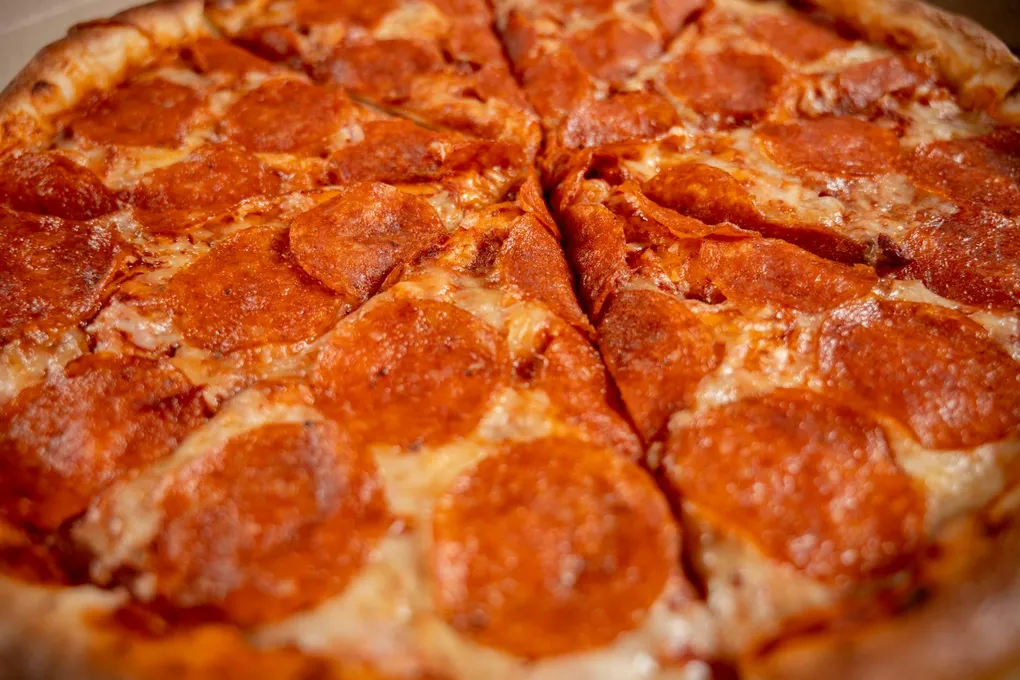
If you have ever pulled a pizza out of the oven and noticed that some pepperoni slices curled into little cups filled with rendered grease while others lay flat, you were not imagining things. The difference is not random. It is a predictable outcome of casing type, slice thickness, fat composition, and heat dynamics. Understanding why pepperoni cups is one of those satisfying intersections of food science and pizza craft that changes how you shop and how you top.
The American Original
First, a quick historical note that surprises most people: pepperoni is not Italian. It is an Italian-American invention from the 1930s. If you order “pepperoni” in Italy, you will get bell peppers. The cured meat Americans call pepperoni has no direct analog in Italian salumi tradition — it was developed by Italian immigrants adapting their charcuterie knowledge to American tastes and available ingredients. [Gemignani]
Today, pepperoni appears on roughly 36% of all pizzas sold in the United States. It is, by a wide margin, the most popular pizza topping in the country. And yet most pizza makers — home and professional — treat it as an afterthought. Grab a bag, scatter some slices, move on. That is a missed opportunity.
Why Pepperoni Cups: The Differential Shrinkage Mechanism
The cupping phenomenon comes down to a battle between two materials shrinking at different rates under high heat.
Natural casing is the key variable. Traditional pepperoni is stuffed into natural animal casings (intestinal lining), which are collagen-based proteins. When exposed to the intense radiant heat of a pizza oven, the casing contracts significantly — it shrinks and tightens as collagen denatures and the moisture within it evaporates.
The meat inside the casing also shrinks during cooking as proteins denature and moisture is driven off. But here is the critical difference: the casing shrinks faster and more dramatically than the meat filling. This differential shrinkage rate is what creates the cup shape. The outer edge (casing) pulls inward and upward while the center (exposed meat face) resists, creating a concave bowl. [Gemignani]
Pepperoni packed in artificial or collagen casings — the kind you find in most pre-sliced supermarket bags — lacks this differential. The synthetic casing either melts away or shrinks at roughly the same rate as the meat. Result: flat pepperoni that just sits there.
The Role of Slice Thickness
Thickness amplifies the cupping effect. Here is why:
-
Thicker slices (3-4mm) have more mass differential between the casing edge and the exposed meat face. The casing still contracts at the same rate, but it has more meat to pull against. The resulting cup is deeper, the edges more dramatically curled, and the center pools more rendered fat.
-
Thinner slices (1-2mm) have less mass to resist the casing’s contraction. They may curl slightly at the edges but tend to crisp more uniformly, sometimes going fully flat and crispy like a chip.
-
The sweet spot for maximum cup-and-char is generally around 3mm — thick enough to form a pronounced cup but thin enough to crisp at the edges within a standard pizza bake time.
If you are buying from a deli counter, ask for a specific thickness. If you are buying whole sticks and slicing at home, a sharp knife and steady hand give you precise control. Some dedicated pizza makers use a mandoline set to their preferred thickness.
The Grease Pool Phenomenon
The cup shape is not just visual. It creates a functional pocket that collects rendered fat during baking. This pool of hot, orange-tinted grease is a concentration of beef fat, pork fat, paprika-infused oil, and capsaicin from the chile peppers in the pepperoni’s spice blend.
Beef fat is the critical factor. Gemignani notes that higher beef-content pepperoni withstands high oven temperatures better than pork-dominant varieties. Beef tallow has a higher melting point than pork fat (roughly 42-48C vs 36-40C), which means beef-heavy pepperoni renders more slowly and retains structural integrity longer during the bake. The fat that does render pools in the cup rather than immediately spreading across the pizza surface. [Gemignani]
This grease pool is, depending on your perspective, either a feature or a defect. Most commercial pizzerias historically considered cupping a defect — it creates an inconsistent appearance and uneven fat distribution. But the craft pizza movement, home pizza culture, and Gemignani himself have embraced it. The cupped edges develop a bacony crispness while the center stays moist and tender, creating a textural contrast in every bite.
Selecting Pepperoni for Cup-and-Char
If you want the cup-and-char effect, here is what to look for:
What Creates Cupping
- Natural casing — the single most important factor. Check the label or ask the butcher.
- Higher beef content — more structural integrity at high temperatures.
- Stick form (unsliced) — you control thickness and freshness.
- Thicker slices — 3mm or slightly more for deep cups.
What Prevents Cupping
- Artificial or collagen casings — no differential shrinkage.
- Pre-sliced thin rounds — most bagged pepperoni is sliced too thin and cased artificially.
- High pork-to-beef ratio — renders faster, goes flat.
Recommended Brands
Gemignani specifically calls out a few pepperoni sources worth knowing:
| Brand | Context | Notes |
|---|---|---|
| Ezzo | Home/enthusiast | Natural casing, high beef proportion, strong cup. The cult favorite among home pizza makers. |
| Capo Di Monte | Restaurant supply | Quality natural-casing pepperoni for professional use. |
| Swiss American | Restaurant supply | Another Gemignani-recommended professional-grade option. |
| Margherita | Widely available | Commonly recommended; check for natural casing versions. |
The common thread: higher beef proportion than typical supermarket pepperoni, and natural casings. These brands produce fuller flavor and more predictable cupping behavior. [Gemignani]
The Rendering Timeline: When to Place and How Long to Bake
Pepperoni behaves differently depending on your oven temperature and bake time, which means your placement strategy should vary by setup.
High-Temperature Ovens (800-950F, 60-90 seconds)
In a portable pizza oven like an Ooni or Roccbox, pepperoni has very little time to render. Place slices before baking. Natural-casing rounds will cup almost immediately from the intense radiant heat. Thinner slices are actually better here — they crisp fast without leaving raw centers. Watch carefully: pepperoni fat near the flame source can ignite, producing bitter carbon rather than desirable char.
Home Oven (500-550F, 7-12 minutes)
This is the sweet spot for the full cup-and-char experience. The longer bake time gives natural-casing pepperoni enough time to gradually cup, render, and develop crispy edges while the center stays just tender. Place pepperoni on top of the cheese at the start of the bake. The 7-8 minute bake at 550F on a steel is nearly perfect for 3mm natural-casing rounds.
Pan Pizza (500F, 12-15 minutes)
Longer bake means more rendering. Pepperoni on a Detroit or Sicilian pizza will render more aggressively. You may want to blot excess grease with a paper towel after baking, or embrace it. The extended bake also means edges can go past crispy into burnt if sliced too thin — err toward 3-4mm for pan styles.
The Placement Debate: On Top of Cheese or Under?
Where you place pepperoni relative to the cheese layer changes the result.
On top of cheese (standard): Full exposure to radiant heat. Maximum cupping, maximum crisp, visible char. This is the classic American presentation and the best approach for cup-and-char enthusiasts.
Under the cheese: Pepperoni steams rather than crisps. The cheese layer traps moisture, preventing the Maillard browning that creates those crispy edges. The pepperoni essentially braises in its own fat. Result: softer texture, more evenly distributed flavor, no cupping. Some NY slice shops do this deliberately — it prevents pepperoni grease from running onto the crust.
Half and half: Some pizza makers place a layer under the cheese for flavor distribution and a second layer on top for visual appeal and textural contrast. This is overkill for most home situations, but it works beautifully on a heavily loaded New York pie.
The Pre-Slice vs. Stick Decision
Buying a whole pepperoni stick and slicing it yourself offers three advantages:
- Thickness control — you choose 2mm for chips or 4mm for deep cups.
- Freshness — freshly cut pepperoni has noticeably more aroma and a brighter spice profile than pre-sliced rounds that have been sitting in modified-atmosphere packaging.
- Casing integrity — the natural casing is intact around each slice, ensuring maximum cupping potential. Pre-sliced pepperoni sometimes has partially stripped or damaged casing.
The disadvantage is convenience. If you make pizza weekly, keeping a stick of quality pepperoni in the fridge (it keeps well for weeks due to the curing) is a worthwhile habit. If pizza is a monthly event, pre-sliced from a good brand works fine.
Beyond Standard Pepperoni: Related Cured Meats
Understanding why pepperoni cups opens up thinking about other cured meats on pizza:
- Soppressata piccante: Larger diameter, natural casing, cups dramatically when thick-sliced. Spicier and more complex than pepperoni.
- Coppa/capicola: Very thin slices crisp and curl at edges; thicker slices cup modestly. Beautiful on white pies.
- Chorizo (Spanish, cured): Cups mildly; the paprika-heavy fat renders orange-red.
- Nduja: A spreadable Calabrese salami — does not cup (no casing) but melts into pools of spicy fat that soak into the dough. A different approach to the same goal: concentrated pork-and-chile flavor.
For guidance on whether to pre-cook toppings like these cured meats before adding them to pizza, see our topping prep guide.
Practical Takeaways
- Natural casing is the single variable that determines whether pepperoni cups. Everything else is secondary.
- Slice at 3mm for the best balance of cup depth and edge crispness.
- Higher beef content holds up better at pizza temperatures and produces a firmer cup.
- Buy sticks, not bags, when possible. Slice fresh for each pizza session.
- Ezzo is the enthusiast benchmark — if you can find it (many online retailers carry it), it is worth trying at least once as a reference point.
- Adjust for your oven: Thinner for fast ovens (800F+), standard 3mm for home ovens, slightly thicker for pan pizza’s longer bake.
The next time someone at your table asks why some pepperoni cups and some lies flat, you will have the answer. And the next time you shop, you will know exactly what to build your pizza with the right pepperoni for the job.