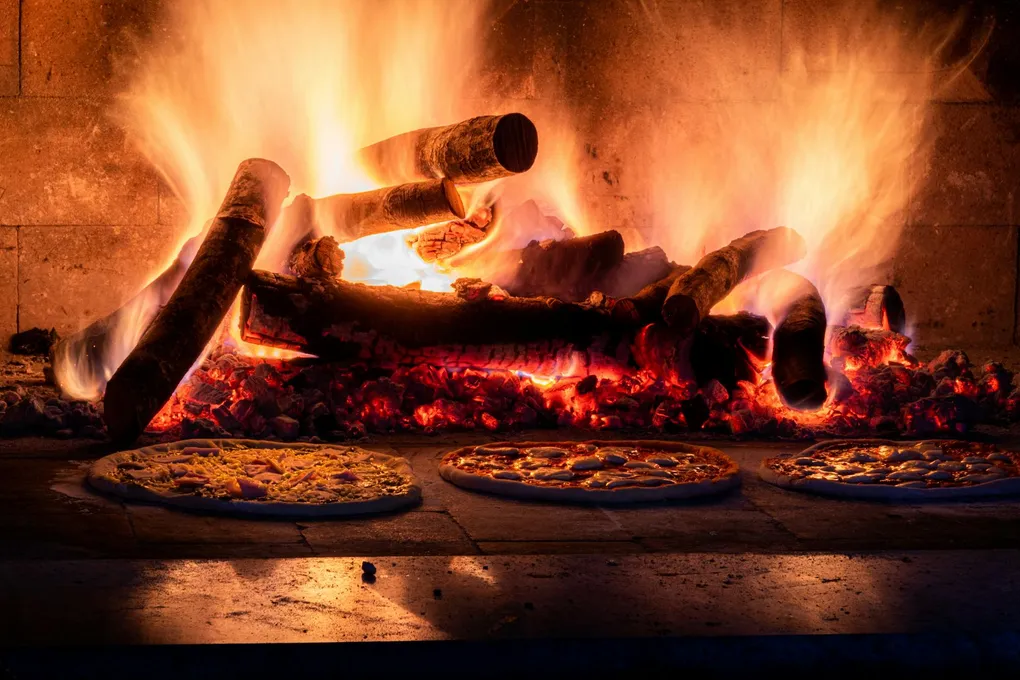
The two questions every home pizza maker eventually asks: Do I need a dedicated pizza oven? And if so, which one?
The honest answer is more nuanced than most reviews suggest. A well-optimized home oven produces genuinely excellent pizza. A portable oven produces a different kind of excellent pizza. The gap between them is real but narrower than marketing implies — and the learning curve for portable ovens is steeper than anyone tells you.
Here’s a head-to-head comparison using real-world data, not manufacturer claims.
The Three Contenders
Ooni Koda 16
- Max temp: 932F (500C)
- Fuel: Propane (29,000 BTU L-shaped burner)
- Pizza size: Up to 16” (but 12-14” is practical)
- Weight: 40 lbs
- Price: $649
- Stone: 15mm cordierite, 16”x16”
Gozney Roccbox
- Max temp: 950F (tested to 970F)
- Fuel: Propane (wood-fire attachment sold separately, ~$100)
- Pizza size: Up to 12”
- Weight: 44 lbs
- Price: $499
- Stone: 12” cordierite, safe-touch silicone jacket
Home Oven + Baking Steel
- Max temp: 500-550F (260-290C), with broiler boost
- Fuel: Electric or gas (existing utility)
- Pizza size: 12-13”
- Weight: Steel adds 15-30 lbs
- Price: $60-180 (steel only)
- Surface: A36 carbon steel, 1/4” to 3/8” thick
Temperature: The Number Everyone Fixates On
Both the Ooni and Roccbox reach 900-950F. Your home oven maxes out around 550F. That’s a massive difference — and it matters.
At 900F, pizza bakes in 60-90 seconds. At 550F, it takes 7-8 minutes. These are fundamentally different baking environments, and Myhrvold’s baking physics explain exactly why: thermal radiation follows the T^4 power law (Stefan-Boltzmann). At 400C, the oven produces 16 times more thermal radiation than at 200C. This isn’t just faster — it’s qualitatively different cooking.
The 60-90 second bake retains far more moisture in the dough. The crust puffs dramatically (steam expansion is 1,600x volume increase). Leopard spots develop naturally from the positive feedback loop: darker dough absorbs more heat, darkens faster. The result is the characteristic Neapolitan crust: soft, pillowy interior with charred blisters on the rim.
The 7-8 minute home-oven bake drives off significantly more moisture. The crust is crispier throughout, with less oven spring and more uniform browning. This isn’t worse — it’s different. And for many styles (New York, bar pizza, pan pizza), the home oven actually produces a more appropriate result.
The Real Preheat Numbers
Manufacturer preheat claims are optimistic. They measure surface temperature, not full stone saturation. A stone that reads 800F on top may have a cold core that saps heat from your pizza base on contact.
| Oven | Claimed Preheat | Real Full-Saturation Preheat |
|---|---|---|
| Ooni Koda 16 | 20 min | 30-40 min |
| Gozney Roccbox | 25-30 min | 30-45 min (60 min for full saturation) |
| Home oven + steel | 15-20 min (beep) | 45-60 min |
Cold/windy conditions add 10-15 minutes to portable oven preheats. Myhrvold confirmed that a home oven’s “ready” beep means the air is hot — the walls and stone are nowhere close. Air heats in 21 seconds; walls and stone take 30+ minutes.
Verification: An infrared thermometer is non-negotiable for all three setups. Check center stone/steel temperature before every pizza. For portable ovens, check the center — the back reads artificially high.
Temperature Gradients: The Hidden Challenge
This is where portable ovens surprise new owners. Neither the Ooni nor the Roccbox heats evenly.
Ooni Koda 16: The L-shaped rear burner creates a 200F+ gradient from back-left (850-950F) to front-right (700F). The back-left zone is the hottest point. Your pizza will burn on the side facing the burner within 20-30 seconds if you don’t rotate it.
Gozney Roccbox: Similar 200-250F gradient from back (800-850F, nearest burner) to front (600F near the mouth). The patented baffle plate improves flame distribution compared to the Ooni’s raw burner, but the gradient is still significant.
Home oven + steel: Relatively uniform. The broiler element provides overhead heat, and the steel provides even conduction from below. The main variable is hot spots in the broiler, which can be mapped once and managed with rotation.
What this means practically: Portable ovens require constant turning — every 15-30 seconds for Neapolitan temps. Miss a turn, and one side chars while the other is underdone. Home ovens require at most one rotation halfway through the bake. The skill ceiling for portable ovens is meaningfully higher.
Heat Recovery Between Pizzas
This matters enormously if you’re making more than one pizza.
Ooni Koda 16: After a pizza absorbs heat from the stone, recovery to 750F+ takes 2-5 minutes on max flame. Realistic throughput: one pizza every 3-6 minutes, not the “one per minute” that raw cook time suggests. Thinner stock cordierite (15mm) recovers faster but also cools faster. A thicker aftermarket stone (3/4” FibraMent or Biscotto) holds heat better but takes longer to preheat.
Gozney Roccbox: Superior insulation means the Roccbox retains heat between pizzas better than the Ooni Koda. Turn to high while prepping the next pizza (1-3 minutes of prep time is typically enough recovery). This is a genuine advantage for multi-pizza sessions.
Home oven + steel: At 3/8” thickness, a baking steel stores enough thermal mass for 4-5 pizzas with minimal recovery time. The oven itself maintains temperature because the door is only open briefly for loading/retrieval. Two stacked steels (upper and lower rack) can sustain 20 pizzas in an hour per Baking Steel’s documented method.
Verdict: For parties and multi-pizza sessions, the home oven with thick steel or double-steel setup is actually the most practical option. Portable ovens are best for 1-4 pizza sessions.
Pizza Size and Style Compatibility
Ooni Koda 16: Nominally fits a 16” pizza, but in practice 12-14” is the practical maximum. At 16”, there’s no room to turn the pizza with a peel. The opening is 4.37” tall by 16” wide, which limits peel angle and pizza height.
Gozney Roccbox: 12” maximum. This is the main size limitation. A 12” pizza from a 250-280g dough ball is a personal-size pie. If you’re feeding a group, you’re making many small pizzas.
Home oven: 12-13” on a standard steel. Limited by oven depth (only ~18” in most home ovens) and peel clearance. But for pan pizza (half sheet pan), Sicilian, Detroit, and al taglio, the home oven is actually better — these styles were designed for 500-550F bakes in pans.
| Style | Best Oven | Why |
|---|---|---|
| Neapolitan | Portable (800F+) | Needs extreme radiant heat, short bake |
| New York | Either (550-600F) | Works in both; deck ovens are 550-600F |
| Detroit | Home oven | Designed for 500-525F pan bake |
| Deep dish | Home oven | 25-35 min bake at 500F, pan-based |
| Pan/Sicilian | Home oven | Extended bake, pan-based |
| Bar pizza | Home oven | Pan on steel, 8-10 min |
| Roman al taglio | Home oven | Sheet pan, can finish on steel |
| Artisan/hearth | Either | Portable gives more char |
If your primary interest is Neapolitan pizza, a portable oven is the right tool. If you want to make multiple styles, the home oven is more versatile.
Cold Weather Performance
Portable ovens live outdoors, and weather affects them significantly.
Ooni Koda 16: Below 40F ambient, preheat times extend substantially. Wind cools the thin steel shell and saps heat through the open mouth. A door accessory helps but Ooni officially warns against it (airflow restriction, potential gas buildup). In practice, doors with ventilation holes work fine, but you’re modifying at your own risk.
Gozney Roccbox: The safe-touch silicone jacket provides meaningful insulation. It handles cold weather better than any Ooni model. After one hour at full, the stone holds 400C even after 5-6 hours of continuous use. This is the Roccbox’s strongest differentiator for cold-climate users.
Home oven: Unaffected by weather. This is an underrated advantage.
Total Cost of Ownership
The purchase price is just the beginning.
| Item | Ooni Koda 16 | Roccbox | Home Oven Setup |
|---|---|---|---|
| Oven/steel | $649 | $499 | $60-180 (steel) |
| Launch peel | $40-50 | $40-50 | $25-40 (wood) |
| Turning peel | $35 | $35-45 | Not needed |
| IR thermometer | $25-50 | $25-50 | $25-50 |
| Propane (per session) | ~$2-3 | ~$2-3 | $0 (existing) |
| Wood burner attachment | N/A | $100 | N/A |
| Cover | $30-50 | $30-50 | N/A |
| Biscotto stone upgrade | $150-170 | $100-150 | N/A |
| Flame guard | $60-75 | $74 | N/A |
| Year 1 total | $900-1,100 | $800-1,000 | $110-270 |
The home oven setup costs 70-90% less. Even after adding a premium steel (ThermiChef 3/8” at $85), a wood peel ($30), and an IR thermometer ($25), you’re under $200 for a complete setup that produces excellent pizza across every style.
The Learning Curve
This is the most under-discussed factor.
Portable ovens: Expect to burn your first several pizzas. Iacopelli’s advice: treat the first pizza of every session as “sacrificial” to calibrate the oven’s behavior. You need to learn: flame management (pizza in/flame down, pizza out/flame up), turn timing (15-30 seconds), launch technique (confident shimmy, not hesitant slide), peel management, and temperature recovery. Most home cooks need 5-10 sessions to produce consistently good results.
Home oven + steel: The learning curve is shallower. Load pizza on peel, slide onto steel, bake 7-8 minutes, rotate once, maybe broiler finish. The longer bake time is more forgiving — a 30-second delay doesn’t mean charcoal. Most home cooks produce good pizza on their first or second attempt.
Upgrades That Actually Matter
For both portable ovens, the aftermarket matters:
Biscotto di Sorrento stone ($100-170): Traditional Neapolitan clay stone with lower thermal conductivity than cordierite. Releases heat more gently, virtually eliminating bottom scorching at high temperatures. The single most impactful upgrade for portable ovens.
Flame guard/heat diffuser ($60-80): The 222Steel or NU2U flame guards block direct flame from charring the crust and redistribute heat more evenly. Community consensus: “total game changer.” Available for both Ooni and Roccbox.
For home ovens: A 3/8” steel is the sweet spot for thermal mass. The jump from 1/4” to 3/8” is the most impactful thickness upgrade (better heat recovery, supports more consecutive pizzas). Beyond 3/8” to 1/2” shows diminishing returns. ThermiChef’s 14”x20” 3/8” steel at roughly $85 is the best value on the market.
The Honest Recommendation
Buy a portable oven if:
- You’re primarily interested in Neapolitan-style pizza
- You enjoy the outdoor cooking experience and the craft of managing fire/flame
- You’re comfortable with a learning curve
- You have outdoor space that’s accessible year-round (or you don’t mind seasonal use)
Stick with a home oven if:
- You want to make multiple pizza styles (NY, Detroit, pan, Sicilian, bar, deep dish)
- You’re cooking for groups (better throughput with double-steel setup)
- You want the lowest barrier to entry and shortest learning curve
- Budget matters (the full setup costs 70-90% less)
- You live in a cold climate without covered outdoor space
The Roccbox over the Koda 16 if:
- Cold weather performance matters (superior insulation)
- You want the option to add wood fire later ($100 attachment)
- 12” pizzas are sufficient (solo/couple cooking)
- Build quality and portability matter (safe-touch jacket, compact form)
The Koda 16 over the Roccbox if:
- You need 14-16” pizza capacity (feeding families/groups)
- You want the simplest gas-only operation
- The Ooni aftermarket ecosystem appeals to you (larger community, more mods available)
The diminishing returns truth: A home oven with a $85 steel and proper technique produces pizza that most people can’t distinguish from a $650 Ooni in a blind taste test — unless the style specifically requires 800F+ heat. For Neapolitan, the portable oven wins clearly. For everything else, the difference is subtle enough that cost, convenience, and versatility favor the home oven.