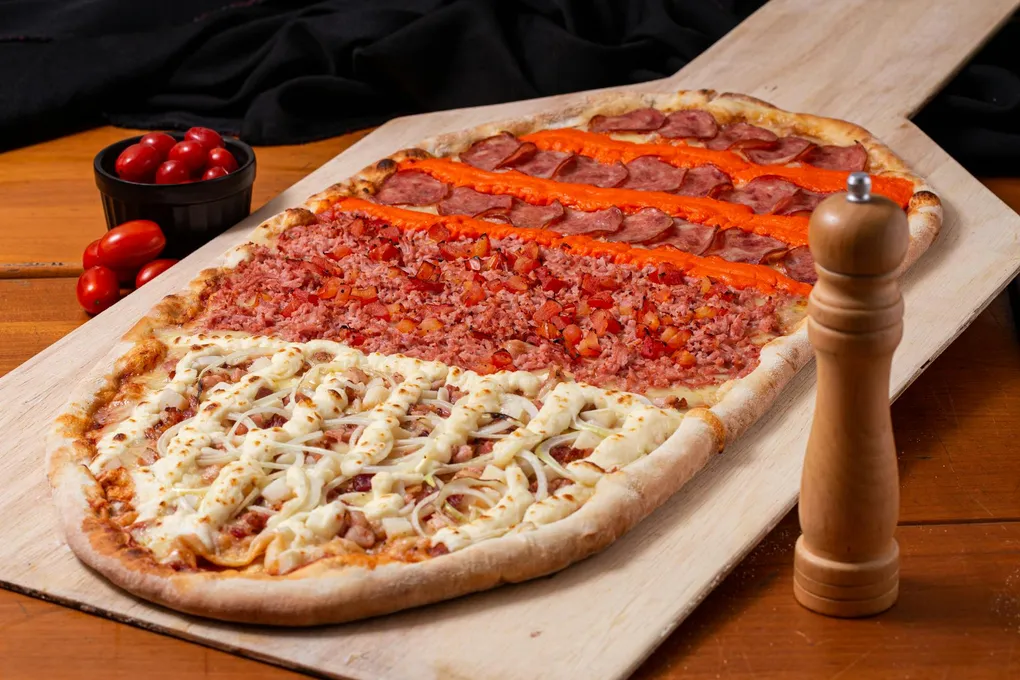
Most home pizza makers buy one peel, use it for everything, and wonder why half their pizzas stick on the way into the oven and the other half are impossible to maneuver once inside. The problem is not technique — it is equipment. You need two peels, minimum. Possibly three.
Each peel type solves a specific problem. Using the wrong peel for the job creates the problem it was designed to avoid.
Why You Need Two Peels
The two fundamental pizza peel operations — launching (sliding a raw pizza into the oven) and turning/retrieving (rotating and pulling out a baking pizza) — have directly opposing requirements.
Launching requires a surface that raw dough does not stick to. Wood and bamboo are naturally better at this than metal because wood absorbs microscopic amounts of moisture from the dough surface, creating a natural non-stick barrier. Metal peels, especially thin aluminum, are moisture-neutral — wet dough grabs them.
Turning and retrieving require a thin, rigid edge that slides under a baking pizza without catching or tearing. Metal excels here. A thin aluminum peel slips under a partially baked crust effortlessly. A thick wooden peel is clumsy, hard to maneuver in a small oven, and chars at sustained high temperatures.
The professional standard, used in Neapolitan pizzerias and endorsed by Gemignani, Forkish, and Iacopelli:
| Peel | Job | Material | Why |
|---|---|---|---|
| Launch peel | Building pizza, sliding into oven | Wood or bamboo (12-14”) | Wood absorbs moisture from raw dough — natural non-stick |
| Turning peel | Rotating pizza mid-bake | Perforated aluminum (7” round) | Thin edge slides under easily; perforations drop excess flour, allow steam escape |
| Retrieval peel | Pulling finished pizza out | Metal, solid or perforated (12-14”) | Heat-resistant, slides under fully baked crust quickly |
In practice, many home bakers combine the turning and retrieval functions with a single metal peel. The dedicated turning peel (small, round, long-handled) matters most for portable pizza ovens where you need to rotate the pizza every 15-30 seconds in a tight space.
Material Comparison
Wood
Best for: Launching raw dough.
Wood is the traditional peel material and still the best surface for building and launching pizza. The grain structure absorbs a tiny amount of moisture from the dough, preventing sticking. A properly floured wooden peel will hold a topped pizza for 30-60 seconds before the moisture begins to seep through.
Advantages: Natural non-stick, warm to the touch (dough does not cool on contact), inexpensive, widely available.
Disadvantages: Thick profile makes it harder to slide under baked pizza. Burns and chars in sustained high heat (do not leave it in a 900F oven). Warps if washed improperly. Cannot go in a dishwasher.
Thickness matters: Look for a peel with a tapered or beveled leading edge. A 1/4-inch taper at the front makes loading much easier than a blunt 3/4-inch edge.
Maintenance: Wipe clean with a damp cloth, dry immediately. Do not soak. Light mineral oil once a month prevents drying and cracking. Sand lightly if the surface gets rough over time.
Bamboo
Best for: Launching (same as wood, slightly lighter).
Bamboo peels function identically to wood for moisture absorption and non-stick performance. They tend to be lighter, harder, and less prone to warping than softwood peels. The Epicurean brand makes a Richlite wood-fiber composite peel that is NSF-certified and dishwasher-safe — a modern alternative that performs like wood but is virtually indestructible.
Aluminum (Solid)
Best for: Retrieving baked pizza.
Aluminum is lightweight, heat-resistant, and thin enough to slide under a baking pizza. Solid aluminum peels work well for pulling finished pizzas from the oven but are not ideal for launching raw dough because the smooth metal surface grabs wet dough.
Workaround for launching on aluminum: Generous flour or semolina dusting, and work extremely fast. Dough on a metal peel starts sticking within 15-20 seconds.
Aluminum (Perforated)
Best for: Launching AND turning (the most versatile single peel).
Perforated aluminum peels have small holes across the blade. These perforations serve two purposes: they allow excess flour and semolina to fall through (reducing burnt flour on your oven floor), and they let steam escape from underneath the dough (reducing the moisture that causes sticking).
GI Metal, the Italian manufacturer used by many professional pizzerias in Naples, makes the benchmark perforated peels. Their anodized aluminum construction is thin, rigid, and slides under pizza with minimal resistance.
For portable oven owners doing 4+ pizzas in a session, a perforated aluminum peel is arguably the single most useful piece of equipment after the oven itself. It handles launching (with adequate dusting), turning, and retrieval.
Stainless Steel
Best for: Turning peels only. Not recommended as a primary peel.
Stainless steel turning peels are durable and easy to clean. The 7” round turning peels with long handles (29-79 inches, often telescoping) are the professional standard for wood-fired ovens. GI Metal’s sliding-handle turning peel is considered overkill for most home users but is loved by enthusiasts for its precision control.
Handle Length
Handle length depends entirely on your oven depth.
Home oven (18” depth): 12-16” total peel length is sufficient. Short handles keep the peel maneuverable in your kitchen.
Portable pizza oven (Ooni, Roccbox, Dome): The oven opening is small and the interior is shallow. Standard 24-30” handles work for launching and retrieval. Turning peels need 28-32” handles to reach the back of the oven while keeping your hand away from the heat.
Wood-fired oven (deeper chamber): 36-48” handles minimum. Roman bakeries with 10-12 foot deep decks use peels up to 79” long.
Do not buy a peel with a handle longer than you need. A 48” peel in a home kitchen is unwieldy and gets in the way. Match the handle to your oven.
Dusting Materials: What Goes on the Peel
This is where oven type becomes critical. The wrong dusting material can ruin your pizza.
For Portable Ovens (800F+)
Semolina is the gold standard. The coarse grains act as miniature ball bearings between the dough and peel. Gemignani recommends a 50/50 blend of flour and fine semolina as the “pro move” — the flour fills gaps between semolina grains for complete coverage.
Regular flour alone burns at 800F. In a portable pizza oven, plain flour on the peel carbonizes on the oven floor within seconds, producing bitter, acrid smoke. Semolina’s coarser grind and higher combustion point handles the heat better, though even semolina will eventually char at sustained 900F+ temperatures.
Rice flour is insurance for very sticky, high-hydration doughs. It absorbs less moisture than wheat flour, maintaining its non-stick properties longer. Some competitive pizzaiolos dust with rice flour first, then a light layer of semolina.
Cornmeal works but has drawbacks. It provides good ball-bearing action but burns at high temperatures and leaves a gritty, sometimes bitter residue on the pizza bottom. Not recommended for portable ovens.
For Home Ovens (500-550F)
Semolina, flour, or a 50/50 blend all work. At these temperatures, flour does not burn on the stone or steel. Gemignani’s 50/50 flour and fine semolina is still the best overall option. Forkish recommends dusting with the same flour used in the dough — not cornmeal or semolina. Both approaches work at home oven temperatures.
The Pre-Launch Check
Regardless of peel material or dusting choice, one technique is universally endorsed by every source:
Shake the peel before adding toppings. After placing your stretched dough on the floured/dusted peel, give it a quick lateral shake (the “jiggle test” or Iacopelli’s “hovercraft test”). The entire pizza should slide freely. If any part sticks, lift that edge and add more dusting material underneath.
Once you start topping, moisture from sauce immediately begins penetrating the dusting layer. You have roughly 30-60 seconds from the first sauce application to launch. Longer than that and the dough will bond to the peel regardless of dusting.
Gemignani’s launch technique: hold the peel level and parallel to the stone (not angled downward). Position the far end where you want the pizza, then do a quick push-and-pull — far end touches stone, immediately pull the peel sharply toward you while keeping it low and level. “Like the tablecloth magic trick.”
Buying Guide: Specific Recommendations by Setup
Portable Pizza Oven (Ooni, Roccbox, Dome)
Launch peel: Wood or bamboo, 12-14” blade, 24-30” handle. Budget option: any well-reviewed bamboo peel ($25-35). Premium: Epicurean Richlite composite ($37) — dishwasher safe, beveled edge.
Turning peel: 7” round, perforated aluminum, 28-32” handle. Ooni Turning Peel (about $35) is lightweight and designed for tight portable oven interiors. Gozney Balance (about $45) has a flat nose that reduces rocking.
Premium upgrade: GI Metal perforated aluminum (launch + retrieve, $50-80). This is what the best pizzerias in Naples use. Thin edge, rigid construction, perforations reduce flour transfer. Worth the investment if you bake weekly.
Home Oven (Steel/Stone)
Launch peel: Wood or bamboo, 12-14” blade, short handle (12-16” total). The peel needs to fit between your oven opening and the steel, which is typically on the upper rack. Measure your clearance before buying.
Retrieval peel: Metal, 12-14” blade, short handle. Can double as a turning peel since home oven pizza does not need constant rotation (just one 180-degree turn midway through the bake). A thin aluminum peel with a beveled leading edge works perfectly.
If you buy only one peel: A perforated aluminum peel (12-14”) with generous semolina dusting works for both launching and retrieving at home oven temperatures. It is not as good as wood for launching, but it is the best single-peel compromise.
Wood-Fired Oven (Backyard/Permanent)
Launch peel: Wood, 12-14” blade, 36-48” handle. The extra length keeps your hands away from the mouth of a hot oven.
Turning peel: GI Metal 6.75-10” stainless head with 29-47” sliding handle ($80-120). The sliding handle is worth the cost — it provides more precise control when rotating pizza in a deep, hot oven. This is the professional-grade tool.
Retrieval peel: Large metal, 12-14” blade, 36-48” handle.
Peel Care
Wood/bamboo: Never soak. Wipe with damp cloth, dry immediately. Mineral oil monthly. Sand if surface roughens.
Metal (aluminum, stainless): Wash with mild soap and water. Dry completely. Aluminum peels will oxidize slightly over time — this is cosmetic and does not affect performance.
Perforated peels: Brush flour out of holes after each session. A stiff brush or compressed air works. Flour trapped in perforations bakes into a crust over time.
All peels are cross-compatible between brands. Ooni peels work in Gozney ovens and vice versa. Buy based on blade size, handle length, and material — not brand loyalty.