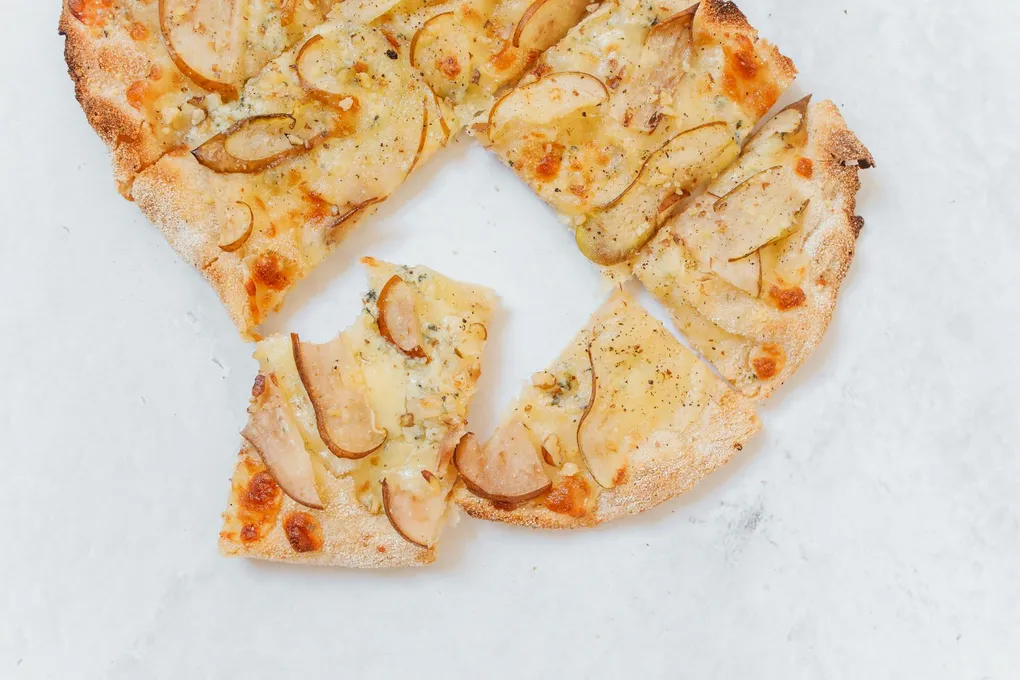
There is a category of pizza that does not appear in most pizza books, is not taught in most pizza schools, and has no governing body certifying its authenticity. It is the pizza of New England bars, suburban pubs, and small-town taverns — small, thin, loaded with toppings, and cooked in an oiled pan until the cheese at the edges crisps into a lacy, golden frico border.
This is bar pizza. And it is having a moment.
What Defines Bar Pizza
Adam Kuban, food writer and pizza historian, provided what may be the best concise description: bar pizza is “round, very thin, decidedly crisp, usually loaded with toppings and cheese.” It is a 1950s and 1960s notion of pizza as interpreted by and for non-Italian Americans. It started as bar food — something to keep patrons drinking — and evolved into the main attraction. [Forkish Ch2]
The defining characteristics:
- Small format — typically 10 inches, not 12 or 14. Sized for personal or two-person eating, not sharing at a table of eight.
- Very thin crust — thinner than New York, approaching cracker territory. No poof, no rise, no cornicione.
- Decidedly crisp — not just crisp on the bottom but crisp throughout. You bite through the entire structure with a snap.
- Pan-baked — not on a stone or steel hearth but in an oiled pan, giving the bottom a fried quality.
- Cheese and toppings to the very edge — zero exposed crust border. The cheese melts against the pan wall and crisps into a lace-like frico edge.
- Loaded — bar pizza is not minimalist. Generous cheese, generous toppings. This is not a study in restraint.
The Lace Edge: Bar Pizza’s Signature
The frico edge is what separates bar pizza from every other thin-crust style. When shredded cheese meets the oiled walls of a hot pan, the butterfat renders and the milk proteins brown through the Maillard reaction. The result is a thin, crispy, golden-brown lace of caramelized cheese that extends beyond the dough, creating a crunchy border that shatters when you bite into it.
This is not an accident — it is engineered. The cheese must extend all the way to the pan edge and press against the walls. During baking, the cheese at the perimeter melts, the fat fries the dough edge, and the proteins brown against the hot metal. The effect is similar to the frico crust on Detroit-style pizza but thinner and more delicate because bar pizza dough is so much thinner.
The Dough
Bar pizza dough is purpose-built for its role: maximum crispness, zero poof, durable enough to support heavy toppings without getting soggy.
Flour
High-protein bread flour — 13-14% protein. This is not a 00 flour application. The strong gluten network from high-protein flour serves two purposes: it holds together when rolled very thin (weak flour tears), and it develops a crisp, structured bite when baked rather than a tender, crumbly one. Forkish specifies bread flour for his bar pizza dough. [Forkish Ch2, Ch6]
Hydration
Approximately 60% hydration — significantly lower than Neapolitan (65-70%) or pan pizza (70-75%). The low hydration is critical for two reasons:
- Crispness. Less water in the dough means less moisture to drive off during baking. The crust dries out faster and more completely, creating the cracker-like texture that defines the style.
- Rollability. Bar pizza dough is finished with a rolling pin — not hand-stretched or tossed. Low-hydration dough rolls cleanly without sticking and maintains its shape without springing back aggressively.
Forkish’s bar pizza recipe targets this zone, creating a stiff but workable dough that rolls out thin and stays thin. [Forkish Ch6]
Shaping: The Rolling Pin Is Correct
In almost every other pizza tradition, the rolling pin is an insult. Neapolitan regulations explicitly prohibit it. Forkish teaches hand stretching for all his hearth pizzas. Gemignani’s shaping method involves fingertip pressing, counter stretching, and airborne flipping.
Bar pizza ignores all of this. You roll it with a pin.
The reasoning is practical: bar pizza dough at 60% hydration is too stiff to stretch effectively by hand without developing too much elasticity from the working. A rolling pin applies even, consistent pressure that flattens the dough uniformly to the target thinness — barely a few millimeters — without the uneven thick spots that hand stretching often produces in stiff doughs.
Technique:
- Flour the work surface and the dough ball.
- Start from the center and roll outward in all directions, rotating the dough 45 degrees between passes.
- Roll to approximately 10 inches — slightly smaller than the pan if your pan is 10 inches, since the dough will relax slightly after rolling.
- Lift the rolled dough onto the oiled pan. Press gently into the bottom and let the edge touch the pan walls.
The Pan
Forkish recommends Lloyd deep-dish nonstick pans for bar pizza. The “deep-dish” designation is slightly misleading — you are not making a deep-dish pizza. The pan walls (typically 1.5-2 inches) serve as the structure against which the cheese fricos, not as a vessel to fill with ingredients. [Forkish Ch2]
Why nonstick matters: The melted cheese that creates the lace edge bonds aggressively to bare metal. Nonstick coating ensures the frico releases cleanly when you remove the pizza from the pan. If you use an uncoated pan, you will leave your best feature stuck to the metal.
Oiling the pan: A thin but thorough coat of olive oil or neutral oil across the bottom and up the sides. The oil serves three functions: prevents sticking, fries the bottom of the crust (adding flavor and crispness), and contributes to the frico formation at the edges.
Alternatives if you do not have Lloyd pans:
- Cast iron skillet — a 10-inch cast iron works well, though the pan is heavier and the thermal mass changes bake timing. Season aggressively and oil generously.
- Any oven-safe nonstick pan with vertical or near-vertical walls. Avoid flared or sloped walls — the cheese needs a vertical surface to frico against.
The Cheese
Bar pizza cheese is not doctrinaire. Where Neapolitan demands fior di latte and New York demands low-moisture mozzarella, bar pizza is a free-for-all.
Forkish describes the bar pizza cheese blend as “anything that melts” — and means it. Common components:
| Cheese | Role |
|---|---|
| Low-moisture mozzarella | Base melter, mild flavor, good stretch |
| Fontina | Creamy melt, slightly nutty |
| Provolone | Sharpness, good browning |
| Cheddar (white or yellow) | Sharpness, excellent frico formation |
| Hard cheese (Parmesan, Pecorino) | Flavor depth, salt, browning |
The invitation here is to experiment. A three-cheese blend of low-moisture mozzarella, sharp provolone, and white cheddar is a reliable starting point. The cheddar is particularly important for the lace edge — its higher butterfat content creates more aggressive frico than mozzarella alone. [Forkish Ch2]
Shred, do not slice. Shredded cheese melts more evenly and distributes more uniformly to the edges. Sliced cheese tends to pool in the center and leave gaps at the perimeter where frico should form.
Coverage: Edge to edge, touching the pan walls on all sides. Do not leave a border of exposed dough.
Building and Baking
Assembly Order
- Oil the pan
- Place the rolled dough in the pan, pressing gently into corners
- Sauce — a thin layer, spread to the edges. Bar pizza sauce is typically a basic smooth tomato sauce, not chunky. Less sauce than you would use on a New York slice — the thin crust cannot support heavy moisture.
- Cheese — shredded, edge to edge, touching walls
- Toppings — whatever you want, generously applied. Bar pizza toppings are often pre-cooked (sausage crumbled and browned, peppers roasted, onions sauteed) because the thin crust and short bake time do not cook raw vegetables thoroughly.
Baking
Oven temperature: 550F (290C), the maximum for most home ovens.
Surface: Place the pan on a preheated baking steel or stone. The steel transfers heat into the pan bottom rapidly, ensuring the base crisps and the frico forms aggressively.
Time: 8-10 minutes at 550F. Watch the cheese edge — when it turns golden-brown and you can see the lace pattern forming against the pan wall, the pizza is close. The center cheese should be fully melted and lightly bubbling.
Optional finish: If the top needs more browning after the bottom is done, move the pan directly under the broiler for 60-90 seconds. Watch carefully — the broiler can take thin pizza from golden to charred in seconds. [Forkish Ch2]
Removing from the Pan
Run a thin spatula or offset spatula around the perimeter to release the frico edge from the pan wall. Slide the spatula under the pizza and transfer to a cutting board. The nonstick coating should make this straightforward. If any frico bits remain stuck, they are worth recovering — scrape them out and eat them separately. They are the best part.
Bar Pizza vs. Other Thin-Crust Styles
| Feature | Bar Pizza | NY Thin | Tavern (Chicago) | Roman Tonda |
|---|---|---|---|---|
| Diameter | 10” | 12-18” | 12-14” | 12”+ |
| Crust thickness | 2-3mm | 3-5mm | 2-3mm | 2-3mm |
| Pan or hearth | Pan (oiled) | Hearth (stone/steel) | Hearth (stone/steel) | Hearth (stone/steel) |
| Crust texture | Crisp, fried bottom | Crisp bottom, foldable | Cracker | Crisp to cracker |
| Edge | Frico lace (cheese) | Modest cornicione | None (flat) | Minimal |
| Flour | Bread (14%) | Bread (14%) | AP (12%) | Varies |
| Hydration | ~60% | 62-65% | ~65% | ~65% |
| Shaped by | Rolling pin | Hand stretch/toss | Rolling pin | Hand stretch |
| Cut | Wedges or squares | Wedges | Squares (tavern) | Varies |
The New England Roots
Bar pizza is a regional American style rooted primarily in the Boston metro area and broader New England. The canonical spots include the South Shore of Massachusetts, where small neighborhood bars have been serving this style since the 1950s and 1960s. Town Spa in Stoughton, Lynwood Cafe in Randolph, and Cape Cod Cafe in Brockton are often cited as foundational.
The style emerged from the same post-war American pizza boom that created New Haven apizza, Chicago tavern style, and St. Louis cracker crust — local reinterpretations of Italian-American pizza by communities that had no direct connection to Naples or Rome. Each region developed its own version based on available ingredients, local preferences, and the specific eating context (in this case, a bar).
Why Bar Pizza Works at Home
Bar pizza is among the most home-oven-friendly pizza styles in existence:
- No peel skills required. You build the pizza in the pan on the countertop and put the pan in the oven. No launching, no sliding, no stuck-dough disasters.
- No high-temperature oven needed. 550F is the sweet spot — standard home oven range.
- No hand-stretching anxiety. The rolling pin does the work. If you can roll pie crust, you can shape bar pizza.
- Forgiving dough. 60% hydration bread-flour dough is easy to handle — not sticky, not fragile, not temperamental.
- Small format. A 10-inch pizza takes less oven space, bakes faster, and serves 1-2 people. Perfect for weeknight cooking or making multiple pies for a gathering with different toppings.
- Customizable. The “anything that melts” cheese philosophy and the loaded-topping tradition mean every pizza can be different.
The lace edge alone is worth the effort. There is no equivalent texture in any other pizza style — it is crispy, salty, cheesy, and slightly caramelized in a way that turns a simple thin-crust pizza into something people specifically request.
A Starting-Point Recipe
Dough (makes two 10-inch bar pizzas):
- 500g bread flour (13-14% protein)
- 300g water (60%)
- 14g fine sea salt (2.8%)
- 1.5g instant dry yeast
Mix until cohesive. Brief knead (1-2 minutes). Rest 20 minutes, shape into a smooth ball. Cold ferment 24-48 hours for best flavor. On bake day, divide into two balls (~407g each), temper to room temperature for 1-2 hours.
Build:
- Oil pan generously
- Roll dough to 10 inches, place in pan
- Thin layer of smooth tomato sauce
- Shredded cheese blend to edges (200-250g per pizza)
- Toppings of choice
Bake:
- 550F on preheated steel, 8-10 minutes
- Optional broiler finish, 60-90 seconds
Sources: Forkish, The Elements of Pizza (2016); Gemignani, The Pizza Bible (2014) (cheese and flour context); Myhrvold & Migoya, Modernist Pizza Vol 1 (2021) (style taxonomy).