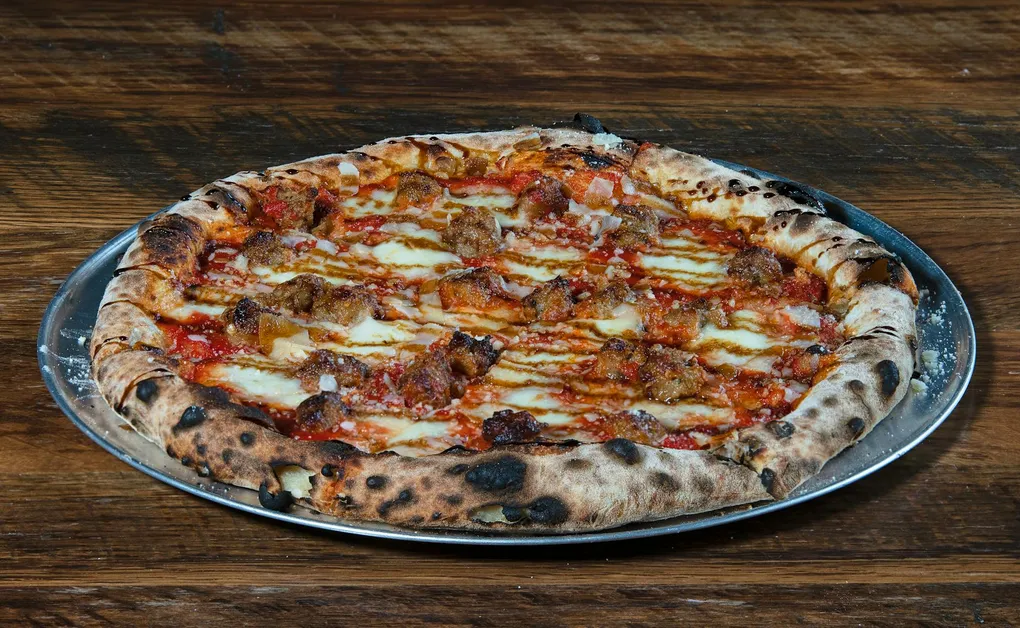
A baking steel is the single most impactful upgrade you can make for home oven pizza. Steel conducts heat 18–20 times faster than a cordierite pizza stone, producing better bottom char, more even browning, and superior oven spring. But not all steels are equal. The thickness you choose affects preheat time, heat recovery between pizzas, weight, and cost — and there’s a clear sweet spot.
Why Thickness Matters: Thermal Mass
A baking steel works by storing heat during preheat and releasing it into the pizza dough on contact. The amount of heat it can store is a function of its thermal mass — which is determined by volume (thickness x area) and material density.
A thicker steel stores more heat. More stored heat means:
- Better first pizza: The steel has a larger thermal reservoir to dump into the dough base, producing faster and more aggressive bottom browning.
- Better recovery between pizzas: Each pizza absorbs heat from the steel. A thin steel drops in temperature significantly; a thick steel barely notices.
- More consistent results across a session: If you’re making 4-5 pizzas for a dinner, the fifth pizza from a thick steel will perform more like the first than it would from a thin steel.
The tradeoff: thicker steel takes longer to preheat, weighs more, and costs more.
Thickness Comparison
Here’s the practical breakdown for a 16” x 16” steel (approximate, since most steels aren’t exactly this size):
| Thickness | Preheat Time | Best For | Recovery Between Pizzas | Weight | Approximate Cost |
|---|---|---|---|---|---|
| 3/16” | 45 min | Occasional use, 1-2 pizzas | Slowest — significant temp drop per pizza | ~12 lbs | $35–50 |
| 1/4” | 45–60 min | Weekly baking, 1–3 pizzas | Adequate for small sessions | ~16 lbs | $50–130 |
| 3/8” | 60 min | Sweet spot. 4–5 pizzas per session | Significant improvement over 1/4” | ~24 lbs | $85–180 |
| 1/2” | 90 min | Maximum performance, party baking | Diminishing returns from 3/8” | ~32 lbs | $100–200+ |
The 1/4” to 3/8” jump is the most impactful upgrade. The difference in heat recovery between these two thicknesses is immediately noticeable when baking multiple pizzas. The 3/8” to 1/2” jump shows diminishing returns — the performance improvement exists but is less dramatic relative to the added weight and preheat time.
Why 3/8” Is the Sweet Spot
For most home bakers making 2–5 pizzas in a session:
- Preheats in 60 minutes. That’s reasonable — you can prep dough and toppings during preheat.
- Recovers well. After pulling a pizza off, the steel regains usable temperature in 3–5 minutes.
- Handles parties. Five pizzas in a row without the last one coming out pale and undercooked.
- Weight is manageable. 24 lbs is heavy but liftable for one person. It can live permanently in your oven.
- Cost is reasonable. The jump from 1/4” to 3/8” is typically $30–50 more, for a proportionally larger performance gain.
When 1/4” Is Enough
If you typically make just one or two pizzas, 1/4” is fine. It stores enough heat for a couple of pies with a few minutes of recovery between them. It’s lighter, cheaper, and preheats faster. For a single-pizza session, 1/4” and 3/8” produce nearly identical results — the difference only shows up when you’re draining the thermal reservoir repeatedly.
When 1/2” Makes Sense
If you regularly bake for groups (8+ pizzas per session) or run pizza parties, the extra thermal mass of 1/2” steel means the last pizza performs almost as well as the first. The 90-minute preheat is the main drawback — plan accordingly. Myhrvold’s testing identified 12mm (approximately 1/2”) as the optimal thickness for best crust performance, though he was testing in a professional context where preheat time is less of a constraint.
Material: A36 Carbon Steel (Not Stainless)
Almost all baking steels are made from A36 mild carbon steel, a low-carbon structural steel. This is the right choice for pizza.
| Material | Thermal Conductivity (W/m-K) | Density (kg/m3) | Pizza Notes |
|---|---|---|---|
| Copper | 385–400 | 8,960 | Theoretically best. Impractical: expensive, heavy, reactive |
| Aluminum | 205–237 | 2,700 | High conductivity but low mass. Good for pans, needs 1cm+ thickness as a hearth |
| Cast iron | ~80 | 7,200 | Better conductivity than carbon steel. Lodge griddle is a viable budget option |
| Carbon steel (A36) | 45–58 | 7,850 | The standard. High density stores 1.5–2x more heat than stone |
| Stainless steel | 15–30 | 7,800 | Poor choice for pizza. Hot spots, uneven heat distribution |
| Cordierite (stone) | 2–3 | ~2,500 | Baseline. 18–20x less conductive than carbon steel |
Why Not Stainless Steel?
Stainless steel has significantly lower thermal conductivity than carbon steel — roughly half, and sometimes less depending on the alloy. This creates hot spots and uneven heat distribution. PizzaBlab (a science-focused pizza resource) specifically warns against stainless for pizza baking. Ooni’s own Pizza Steel 13 is 430-grade stainless, marketed for home ovens — but it’s not recommended for use inside Ooni’s own portable ovens, which tells you something about its performance characteristics.
A36 carbon steel is the standard for a reason: it balances conductivity, density (heat storage), cost, and availability.
Why Not Cast Iron?
Cast iron actually has better thermal conductivity than A36 steel (~80 W/m-K vs. 45–58). A Lodge cast iron griddle or plancha placed in your oven is a legitimate budget alternative. Myhrvold notes that cast-iron pans work equally well and are more economical.
The disadvantages of cast iron are weight (it’s even heavier than steel at the same dimensions) and surface texture (rougher than plate steel, which can affect sliding the pizza). But for a budget setup, a large cast iron griddle is a perfectly functional baking surface.
Brand Comparison
The baking steel market ranges from the original Baking Steel brand to budget imports and DIY options:
| Brand | Size | Thickness | Weight | Price | Notes |
|---|---|---|---|---|---|
| Baking Steel (Original) | 16” x 14” | 1/4” | 15 lbs | $129 | The brand that started it. A36 steel. Free shipping |
| Baking Steel Pro | 16” x 16” | 3/8” | 27 lbs | $179 | Sweet-spot thickness from the original brand |
| Baking Steel Plus | 15” x 20” | 1/4” | 22 lbs | $169 | Larger surface area |
| ThermiChef/Cooking Steels | 14” x 20” | 3/8” | 30 lbs | about $85 | Best value — largest surface per dollar |
| ThermiChef | 14” x 14” | 1/4” | 13.4 lbs | $60 | Budget entry point |
| NerdChef Steel Stone | 14.5” x 16” | 1/4” | ~16 lbs | about $95 | Speed Steel line has heating fins |
| NerdChef Pro | 14.5” x 16” | 3/8” | 23 lbs | about $123 | Sweet-spot thickness, competitive price |
| Dough-Joe Samurai | 15” x 15” | 1/4” | 16 lbs | $97 | Made in South Dakota |
| Dough-Joe Shogun | 15” x 15” | 3/8” | 24 lbs | $125 | Sweet-spot thickness |
| Steelmade | 14” x 16” | 1/4” | 17 lbs | $58 | Best budget branded. Includes handles |
| VEVOR | Various | 1/4”–3/8” | Varies | $35–70 | Budget Chinese brand. Amazon |
| DIY (A36 plate) | Custom | Any | — | $10–25 | From a metal fabricator. 70–90% savings |
Value Analysis
The price-to-performance ratio heavily favors a few options:
Best overall value: ThermiChef 14” x 20” at 3/8”. Around $85 for the largest 3/8” surface you can buy at this price point. If it fits your oven rack, it’s hard to beat.
Best budget entry: Steelmade 14” x 16” at 1/4”. Under $60 with handles included. Good for someone testing whether they want a steel before committing to a thicker (and more expensive) option.
Best premium: Baking Steel Pro 16” x 16” at 3/8”. The original brand, good size, the right thickness. You’re paying extra for the name, but the product is proven.
Best absolute value: DIY from a metal fabricator. More on this below.
The DIY Option: 70–90% Savings
A baking steel is, fundamentally, a flat piece of A36 mild steel. There’s nothing proprietary about the material. Metal fabricators and steel suppliers sell plate cut to size for a fraction of branded baking steel prices.
How to Order
Search for “metal fabrication” or “steel supply” in your area, or use online services that cut to order. Request:
- Material: A36 mild steel (also called “hot-rolled plate” or “low-carbon plate”)
- Thickness: 3/8” recommended (or 1/4” for lighter weight)
- Dimensions: Measure your oven rack. Leave 1” clearance on each side for air circulation.
- Finish: Mill finish is fine. No special treatment needed.
Typical cost: $10–25 for a piece that would cost $85–180 as a branded product.
Preparation
-
Deburr the edges. Fresh-cut steel has sharp edges and burrs. Use a metal file, angle grinder with a flap disk, or coarse sandpaper to smooth all edges. This takes 10-15 minutes.
-
Clean thoroughly. Scrub with hot soapy water and a Scotch-Brite pad to remove any mill scale oil or machining residue. Rinse well. Dry completely.
-
Season like cast iron. Apply a thin coat of high-smoke-point oil (flaxseed, grapeseed, or vegetable) to all surfaces. Wipe until it looks dry. Place in the oven upside-down at 500°F for one hour. Let cool in the oven. Repeat 2-3 times. The seasoning builds a polymerized non-stick layer and prevents rust.
-
Ongoing maintenance. After each use, let the steel cool in the oven. Scrape off any stuck debris with a bench scraper. If the seasoning looks worn, re-apply oil and heat. Store in the oven (most people leave it there permanently). If rust develops, scrub it off with steel wool, re-season.
The DIY steel performs identically to branded steels because it’s the same material. The branded products save you the deburring and seasoning steps and come with a nicer finish — whether that’s worth $60–150 depends on your comfort with basic metalwork.
Preheat Protocol
Regardless of thickness, proper preheating is essential. The common mistake is under-preheating: the oven air reaches temperature in seconds, but the steel takes much longer to fully saturate.
Minimum preheat: 45 minutes at maximum oven temperature. For 3/8” and thicker steels, 60 minutes is better. For detailed temperature management strategies, see our home oven temperature guide.
Myhrvold’s testing showed significant cold spots remaining in baking surfaces after just 22 minutes of preheating. His recommendation: preheat 15°F/25°F above your target temperature to compensate for the temperature drop when you open the oven door to launch.
Verification: If you have an infrared thermometer, check the surface temperature before launching. The coolest corner should be within 9°F (5°C) of your target. For a typical home oven session at 550°F, the steel surface should read at least 500°F across its entire area.
Tip for a series of pizzas: Preheat the oven 15–25°F hotter than your baking target. The first pizza drops the steel temperature; the oven thermostat then works to recover. A higher starting point means the recovery is faster and the second pizza doesn’t suffer.
Positioning
Place the steel on the upper third rack, 6–8 inches below the broiler element. This positioning serves two purposes:
- The steel provides bottom heat through conduction (steel to dough base).
- The broiler provides top heat through radiation (element to toppings and cornicione).
This two-source heat arrangement mimics, at much lower intensity, the floor-and-dome heating of a traditional pizza oven. The gap between steel and broiler matters: too close and the tops burn before the bottoms are done; too far and you lose the radiant heat advantage.
For bake-only mode (no broiler), the steel can sit on any rack — mid-oven works fine. But for the broiler finish technique that produces the best results, upper-third positioning is critical.
The Double-Steel Setup
For maximum home oven performance, some bakers use two steels:
- Steel #1: Upper rack near the broiler (primary cooking surface — pizza bakes here)
- Steel #2: Lower rack (radiates heat upward, creating a top-and-bottom heat chamber)
The lower steel absorbs oven heat during preheat and radiates it back toward the pizza from below, while the broiler radiates from above. This creates something closer to the omnidirectional heat of a pizza oven than a single steel can achieve.
Baking Steel’s documentation claims this setup enables 20 pizzas in one hour — the double thermal mass means virtually no recovery time between pies.
The cost ($200–350 for two steels) and weight (40–50+ lbs of steel permanently in your oven) are the main drawbacks. But for dedicated home pizza makers, it’s the ultimate home oven setup short of buying a dedicated pizza oven.
Steel vs. Stone: The Final Word
Every authoritative source that has tested both reaches the same conclusion: steel outperforms stone for pizza.
Steel’s thermal conductivity is approximately 18–20x higher than cordierite. Both reach the same equilibrium temperature during a long preheat, but steel transfers that heat into the dough dramatically faster on contact. The result: better bottom char, more even browning, superior leopard spots, and faster oven spring (because the bottom of the dough heats more rapidly, driving faster steam expansion).
Stone still has its place. It’s lighter, cheaper, won’t rust, and works well in portable pizza ovens (where the thermal dynamics are different). For bread baking, stone’s slower heat release is actually an advantage. And if you only make pizza occasionally, a good cordierite stone is a perfectly adequate surface.
But if pizza is your primary use case and you want the best results your home oven can produce, steel is the right investment. And at 3/8” thickness, from a value-oriented brand or DIY, that investment is surprisingly modest.